

Two laws in Montenegro, which are controversial from the perspective of Brussels, amendments to laws in the judiciary sector in Serbia, and the failure to lift the parliamentary immunity of the former deputy prime minister in Albania, have brought these three candidate countries for membership in the European Union back before the main test for admission, that of the rule of law.
Progress in all chapters that need to be closed before accession will not be sufficient if candidate countries stagnate or regress in Chapters 23 and 24, which, according to the European integration methodology, are opened first and closed last.
"Irreversible reforms in these areas are a condition for enlargement partners to progress on their accession paths, fulfilling specific standards," the European Commission's Press Service recalled in several responses to Radio Free Europe.
"Reforms are not just on paper, countries must demonstrate their implementation and must guarantee credibility through tangible results," it was stated, among other things, in the response.
Albania and Montenegro are at the top of the list to become new members of the European bloc. In this regard, EU Enlargement Commissioner Marta Kos spoke with Montenegrin Prime Minister Milojko Spajic last week in Podgorica.
"You must definitely have an independent judiciary, which has the capacity to fight organized crime and corruption, as well as have independent media as we will never compromise on these issues."
Why are two laws making Montenegro's path to the EU more difficult?
The ambitions of the authorities in Montenegro to become the 28th member state of the EU have been complicated after the adoption of two controversial laws.
These are amendments to the Law on Internal Affairs and the Law on the National Security Agency.
According to the European Commission, these amendments are not in line with the General Data Protection Regulation and the Law Enforcement Directive.
The General Data Protection Regulation is a law that governs how individuals' data is collected and stored in the European Economic Area. It strengthens privacy rights, imposes serious obligations on organizations, and applies to all companies worldwide that process data of EU residents.
The Law Enforcement Directive regulates the way police and judicial authorities in the EU process and protect the personal data of individuals, in particular victims, witnesses and suspects of criminal offences.
The Montenegrin opposition and civil society criticize the changes made to the Law on Internal Affairs as they believe that they increase the powers of the Minister of Interior, especially in the appointment and dismissal of the police director, and thus open the way for political influence on the work of the police.
Regarding the Law on the National Security Agency, the most frequent criticism concerns the provisions that allow access to the databases of state bodies and institutions, in some cases without a court decision.
Meanwhile, Montenegro is expected to appoint members of the Judicial Council, the main body of the judiciary, whose members can appoint and dismiss judges.
Why are the new laws problematic for Serbia's path to the EU?
In the case of Serbia, the EU has been clear. After the adoption of the judiciary laws, initiated by President Aleksandar Vučić's party, criticism has been swift from Brussels, including from the Enlargement Commissioner, who has assessed that these laws limit the independence of the judiciary and, in her opinion, constitute a step backwards.
Vučić responded by saying that he does not understand what kind of backward step this is, since Serbia has been stagnating on its path to the EU for four years. In 2021, Serbia opened a group of chapters on the green agenda and sustainable connectivity, but no progress has been made.
The judicial laws that have begun to be implemented are pushing the country in the opposite direction from European standards.
The European Union had requested that the laws not be approved, and after Vučić signed them, Brussels said that their implementation should be suspended until there is an opinion from the Venice Commission.
Florian Biber, professor of history and politics and director of the Center for Southeast European Studies at the University of Graz, said that in such a political constellation, Serbia has no chance of approaching European structures.
"It's not just about the rule of law, but about the lack of respect for basic democratic rules. It is clear that the current regime is not interested in EU membership, or in guaranteeing that Serbia is a democratic state," Bieber said.
Albania's challenges
Last year, Albania opened all negotiation chapters, despite problems in the rule of law sector.
As with other candidate countries, the European Commission mentioned in its Progress Report in October last year that the main concerns for Albania include increasing political pressure on the judiciary, the weak fight against corruption, and limited media freedom.
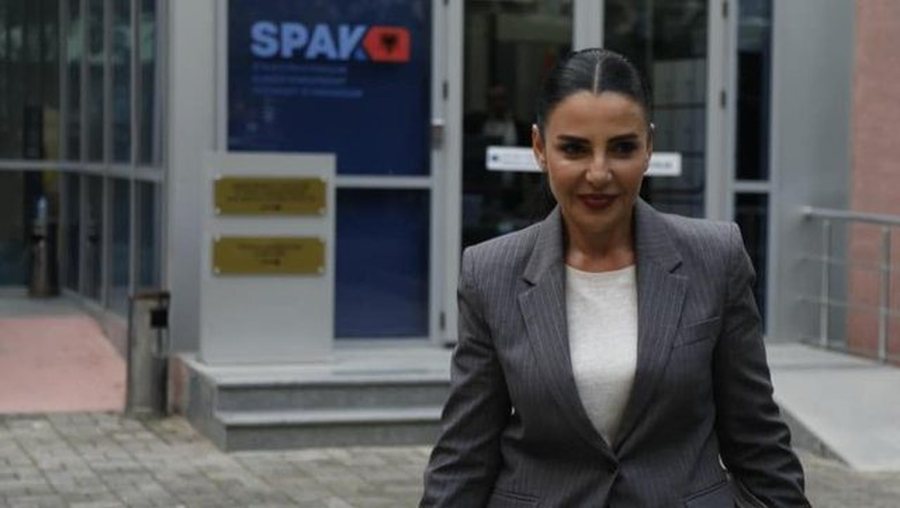
The latest challenge concerns the refusal of members of the Albanian Parliament to lift the immunity of former Deputy Prime Minister Belinda Balluku, who is accused of corruption.
MPs from the ruling Socialist Party have refused to lift her immunity, and the decision has been welcomed by Prime Minister Edi Rama himself, who said that Parliament has done "what any democratic state in Europe would do."
Brussels disagreed with Rama's statement that the request for lifting immunity was not in accordance with the Constitution.
Radio Free Europe has learned that something like this has directly influenced the resistance of some member states to guarantee Albania a so-called positive IBAR.
IBAR is the abbreviation for the Interim Benchmark Assessment Report, which assesses progress in the rule of law, judiciary and the fight against corruption, for key Chapters 23 and 24 in the accession negotiations.
Until EU countries unanimously approve the IBAR, Albania will not be able to move forward in closing the chapters.
Montenegro, for example, had to wait for a positive IBAR, which was adopted in June 2024, in order to start closing chapters. Before this decision, the last time it closed chapters was in 2017.
Can one eye be closed?
The admission of new members without the right of veto, which all 27 EU member states currently have, is something that both Edi Rama and Aleksandar Vučić advocated for in a joint article last month in the German daily Frankfurter Allgemeine Zeitung, which has added to speculation that the Western Balkan states "may turn a blind eye."
Florian Bieber believes that within this legal framework it is impossible to separate political considerations from rule of law criteria.
"Of course, the political elites in Montenegro and Albania recognize the political momentum and tend to be less strict about implementation. However, ultimately, the consent of the 27 member states is needed, which is far from guaranteed," Bieber warns in several responses to Radio Free Europe.
Commissioner Kos spoke in this regard in the European Parliament in early March, emphasizing that the status of the leader in this process is not guaranteed forever.
She has told Albania, Montenegro, Ukraine and Moldova that "progress must be achieved through reforms."
Can “defense mechanisms” help?
Safeguard mechanisms are not unknown in European processes.
When Bulgaria and Romania were admitted to the EU in 2017, the European Commission decided to approve their membership, despite unfinished reforms in the area of the rule of law, on the condition that weaknesses continue to be addressed after accession through the so-called Cooperation and Verification Mechanism, which enabled post-accession monitoring and regular assessment of progress in the judiciary and the fight against corruption.
This post-accession surveillance lasted a full 16 years and ended in 2023.
For Florian Biber, there are solutions to the potential dilemmas of member states, and according to him, the solution lies in a transitional period that would allow new members to implement reforms after accession.
According to him, the accession of Montenegro and perhaps other countries in the region would signal that there is a future for the region in the EU.
"Such a political project must convince skeptics among member states and must also include sustainable mechanisms to ensure that future members will respect the rule of law," Biber assesses.
However, he believes that even if a new member meets all the criteria, there is no guarantee that there will be no obstacles.
Something like this happened in Hungary, Poland or Slovakia a few years after EU membership, when problems with judicial independence and the rule of law came to the fore in these countries, because the authorities often tried to influence the courts, limit media freedoms and reduce control over independent institutions. /REL/