

By Ditmir Bushati
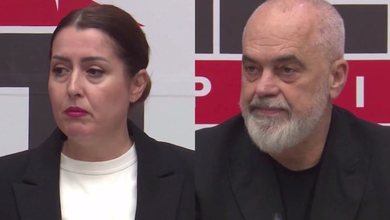
Enthusiastic promises to conclude negotiations by 2027 and the European Union accession process by 2030 were somewhat eclipsed by the joint initiative of the Prime Minister of Albania and the President of Serbia, published in the German newspaper Frankfurter Allgemeine Zeitung, to renounce membership and accept some kind of "second-level" relationship with the EU.
Since the Russian aggression in Ukraine, the EU's enlargement policy has undergone a shift. From Croatia's last EU accession in 2013 until February 2022, enlargement was a stalled and politically contested process. As a result of the war, it is now being seen as an important instrument for European security.
Seen in this context, enlargement is increasingly being used not only to prepare countries for membership, in terms of rule of law reforms, sustainable economic and social development, but also as an opportunity to strengthen their resilience, by aligning them geopolitically with the EU, in a security environment affected by the war on the continent. A war that has entered its fifth year.
Against this background, the debate has intensified on whether the enlargement process requires new institutional models or not, with the aim of intensifying it. Among others, the following have been proposed: (i) a 'gradual accession' process or one with different phases, where each phase is linked to the completion of certain reforms; (ii) 'integration into the EU's internal market', as an intermediate and preparatory stage to facilitate EU membership; (iii) 'reverse enlargement', which gives priority to membership before fulfilling the criteria, accompanied by the relevant guarantees for their fulfillment by being part of the EU.
Such proposals aim to reconcile geopolitical urgency with the current framework of the EU accession process. Of the above-mentioned proposals, that of 'reverse enlargement' has been rejected by EU member states, which insist on a process that combines rule of law reforms with geopolitical alignment.
Meanwhile, the initiative of the Prime Minister of Albania and the President of Serbia creates a smokescreen, as it proposes models that are unrelated to each other: participation in the EU internal market and the Schengen area, while giving up EU membership.
For an issue like EU membership, which is considered a national objective to be fulfilled, after NATO membership, the initiative should be subject to a genuine political and social discussion in advance. The government must demonstrate the ability to perform three tasks: (i) timely understanding of the problems related to the different stages of the enlargement process; (ii) in-depth elaboration of the solutions it proposes without shirk- ing responsibility; and (iii) transparently formulating a strategy for implementing what is most useful as a solution.
We Albanians have no dilemma and remain steadfast in our aspiration to join other peoples in the European family. Therefore, we deserve to be informed about the reasons for this initiative and to be heard about what we think needs to be done to implement the European path.
Presented to a German audience, which bears the main burden of EU financial spending, the initiative was greeted with a cold reception by German politicians. The only one who commented on the initiative was the Enlargement Commissioner, who said that 'the proponents have no idea how much work and reform is needed to be part of the internal market and the Schengen area'. A discouraging statement compared to her previous statements that 'Albania's objective of concluding the EU accession negotiations process by 2027 is an ambitious but achievable objective'. If concluding the negotiations is an achievable objective, there is no reason why participation in the EU internal market, which is in any case less than membership, should not be an achievable objective for Albania.
Also, any suggestion and initiative by the Commissioner to initiate a political and democratic process, which is completely absent, and which should in fact precede such initiatives in Albania and Serbia, would be assessed as a sensitivity of the institution she represents to the values and principles of democracy, dialogue and political understanding. At the same time, it would also signal a return to the best tradition of the European Commission, showing special care for encouraging and respecting democratic processes in political and social life, rather than for filling the boxes of many, many plans, matrices and strategies that in some cases do not produce measurable effects in the lives of citizens.
MISCONCEPTIONS ABOUT THE INTERNAL MARKET
Participation in the internal market for non-EU countries means acceptance of EU rules implementing the freedom of movement of goods, services, capital and people, but without the possibility of financial benefits and the use of instruments that correct the imbalances that may arise, which are available only to member countries. Meanwhile, the Schengen area is not an economic package, but a strict regime of trust that includes security, justice, visa policy and border control.
It is important to know that the European Economic Area was created in 1992 to enable participation in the EU internal market of countries such as Norway, Iceland, Liechtenstein, which did not aim for membership, but a common market with the EU, due to mutual economic and political interest. The aforementioned countries accepted the EU's supervision rules, due to the size of the market and the high standard, since the European Economic Area consists of developed economies with consolidated institutions, advanced democracies, security standards and the rule of law. In this way, both EU members and non-members benefit from a larger and more regulated market, where national economies are able to cope with the forces of competition and where the consumer has more choice.
In practice, this means that all businesses and people are treated as if they were part of the EU, and can establish and move their businesses freely anywhere, without any barriers, tariff or non-tariff. Public procurement rules also support the internal market. General market principles such as non-discrimination, transparency, equal treatment, mutual recognition, proportionality also apply to public procurement.
Could the model of Norway, Iceland and Liechtenstein be applicable in the case of Albania and Serbia? This could be an option that should have been explored long ago in coordination with regional integration initiatives. The latter has always been considered a prerequisite for EU membership. But unfortunately it continues to remain underutilized or misused.
At the Sofia Summit in 2018, the EU and the Western Balkans committed to the creation of the Western Balkans Regional Common Market, as a prelude to the inclusion of our region in the EU internal market. Instead of working to accelerate this complex process that requires meeting European standards, the Prime Minister of Albania and the President of Serbia created a parallel project, called the Open Balkans, whose purpose and results remain unclear even today.
It may sound ironic, but as soon as Albania made progress with the EU accession chapters, it abandoned the Open Balkans. While we await the Interim Milestone Report and the EU’s common position on the first chapter group related to the rule of law and which is decisive for the quality and speed with which the EU accession chapters will be closed, Albania rejoins Serbia by declaring its renunciation of membership and accepting a kind of “second-level” relationship with the EU.
Leaving aside the above contradictory context, at first glance, the demand to become part of the EU internal market may seem attractive, as people are rightly oriented towards economic benefits anywhere in the world. Albanians and Serbs are no exception in this regard. Suffice it to recall the impact that the fall of the 'Schengen Wall' and the provision of visa-free movement had on citizens and businesses.
But nothing in the EU is free. Especially when it comes to the internal market, which is one of the most sophisticated forms of economic integration we have known to date. Participating in it is not like a walk in the park, but like the Olympic Games, where serious and daily training is needed. The internal market operates on a level of trust for the unhindered implementation of the freedom of goods, services, capital and people. To make this possible, EU member states must trust that we have not only the written laws, but also the capacity to implement EU rules and policies.
The EU internal market is not only about the economy, but above all about the rule of law in the economy. Therefore, integration into the EU internal market is impossible without changing the current model of governance that is based on the personalization of power and complete control over all institutions, the metastases of corruption and organized crime in critical sectors of the economy.
SPAK's investigations into infrastructure and technology tenders, among other things, show us the need to ensure a level playing field for all domestic and European businesses, by applying public procurement and competition rules. Likewise, policies and actions are needed that create confidence in member states regarding the unblocking of EU funds in the field of agriculture and technology, as a result of alleged violations and investigations undertaken by European and Albanian institutions. In other words, any money coming from the state budget or euros coming from the EU budget and being procured must be subject to the same logic.
In short, without the rule of law, democracy, and good governance, participation in the EU internal market, increased productive and exporting power, and enjoyment of the benefits that come from this participation are unimaginable.
The initiators make it clear that they are not seeking institutional integration into the EU. That is, they do not consider participation in the internal market as an intermediate step towards EU membership. Austria, Sweden and Finland initially became part of the EU internal market and were later admitted to the EU. Also, Iceland, which is part of the internal market, has announced the holding of a referendum to consult its citizens regarding possible EU membership. If the citizens respond positively, then Iceland will become the 28th country of the EU.
Participation in EU institutions is an integral element of the accession process and without it, membership does not exist. Although the aim of the initiative may be to open only the door to the EU internal market, recognizing the difficulties of opening the big door of the EU, our ambition cannot end here. All the more so since the EU has shown itself generous with Albania, giving us the opportunity to open with unprecedented speed all the group chapters, and expecting from us the fulfillment of the criteria related to their closure for EU membership.
We should not forget that in the current geopolitical environment the EU is guided not only by the logic of trade, but also by the logic of security and even the protection of the integrity of its own market. Therefore, investments are also viewed through the prism of security. This is why the EU has adopted regulations on the screening of foreign direct investment. These elements are also reflected in the accession negotiations process to assess who is investing, where is being invested and who controls key sectors such as: energy, infrastructure, telecommunications, data and advanced technologies.
THE SCHENGEN ILLUSION
The experience of countries with a similar past to that of Albania and Serbia shows that the countries first became part of the EU, and then part of the Schengen area. The opposite of what is proposed in the joint initiative of the Prime Minister of Albania and the President of Serbia, which calls for participation in Schengen without being part of the EU.
Countries that joined the EU in 2004 and decided to join Schengen took another four years after joining the EU to join Schengen. Croatia, which joined the EU in 2013, took another ten years to join Schengen. While Bulgaria and Romania, which joined the EU in 2007, took a full eighteen years to join Schengen. The Schengen members that are not EU members are Switzerland, Norway, Iceland and Liechtenstein. Their high standard, incomparable to that of Albania and Serbia, needs no further comment.
The above-mentioned facts speak for themselves. To become part of Schengen, the requirements are even stricter than membership in the internal market or EU membership, because it requires full trust in the institutions of the state that is joining, an uncompromising fight against corruption and organized crime, full cooperation in the police and judicial fields, as well as full harmonization with EU policies.
First of all, this cooperation means acting on European arrest warrants so that the country acceding to Schengen does not become a "safe haven" for individuals or structured criminal groups that evade justice. The balance of the Albanian police and law enforcement institutions in executing arrest warrants of structured criminal groups is extremely deficient.
Sensitivity to the repeated demands of international partners to eliminate organized crime groups is low. Security structures in general and the police in particular suffer from the lack of trust of international partners. No marketing strategy or action plan can replace iron political will in this area. The only currency that counts in this case is the belief that a country controls its territory and security risks, and that law enforcement institutions function equally for everyone.
The work of becoming part of the Schengen area is many times more difficult and challenging than fulfilling the criteria that enabled the lifting of the visa regime with the Schengen area, or fulfilling the criteria for EU membership. Therefore, let us not harbor any illusions. Our path to Schengen will be even longer, even more difficult than that of participation in the internal market and EU membership.
SUSTAINABLE PATH
In such conditions, the question that requires an answer from the initiators of the proposal themselves is why they are asking the EU for something that is impossible to obtain and what is the value of this proposal. Why this smokescreen now?
Whatever the reasons behind the initiative, it is certain that, for Albania, the only sustainable path is full EU membership. Sitting with dignity at a table where rights and obligations apply equally to all, and not a secondary relationship with the EU. Meanwhile, the EU's reward for reforms in the area of the rule of law and geopolitical alignment remain essential for the effectiveness of enlargement and its role in strengthening European security.
EU membership can be achieved through building a climate of cooperation and political understanding that encourages the rule of law, guarantees free and fair elections, media freedom, and rigorous implementation of European rules in all areas of governance. This goal can only be achieved through sustainable reforms and measurable results. Not through illusions or evasion of political responsibilities.
The analysis is a publication of the Friedrich-Ebert-Stiftung Tirana foundation.
Give me another title and play with ramen.