

The Albanian government has promised to reduce the excise tax on oil “by 20%,” while the Minister of Finance stated on Monday that the reduction will only be activated once the price reaches 220 lek per liter. Both statements indicate two basic things: The government is not serious about managing the economy and is constantly focused on empty words, and secondly, increasing taxes is much easier than reducing them.
It has been ten days since the Albanian government made its first statement, promising to reduce fuel excise taxes “by 20%” to mitigate the consequences of the crisis caused by the war that the US and Israel are waging against Iran. But after ten days, the Minister of Finance declared that the government, not only has not fulfilled the promise, but also intends to activate such a policy only if the price of fuel increases to over 220 lek per liter.
The vague wording of the March 20 promise to reduce excise duty "by 20%" as well as the threshold set by Petrit Malaj at 220 lek per liter, suggests that the government is not serious about managing a crisis and that its promise to reduce excise duty is similar to renderings of airports, railways and roads that do not exist in reality.
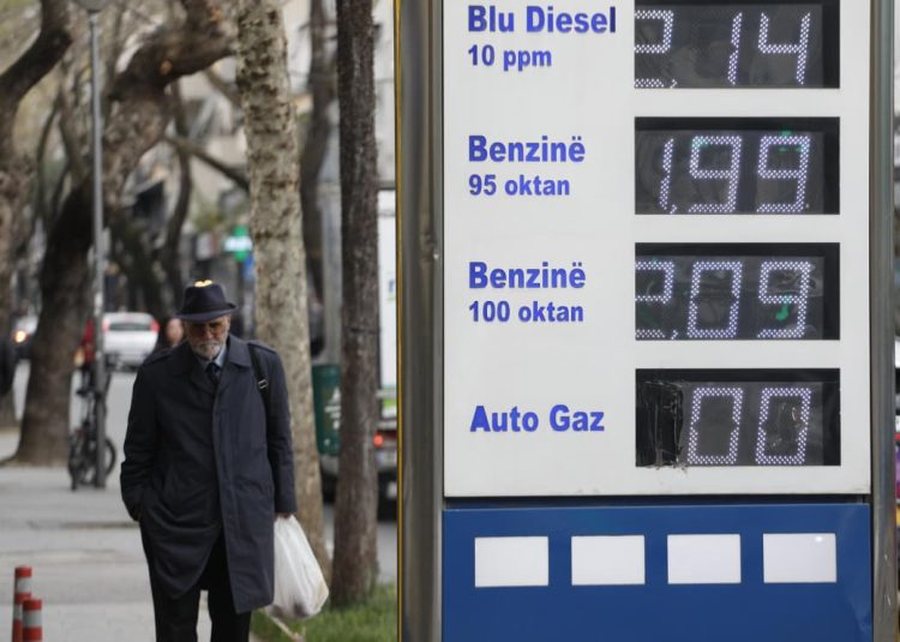
The price of the main fuels used in Albania, diesel and gasoline, was 170 lek before the crisis and has fluctuated between 180-210 lek during the crisis. If we wait for the price to reach 220 lek before we act, this means that the price will increase by 40 lek, or 25%.
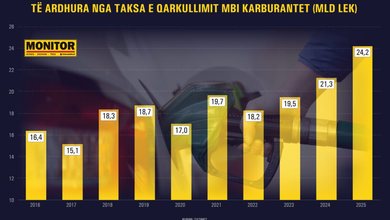
Using tax cuts to mitigate the consequences of the crisis for businesses and citizens, and therefore for the economy, is not a populist policy and is, most likely, neutral in terms of budget revenues. In short, the government is collecting additional revenues today and all day long from the increase in fuel prices. When the price is 170 lek, the VAT paid by citizens is 28.3 lek. When the price is 210 lek, the VAT increases to 35 lek. By the time the price reaches 220 lek, the VAT paid by citizens has increased to almost 37 lek. In short, if the government reduces the excise tax “by 20%”, then this means that the government is not “suffering”; it is not being forced to reduce the number of parasitic patronages on the state payroll, nor does it need to reduce the dose of manipulation of public procurement. It is simply granting citizens the additional taxes created by the price increase. Citizens will still pay a higher price than before, but the government will not be a net beneficiary of the crisis. In this context, setting an abusive threshold of 220 lek per liter allows the government to benefit from price increases at the expense of citizens and businesses.
The key problem, and one that shows that the government is not serious about managing the crisis, is the fact that, by promising a 20% reduction in excise duty once the price reaches 220 lek per liter, the government risks doing more harm than good to citizens.
We need to go back to 2014 to understand why suddenly reducing excise duty "by 20%" risks blocking a key market for an essential commodity like excise duty.
In 2014, the socialist government, as part of its populist pre-election promises, abolished VAT on medicines. You should keep in mind that at that time, Albania had a 10% Value Added Tax on medicines, most of which are imported. The abolition of VAT on medicines had a negligible effect on citizens because in the Republic of Albania, the vast majority of medicines are paid for by the taxpayer through the national health insurance scheme. A very small part, say, an aspirin or paracetamol, is paid out of pocket and this does not matter in the overall situation. But the trouble that happened was that, when importers and pharmacies learned that VAT would be abolished, while they were waiting for it to be abolished, they stopped almost all activity due to the need to avoid the risk of selling medicines purchased with VAT, without VAT, i.e. at a loss. People were left without medicine while waiting for the government's bureaucratic machinery to get to work. Albania is likely to experience a similar crisis if the price rises above 220 lek per liter and the government reduces the excise tax, as it has promised, by 20%. Market operators, whose profits are in the order of 2 lek per liter, will likely cut off supplies while they wait to see what the government will do, for the simple reason that their profit, 2 lek per liter, is four times lower than the excise tax that is promised to be reduced. Consequently, instead of reducing the price of fuel and reducing the effects of the crisis on the economy, the government is likely to leave citizens and businesses without oil.
Raising taxes is a comparatively easier exercise. For example, the government increased the “turnover tax” on fuel in 2014 and 2015 by 10 lek per liter each time. While waiting for the new tax to come into effect, importers increased imports so that they could sell imported oil at the old tax rate, compared to the new tax rate. While the speculative profits were huge, at least there were no shortages in the market, as in the case of medicines.
Consequently, it is very logical, both in terms of crisis management and in terms of avoiding shortages in the market, for the government not to wait for the price to increase to 220 lek to act, but to act as gradually as possible. In short, instead of “reducing the excise tax by 20%” when the price exceeds 220 lek per liter, it should reduce the excise tax by 2% when the price reaches 175 lek, by another 2% when it reaches 180 lek, by another 2% when it reaches 185 lek, and so on. Because the price has already reached 200 and a half lek, the government would do well to look at the frequency of fuel imports to calculate to what extent the gradation of the price reduction can be more easily absorbed by the market.
But if you see that government experts were so incompetent that they miscalculated fuel costs and were forced to redo the calculations when threatened with market blockade by importers, the chances that elementary economic logic will be decisive in policymaking are extremely low. /BIRN/