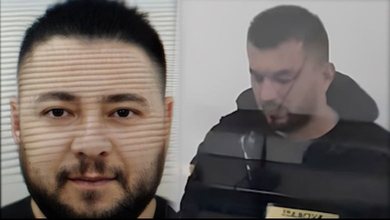



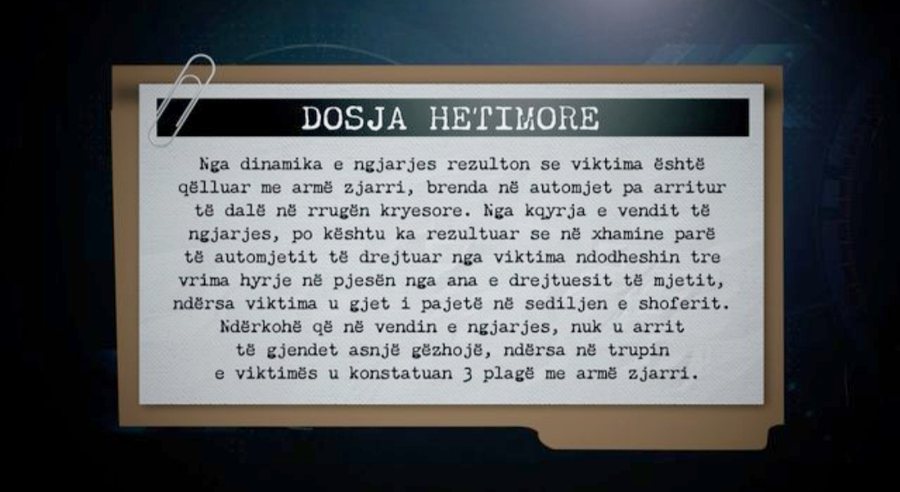
The murder of police officer Imer Hajdari has still remained unsolved, although his family members' suspicions are about the Xheçuka family, which had openly stated that they would kill one of the Hajdari tribe in revenge.
But in his testimony, Hysen Xheçuka, the brother of one of the Xheçuka tribe victims, Shahini, whose murder sparked the war between the two families, stated that they are not responsible.
Shahin Xheçuka is my brother.
On April 23, 2011, he was killed by citizen Alket Hajdari, a police officer in prisons. I have five sons, who are immigrants in Greece. What I want to say is that I have no knowledge of the murder of citizen Imer Hajdari,” Hysen Xheçuka's testimony states.
But despite lengthy investigations, the investigative group that dealt with the murder of prison officer Imer Hajdari appears to have failed in its search to find the perpetrator or organizers of this crime.
Suspicions about this murder continued to fall on members of the Xheçuka family.
But no evidence led to the name of any of them.
Which forced the Prosecution to return the file to the police once again.
Investigations that were suspended, only to be reopened 18 months after the execution of Imer Hajdari.
Where all the movements made by the persons suspected or interested in the execution of Imer Hajdari were once again requested.
Their telephone records were also combed in the hope that they could find clues that could implicate these suspects in this murder.
Despite the contradictions that were found in the movements of the suspects, members of the Xhecuka family, the prosecution was unable to identify the perpetrators of the murder.
In December 2013, by order of the head of the Prosecution Office, the investigation into the murder of Imer Hajdari was resumed, where, among other things, all the cell phones of mobile companies were verified along the route from the apartment rented by the victim Imer Hajdari to the scene of the crime, where the analysis of telephone call records was requested.
Likewise, the Xheçuka brothers' entries and exits were verified in the border police records.
As well as the lists of passengers available from the Border Crossing Control Points, for each of the lines that these citizens traveled on in the time period in which the event occurred.
But what resulted from these researches?
Did they take into account the clues that members of the Hajdari family gave about the possible names that could have been involved by the Xheçuka family in the execution of their man?
Meanwhile, as is customary, according to the testimony of the Hajdari family, immediately after the murder of their man, the Xheçuka family had sent word to them that they had no connection to the murder of Imer Hajdari in Tirana.
Relatives of the victim Imer Hajdari stated that three days after the murder of their man, the Xheçuka family sent word to their home as usual through citizens Sh.Th and FS that: 'The Xheçuka family had no hand in the murder of Imer and that they should seek responsibility elsewhere.'
But as we said, the Hajdari family had received information about possible names connected to the Xheçuka family who had participated in the murder of Imer Hajdari.
Information they had received from inside the prison.
From the very conversations that Agim Pepa, son-in-law in the Xheçuka family, who at that time was in prison for the murder of Commissioner Gani Malushi, had with other prisoners.
Where he stated that the murder of Imer Hajdari was committed by citizens B, Xh and VP.
Conversations that were never actually confirmed or verified, thus remaining only in the form of rumor.
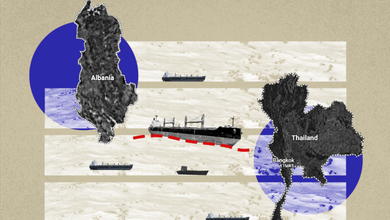
But one of the most interesting findings of the investigative group after the resumption of the investigations is the fact that members of the Xheçuka family, including well-known names associated with crime, had left Albania at the beginning of April and had returned only one day after Imer Hajdari was murdered.
This was an alibi that would help them avoid being suspects in the murder of the prison police officer on the morning of April 10, 2012.
Among these people who had traveled together outside Albania was Tori Xheçuka.
Considered today as a hired killer and involved in many criminal events, wanted by the State Police.
But what did the research on the TIMS system result in?
Had these people actually left Albania?
And if so, were these exits a way to hide the traces of organized crime, of the murder of Imer Hajdari?
Referring to data obtained from the TIMS system, it has resulted that citizens Tori Xheçuka (Hektor Xheçuka), Luan, Fatmir and Flamur Xheçuka, etc. left Albania on April 6, 2012 and returned on April 11, 2012, just one day after the murder of citizen Imer Hajdari.
Suspecting that these citizens had made fictitious exits in the system, further verifications were undertaken at the Department of Border and Migration, in order to verify the entries and exits at the border crossing points of these citizens.
From which it resulted that Fatmir, Luan and Beqir Xhecuka were registered at the exit on April 6, 2012 and at the entrance on April 13, 2012.
While citizen Besnik Xheçuka was registered at the exit on April 22, 2012, while citizen Tori Xheçuka was registered at the exit on April 6, 2012 and at the entry on April 11, 2012.
Where information was requested from airlines regarding booked tickets.
Despite these suspicions, the investigative group admitted with their hands up that they failed to provide sufficient evidence to bring to justice the perpetrators of the murder of prison guard Imer Hajdari.
Something he continues to do today, almost 14 years after his murder.
After the murder that occurred on April 23, 2011, in a bar in the center of Mamurras, despite Alket Hajdari admitting responsibility, claiming that the incident had occurred out of negligence, the two families, Hajdari and that of the victim, Shahin Xheçuka, became enmity.
And the fact that most of the Hajdari family hid after the murder out of fear of revenge.
The motive for which the victim Imer Hajdari had requested a transfer from Kruja Prison to be appointed to Prison '313', where he had been working for more than six months.
From the totality of the evidence obtained during the investigation, it was proven that there are suspicions that the perpetrators of the murder of citizen Imer Hajdari may be members of the Xheçuka tribe, based on the motives and intentions clearly expressed by them after the murder of citizen Shahin Xheçuka.
However, beyond any reasonable doubt, we were unable to identify the specific perpetrator or perpetrators of the criminal offense.
But even though justice was shamefully silent, surrendering to a murder that did not seem to be that sophisticated, the family of the deceased officer, Imer Hajdari, did not do this. Even today, more than a decade after the loss of their loved one, they continue to send letters demanding that the investigations be reopened.
And justice must be served for a man whose mission was to enforce the law.
A mission that the prosecutors who dealt with his case should also have, but who seem to have given up and left him on the street.
As is this letter from the victim's niece, seeking justice for her uncle.
Who was only 15 years old when she faced the shocking loss of her loved one.
I, who am writing to you, am the granddaughter of the late Imer Hajdari, an officer at the time at Prison 313 in Tirana, who was killed in April 2012 near 'Teodor Keko' street in Tirana, while on his way to take office, suspected of being the result of a feud with the Xheçuka family.
The case of my late uncle has been suspended due to the failure of prosecutor Adriatik Cama, at the Tirana Judicial District Prosecutor's Office, to identify the perpetrator.
Since almost 14 years have passed and nothing has been done about this issue, and although my mother has gone to the Prosecutor's Office several times, both personally and with a legal representative, to provide new clues regarding the incident, nothing has been taken into account and the deceased's file continues to gather dust in the archive of the Tirana Local Police Directorate.
And we believe that the murder of our relative was attempted to be covered up by the direct influence of persons connected to the state./In Target