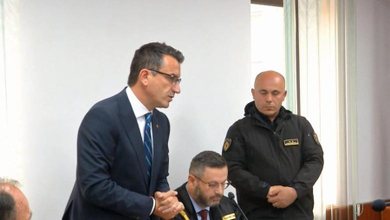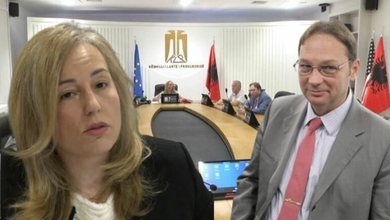



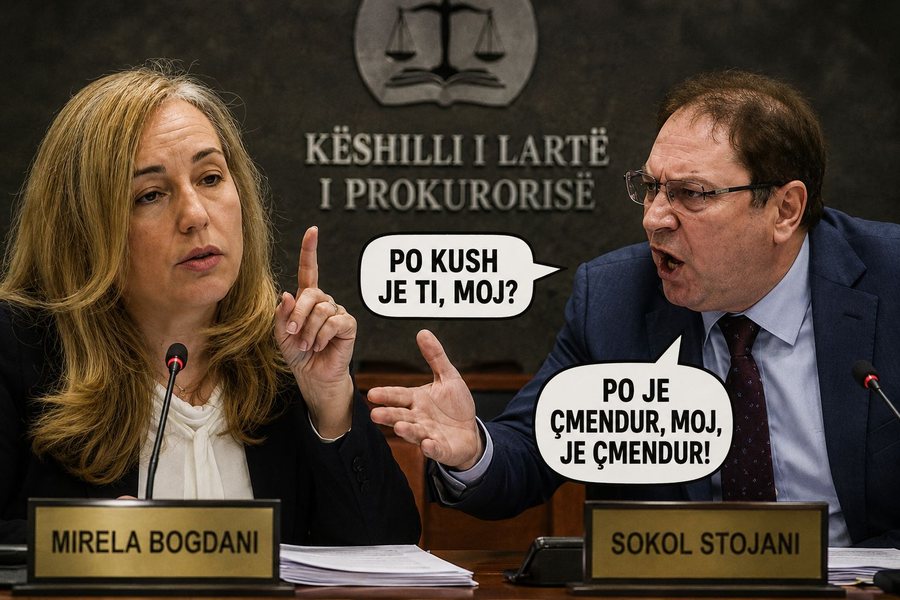
“You're crazy, man!” — this is not a scene from some banal television debate, but part of the communication between members of the Supreme Prosecutorial Council, the institution that is supposed to guarantee the highest ethical and professional standards in the justice system.
The audio of the April 30 meeting highlights a worrying degradation of institutional communication among KLP members. The debate erupted between chairwoman Mirela Bogdani and member Sokol Stojani regarding the return for review of a decision taken on April 2 to open vacancies on the Council.
"There is nothing more ordinary than this. This is a conceptual problem," Stojan is heard saying, as the tension quickly escalates:
“Who are you, my dear?”
“Maybe I’m crazy.”
“You’re crazy, my dear, you’re crazy.”
In any normal country, members of the institutions that lead the prosecution and justice reform should be models of self-restraint, ethics, and institutional culture. But the audio of this meeting creates the impression of a body embroiled in personal conflicts and tensions that resemble more neighborhood squabbles than discussions of a constitutional institution.
The irony is that these very people have taken it upon themselves to assess the integrity, professionalism and ethics of Albanian prosecutors. Just a few months ago, these same members of the KLP were interviewing live the candidates for the leadership of SPAK, in a process that instead of imposing institutional seriousness, often exposed a low level of professionalism, substandard questions and a communication ethic that was widely commented on by public opinion.
But this is not the only episode that has hit the institution's credibility. Just a short while ago, the KLP was involved in another public scandal, after the investigative show "Stop" denounced member Olger Eminaj for sending photos of his sexual organ and having conversations with an erotic content with a whistleblower, during official hours and within the institution's premises.
The KLP's reaction at the time was bureaucratic and cold: the institution stated that the matter was being verified by the competent bodies and that disciplinary measures belonged to the High Inspector of Justice. A formal reaction that failed to quell the public perception of an institution that seems to be gradually losing the moral authority it should have.
When a constitutional institution produces one after another scenes of banality, personal conflicts and ethical scandals, the problem no longer remains individual. It turns into a crisis of standards. And this is perhaps the most severe blow to a body that was created precisely to guarantee higher standards in Albanian justice.