


By Muriel
In today’s Tirana, economic growth is measured by the height of the towers that scratch the sky, while the health of democracy languishes from a silent asphyxiation on the ground floors of the institutions. Prime Minister Edi Rama, a master of political aesthetics, has built a European image by selling “stability” as a commodity for domestic freedom. But, as Blaise Pascal said, “Justice without force is powerless, while force without justice is tyrannical.” In Albania, we are witnessing the triumph of a force that has donned the garb of law to block every path to change.
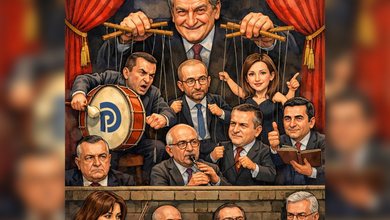
This new kind of power has created a system of total surveillance, where the media has become a high wall of silence. When propaganda drowns out facts, what Hannah Arendt called the death of judgment occurs: the citizen does not start believing the lie, but simply stops believing the truth. The mainstream media, bound by public contracts, no longer serve as whistleblowers. They curate a parallel reality where the theft of national wealth is sold as a “vision.” When the media is silent, corruption ceases to be a scandal and becomes a painful routine.
Even the last hope in justice is facing an intervention with double standards. The reform that started as a great promise, today resembles a knife that carefully chooses who to hit and who to protect. Institutions like SPAK operate in an environment where government pressure has become part of the atmosphere. When courts produce decisions that maintain the balance of power instead of the scales of law, independence ceases to be a principle. It turns into a tool that only hits the withered branches of the opposition, but never dares to touch the strong root of the administration.
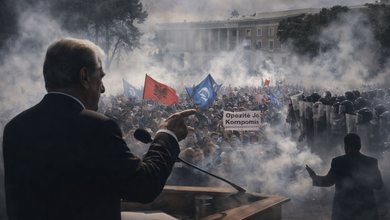
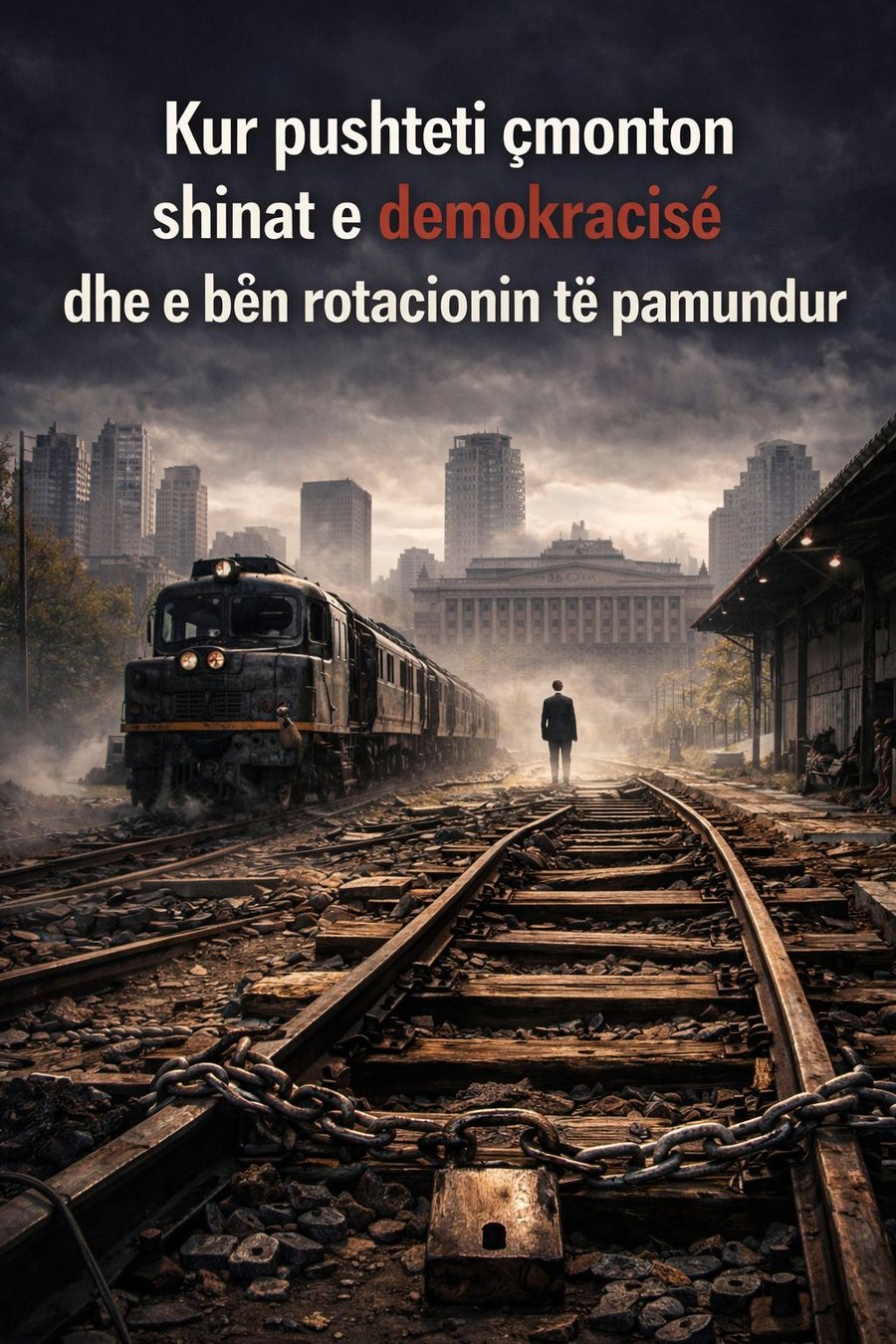
Here the true mechanics of failure appear. The Albanian opposition today resembles a massive locomotive, ready to move towards the rotation station. But the philosopher Immanuel Kant reminds us that “he who wants the end must also want the means”. The opposition may have the right intention, but the “architect” of power has dismantled the means—the rails. When the Electoral Code is changed unilaterally and when justice is used as a tool to hold the opponent’s logo hostage, the train remains motionless. It is not a lack of will; it is pure theft of the road.
This whole drama is played out under the paradox of stabilocracy. Rama has skillfully played the stability card, offering himself as the guardian of peace in the Balkans. He has bought a kind of international tolerance, eroding democracy at home in exchange for geopolitical smiles abroad. This is the real tragedy: the opposition is not just fighting a rival party, but against a machine that has also corrupted the world’s perception of our reality.
For the millions who await change, this last mile has become a physical impossibility. According to Isaiah Berlin, freedom is not simply the absence of shackles, but the existence of real possibilities for action. The opposition is “free” to protest, but it is paralyzed to win. When the rules are written by the one playing alone and the referee is part of the opposing team, the race is over before it even starts.
Albania is sliding toward a model where rotation is not hindered by handcuffs, but by institutional engineering. Without the return of the tracks—without a media that dares to speak out and an independent judiciary—the opposition train will remain a stationary relic. If the world continues to applaud Tirana’s facades while the tracks of the rule of law are stolen into the sunlight, the station of democracy will no longer be a destination of hope, but a monument to a freedom that was sold too cheaply for the sake of a false stability.