


By Muriel
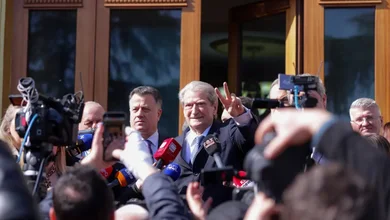
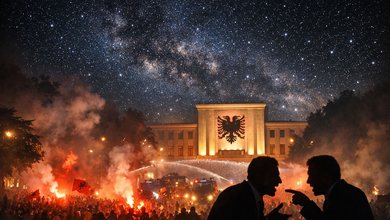
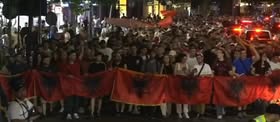
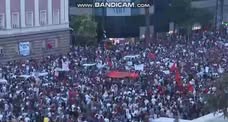
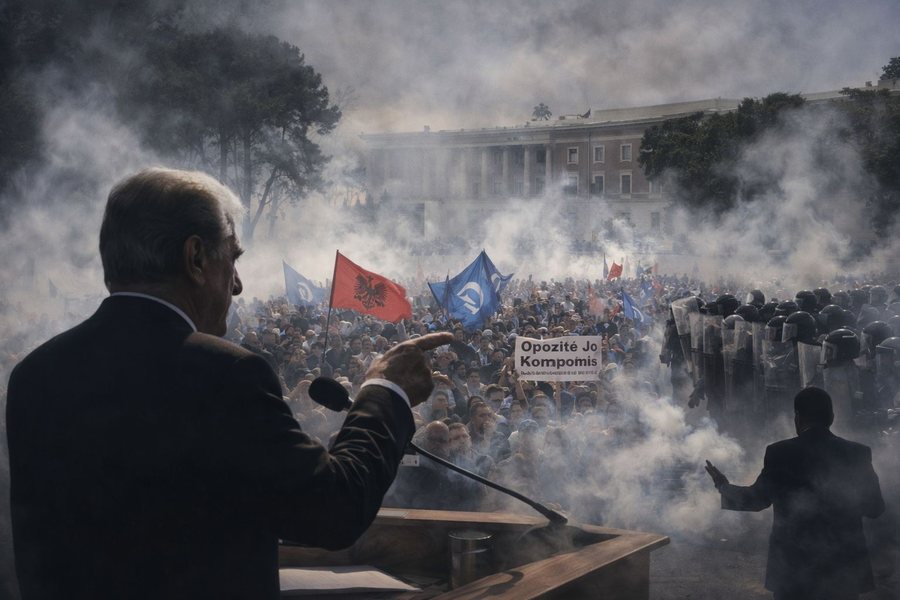
Yesterday's protest on March 22, 2026 on the "Martyrs of the Nation" boulevard was sold by the DP dome as a "hurricane" that would overthrow the regime, but in fact it was more like a requiem for an opposition that has lost its way in its own backyard. While police forces surrounded government buildings and tear gas filled the lungs of the remaining militants, the truth was hidden behind the banners: Edi Rama today is not invincible because he is a genius, but because Sali Berisha allowed him to become so.
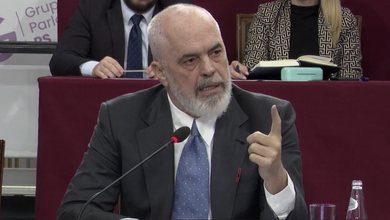
A cold analysis of Edi Rama’s political journey inevitably leads to the years 2005–2011, a period when Sali Berisha enjoyed the height of his power as prime minister. It was precisely at that time that Berisha, with a full awareness of Rama’s political profile, chose a path of inexplicable tolerance. Instead of Rama being denounced and blocked for rampant corruption with construction permits in Tirana and early connections with dubious elements, Berisha allowed a kind of political “coexistence”. This tolerance gave Rama time to build a financial and political structure so strong that today it has become a monism that knows no rotation. Today, Rama is not leaving simply because he is strong, but because he uses the resources that Berisha left in his hands to buy everything: time, internationals, and even segments of the opposition itself.
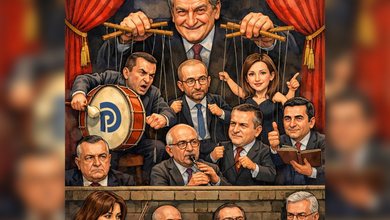
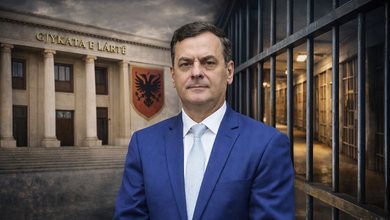
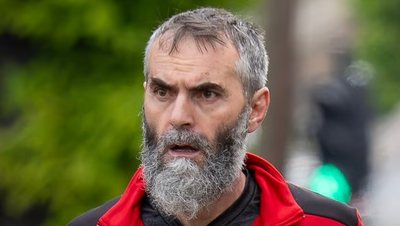
If Berisha is the old architect of this building, the “guard” he carries behind him today is the guarantee that nothing will change. Figures like Flamur Noka have become the symbol of what is commonly known among the people as “the dog that barks but doesn’t eat”. Noka’s role is often described as a political theater where noise serves as a bargaining chip: he howls on podiums against corruption just to increase the “bargain” of silence, but as soon as it comes to the projects of the oligarchs who keep Edi Rama on his feet, his voice fades. After every denunciation that is “forgotten” along the way, a morsel is hidden from the same oligarchic table. This symbiosis makes Noka and the people around him incapable of inspiring the gray mass; people understand that their noise is simply a tool for private interests, not a tool for political rotation.
Disappointment within the opposition ranks has reached boiling point and this was clearly seen in the recent statements of Ervin Salianji, who has described Flamur Noka as “the biggest political accident in 35 years of the DP”. Salianji exposed Noka as a “building administrator” who has no connection to real action, but who only deals with internal intrigues and exclusions to preserve his chair. This is the painful reality of a leadership that has destroyed structures to serve personal agendas, while ordinary democrats are abandoned in the face of a state machine that buys or suppresses them.
Sali Berisha owes an incalculable moral and political debt to the Democrats who have been waiting in the streets for 13 years, a debt that grows with every protest that ends without result. The opposition does not need nostalgic anniversaries of '92, but for a radical break from the old model of coexistence with evil. As long as the "revolution" will have as its face people who bark for votes during the day and count the "animals" of the oligarchs at night, Edi Rama will continue to govern peacefully. Berisha's debt to the Democrats is increasing with every tear gas that is inhaled in vain on the boulevard, while his "guard" continues to count the benefits from the oligarchy.
“The creatures outside looked from pig to man, and from man to pig, and from pig to man again; but it was now impossible to tell which was which.”
— George Orwell, Animal Farm