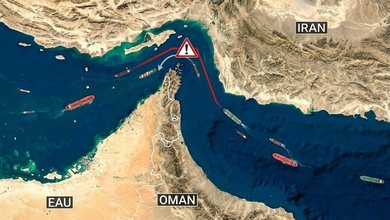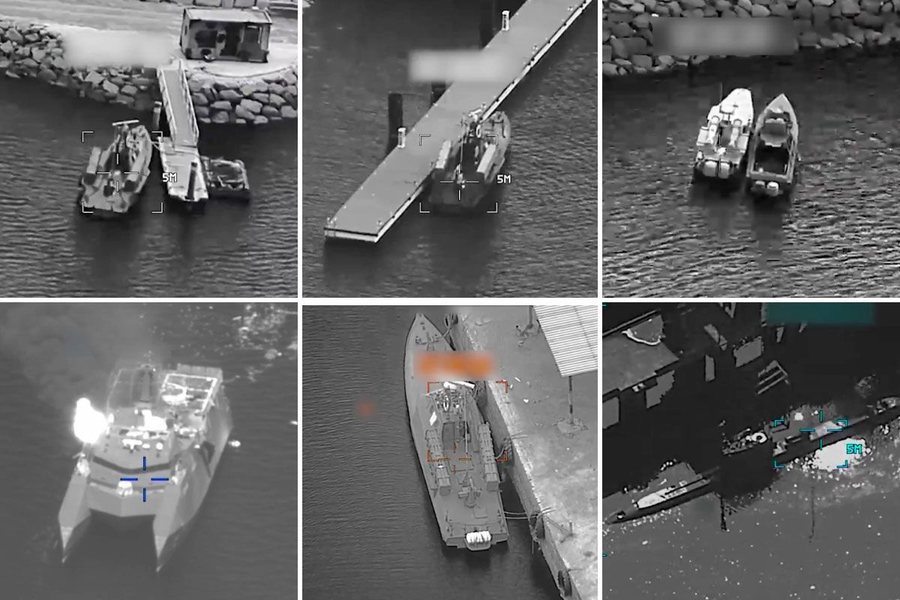
Iran is tightening its grip on one of the world's most important shipping lanes, the Strait of Hormuz, by threatening merchant ships and attacking oil tankers. But beyond these attacks, a much more insidious danger is looming in the waters of the Persian Gulf: naval mines.
According to estimates by the US Defense Intelligence Agency, Iran possesses over 5,000 naval mines and has begun deploying some of them in the area. These weapons could seriously complicate efforts to resume normal shipping traffic in one of the planet's most important energy corridors.
The geography of the strait gives Iran a major advantage. The long coastline in the south allows small naval vessels to quickly go out to sea and lay mines. Meanwhile, the narrow shipping lanes leave little room for maneuver. At its narrowest point, the water depth is about 60 meters, shallow enough to create entire minefields.
Naval mines have been used by militaries since World War I and come in several forms. One of the most common is the anchored mine, which sits just below the surface, attached by a chain to a weight on the seabed. When a ship touches it, it explodes instantly.
If the chain holding them anchored breaks, the mine can drift with the current and become a "floating mine," becoming even more unpredictable for passing ships.
Another category are mines placed on the seabed. These contain larger amounts of explosives and are equipped with magnetic, acoustic, and pressure sensors that detect the presence of a ship. When the sensor identifies the target, the mine explodes with great force, creating a gas wave that hits the bottom of the ship.
Iran also possesses so-called "limpet" mines, small explosive charges that are placed by divers or swimmers on the hull of a ship. They explode after a set time, allowing those who set them to leave.
Most of these mines are not necessarily intended to sink ships, but to cause severe damage that makes them unable to continue their mission. Modern tankers are designed with double hulls and watertight internal compartments, which makes them more resistant to explosions.
Laying mines is relatively quick, but clearing them is a long, expensive and very dangerous process. To find them, teams use robotic underwater vehicles equipped with sonar that systematically scan the area. Once identified, the mines are destroyed with explosives or deactivated by specialist divers.
There is also the method of “mine clearance,” where special equipment mimics a ship’s magnetic or acoustic signals to force the mine to explode. However, this method does not guarantee that all mines will be eliminated.
History shows that clearing these weapons can take weeks or even months. In 1991, after Iraq laid over a thousand mines in the Persian Gulf, it took the Allied fleet almost two months to clear the coast of Kuwait.
According to US officials, Iran appears to be trying to lay mines faster than they can be cleared by Western forces, creating an intimidating effect on ships passing through this strategic route.
The Strait of Hormuz is a vital artery for global energy trade. Any disruption in this corridor could shake international markets and significantly increase oil prices worldwide.