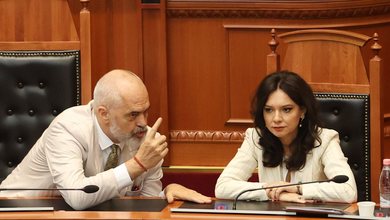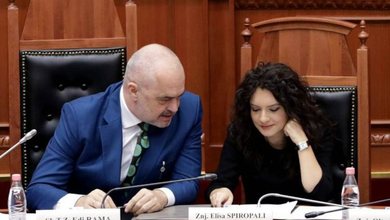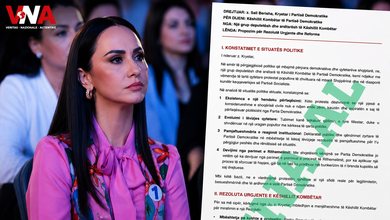



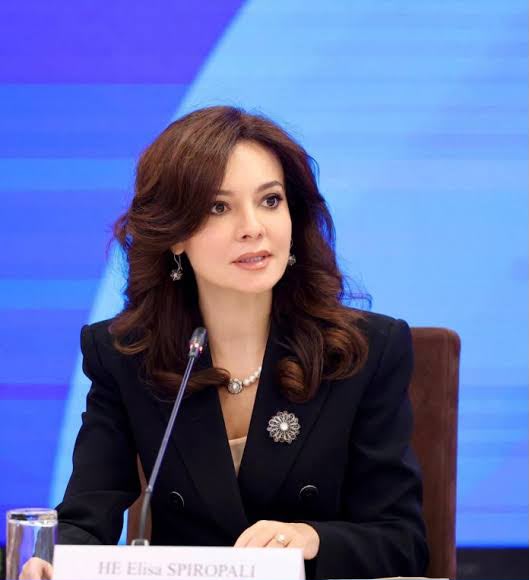
There is a paradox that is evident from the first lines of Elisa Spiropali's motion. The document calls for an end to the "cult of the loyal", more meritocracy, free elections in the party, open debate, separation between party and state, and less personalization of power.
These are precisely the characteristics that critics have been attributing to the political model built by Edi Rama for years.
But the irony is that this manifesto was not written by an opposition member or a socialist who spent 13 years on the periphery of power. It was written by one of the figures who rose to the top of the Socialist Party precisely within this model.
For this reason, her motion resembles a revolt against... spiropalism.
Not towards Elisa Spiropali as a person, but towards the way of doing politics that she herself embodied for more than a decade: unequivocal protection of the leader, unconditional loyalty to his every decision, and a political career that developed in parallel with the consolidation of the model that she today considers a problem.
If her diagnosis is correct, then the question is as simple as it is unpleasant: where was Elisa Spiropali when this system was being built?
Because the document speaks of an Albania where "more merit and less personal loyalty are needed", where "less personalization of power is needed", where "power is not identified with anyone", where "the final separation between the state and the party is needed", where "the forums of the Socialist Party should be places where ideas confront, not simply where decisions are approved", while "no function should be permanent and no responsibility should be non-competitive".
These are sentences that you could have heard from the opposition or government critics for years.
The problem is that these are not written by someone who has opposed this model.
I'm writing to one of the people who has been a part of it at almost every stage.
Elisa Spiropali didn't wake up in July 2026 and suddenly discover that the Socialist Party needs internal elections. She didn't realize yesterday that personal loyalty has replaced meritocracy. She didn't learn after leaving the government that power has been personalized.
She was there when this model was built and consolidated.
He has led Customs, been one of the strongest political voices in defense of Edi Rama, held ministerial positions, led the Parliament and was part of the prime minister's inner circle. In none of these roles is he remembered as having publicly called for competitive elections in the party, open debate in forums, the end of personal loyalty or the real separation of the party from the state.
Therefore, the motion reads as an autopsy of the system that she herself helped build.
When he writes that "forums should be places where ideas are confronted, not simply where decisions are approved," the question naturally arises: why didn't he say it when he was one of the most powerful figures in the majority?
When he writes that there needs to be a "final separation between state and party," the next question is just as simple: at what point in these 13 years did he think this separation existed?
When she writes that "more merit and less personal loyalty" is needed, it's hard not to remember that her own political career was built within the very system that she now considers a problem.
The biggest paradox is that the document does not attack anyone by name, but almost every paragraph describes the defects that critics have been addressing for years in Edi Rama's governance model: the concentration of power, the lack of internal competition, the identification of the party with the leader, the politicized administration, clientelism, and the lack of meritocracy.
Ultimately, perhaps Elisa Spiropali is right about much of what she writes. Perhaps the Socialist Party really needs more internal democracy, more competition, less personal loyalty, less personalization of power, and a real separation between party and state.
But for this message to be credible, it must begin with two words: mea culpa.
With the admission that for more than a decade she was not an observer of this model, but part of it. That she did not raise her voice when these phenomena were consolidated. That she publicly defended decisions and practices that today she describes as problems.
Only after this can there be moral authority to tell others how the Socialist Party should be reformed.
While for those who may see this document as the platform of a possible successor to Edi Rama at the head of the Socialist Party, it would be enough to look at the balance sheet of the institutions she has led. Before holding the model she established accountable, Elisa Spiropali must also answer to the citizens for the way she herself exercised the responsibilities entrusted to her.
If this motion had been signed by a socialist who had spent 13 years on the periphery of power, it would have sounded like an act of courage. When it is signed by one of the figures who has passed through almost every level of Edi Rama's power, it sounds more like a self-criticism… without self-criticism.