


Albania turns out to be the country with the most expensive fuel in Europe when the price of oil is compared to the income of citizens.
Monitor has processed per capita income data in dollars for 2026 according to the publication of the International Monetary Fund and the current oil price according to Global Petrol Price.
The average per capita income in dollars in Albania for 2026 is $12,000, or $33 per day, according to the IMF's Global Economic Outlook. A liter of oil was trading in Albania yesterday for about 200 lekë, or $2.4, at the current exchange rate.
As a result, an Albanian citizen would currently need 7.2% of their daily income to buy a liter of diesel.
According to data processed by Monitor, based on IMF figures and Global Petrol Price, this is the highest weight among the European countries included in the analysis.
Compared to other countries in the region, the weight is at least twice as high. In Serbia, a liter of fuel represents about 3.7% of daily income, in Montenegro about 3.6%, while in Romania about 2.8%. Even in Greece, one of the most expensive fuel markets in Europe in nominal terms, the weight of a liter of oil in relation to income is about 2.5%.
The region has oil prices, in nominal terms, on average 15-30% lower than Albania, especially Kosovo and North Macedonia. Meanwhile, the country's per capita income remains among the lowest in the region, recently surpassing North Macedonia, with Kosovo having the lowest.
In more developed European economies, the difference is even greater due to higher incomes, with fuel in Albania being three to six times more expensive in relative terms, according to purchasing power.
In countries like Italy, France, Germany or Belgium, a liter of fuel usually represents less than 2% of the average daily income, while in some Northern European countries the weight drops even further. The Netherlands has the most expensive oil in Europe in absolute terms, but a citizen there needs only 1.1% of daily income to buy a liter, or 7 times less than in Albania.
Albania already has one of the lowest per capita incomes in Europe, while fuel prices are often similar to or only slightly lower than those in European Union countries. This makes the real weight of fuel on household budgets and on transportation costs for businesses much higher.
According to Global Petrol Price data, even in nominal terms, Albania ranks fifth in Europe for oil prices, after the Netherlands, Denmark, Norway, and Switzerland, with the latter having fuel only 10 to 30 cents more than in our country.
Fuel is one of the main components of transport and logistics costs in the economy. In countries where its share in income is high, the impact spreads further to commodity prices, the cost of transporting goods, and everyday household expenses.
The high burden of taxes remains one of the main reasons for expensive prices in the country, where about 60% of the price is made up of taxes. (Excise duty: about 37-38 lek/liter; Circulation tax: about 27 lek/liter; Carbon tax: about 3 lek/liter; VAT: 20% of the final price, etc.).
Fuels, price increases are reflected very quickly, but decreases are not!
The very rapid reactions to price increases when they increase on the stock exchanges and the slow decreases when they fall on international markets remain another important reason.
According to Monitor's reports in the ranking of the largest companies by profits, for example, in 2019, the profit rate for the sector increased by 0.5-1 percentage point. Market operators explained this by the downward trend in fuel trading prices in the country that year.
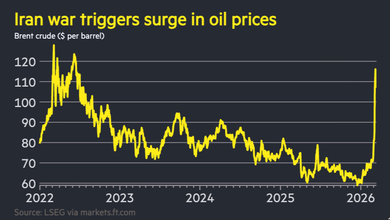
The decrease in prices in international markets is not reflected at the same pace and time in the domestic market and this leads to an increase in profit rates. The opposite happens when the price increases, when the reflection is faster, as the last few days have shown.
The same trend was observed in 2024, where some companies saw a slight improvement in profit rates in 2024. Operators again admitted that when the price is low, companies have more opportunities to maneuver with prices, since the reflection of their decline on the stock exchanges is a little slower. In 2024, prices had a downward trend, favoring importing and trading companies./Monitor