


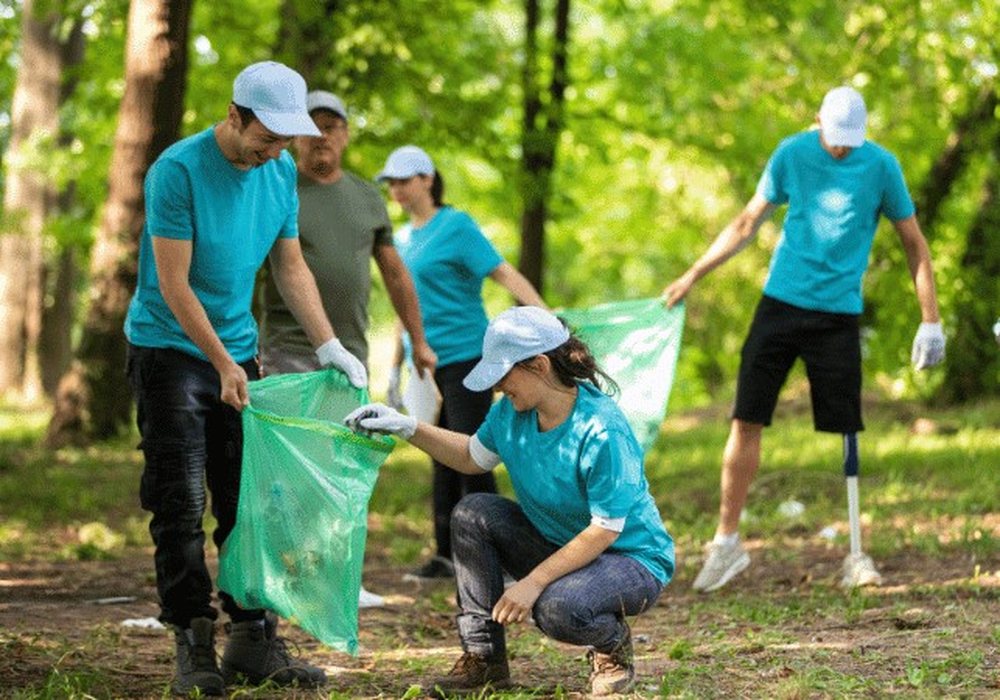
Albanians deeply lack a sense of civic engagement and volunteerism. The latest Eurostat data on citizens' participation in voluntary activities and active citizenship initiatives dating back to 2022 place Albania at the bottom of the list in Europe.
With only 1.6% of the population declaring that they engage in these processes, our country shows a very low level of community feeling and social participation compared to other countries on the continent.
This level is significantly lower than the European Union average, which stands at 12.3%, testifying to a civil society that is still poorly mobilized.
If we look at the countries of the region, Albania again lags behind neighbors like Serbia and Montenegro, which, although with low levels of 2.2%, still reflect a higher dynamic than Albania's.
The gap becomes alarming when compared to Northern European countries. Norway, which tops the list, has an engagement rate of 51.1%, indicating that more than half of the population there actively contributes to the community, followed by the Netherlands and Denmark with also very high figures.
This negative ranking for Albania shows that the culture of volunteerism and the belief in the role of the individual to change society through "active citizenship" remain major challenges.
While developed countries see volunteerism as a main pillar of social cohesion, in Albania this indicator remains minimal, reflecting the need to foster community spirit and involve young people in social causes.
But unlike other European countries, Albania has a bitter legacy of the communist system where volunteer work was compulsory. This has created a kind of syndrome towards the term volunteerism, seeing it as something without personal benefit, unlike countries like Norway or Denmark, where volunteering is seen as a moral responsibility.
Also, the low level of trust in institutions and civil society organizations makes people skeptical that their engagement can bring about real change.
Low economic status also plays a role. In a country where a significant portion of the population struggles to meet basic needs, volunteering is seen as a luxury. Individuals tend to contribute to society only after meeting their economic needs. When free time is spent seeking additional sources of income or in precarious work, the space for unpaid civic engagement narrows considerably.
Also, civic education in our education system has often been theoretical and disconnected from practice. The lack of programs that encourage students to engage in the community from an early age has meant that active citizenship is not part of the social routine./Monitor