


“This is the reason they asked him to take the exam for the Albanian language and the history of Albania,” says Ebif, proud of his son.
The father and son are part of a small community of 200 foreign nationals, most of them from Egypt and Turkey, who have worked as fishermen for years. But the Albanian they speak leaves much to be desired.
Although they have lived in Durrës for many years, few of them have had the opportunity to attend Albanian language courses. Muhamed, another fisherman from Egypt, explains with difficulty, mostly with the help of signs, that the motor fishermen will stay in the port these days, as the weather is bad. “We go out to the market,” he adds.
Another foreign community in Durrës, different from the first, has an equally difficult relationship with the Albanian language. But the community of Italian pensioners is at an advantage over the locals, who speak Italian.
Among them, Carlo Chersoni, who arrived in Durrës four years ago, is among the few Italians who has taken Albanian language lessons from a private teacher.
“It seems to me the only way to get to know the culture, traditions and customs of Albanians,” says Carlo.
He says that initially there was a greater interest, as the Albanian language course started with ten people, but after a year only three remained. Carlo admits that most of his compatriots have not shown any interest in the Albanian language.
“Maybe it's also because when we try to speak a word in Albanian, most people from Durrës respond to us in Italian,” he says.
Italian is a family language for most middle-aged Albanians due to geographical proximity and the viewing of Italian television, which served as the only window to the West in the final years of the communist regime.
The opposite happens with young Albanians, who are more connected to English.
English teacher Mira Tati says that most of her students solve third-year exercises in their first year.
Computer technology and mobile phones have made it easier to learn a foreign language, as well as their rapid employment in various agencies.
Tati adds that many boys and girls have been employed at one of the new hotels on the seaside promenade, which has a generally foreign clientele. Several foreign language learning centers operate in the city, where, along with English, interested parties learn Spanish or German, which serve as employment in call centers.
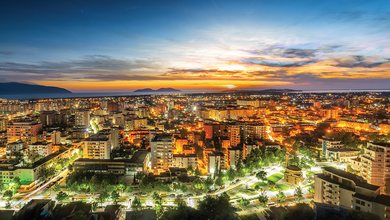
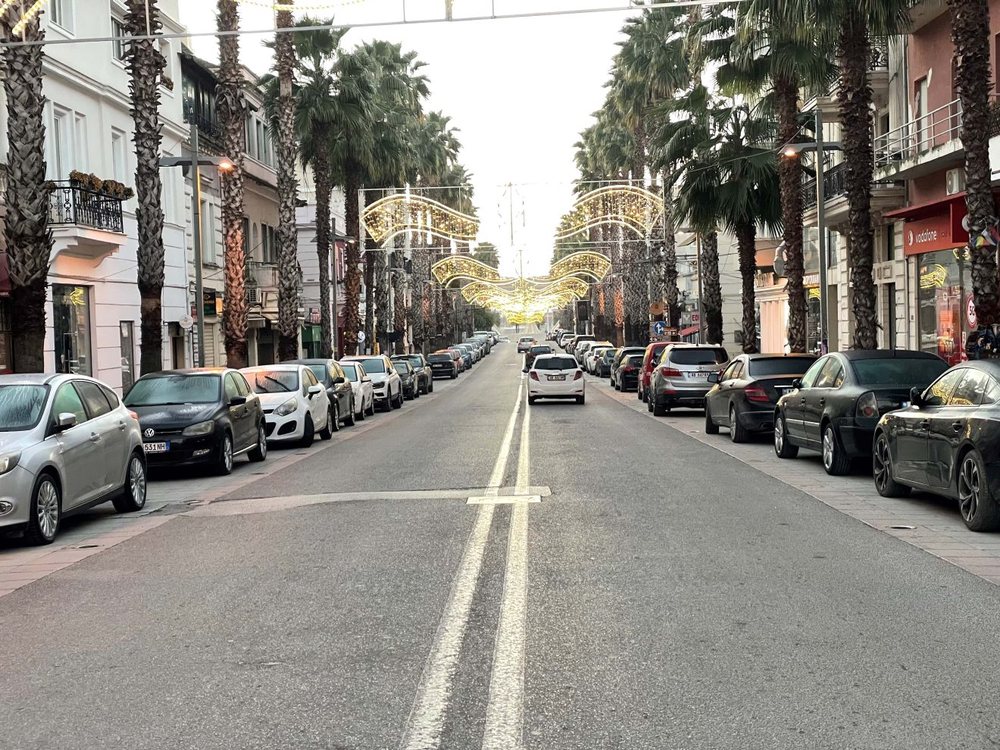
The approach of summer makes the presence of foreigners in the city more visible.
Resident foreigners are joined by tourists, who choose Durrës for a few days, while the coastal promenade buzzes with words in different languages.
"Then I remember the Tower of Babel, which, as they say, became the reason for adding to the languages of the world…," concludes teacher Tati.