


Recent events in Tirana have raised serious questions about the safety of ventilated facade technology, which, although energy efficient, are becoming channels for the rapid spread of fire. Experts explain that the use of combustible materials with a plastic core and the lack of horizontal barriers are creating the so-called “chimney effect”. This phenomenon puts the lives of residents in multi-storey buildings at risk, where the compromise with the cost of materials becomes fatal within minutes. According to experts, this is because Albania is facing a worrying legal vacuum regarding fire protection, having not yet adopted the Eurocodes that would regulate the entire construction chain and responsibilities in the event of disasters
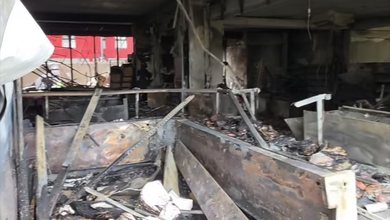
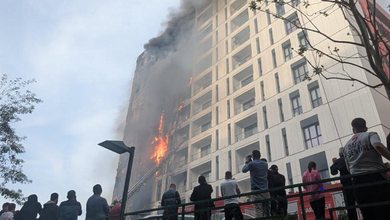
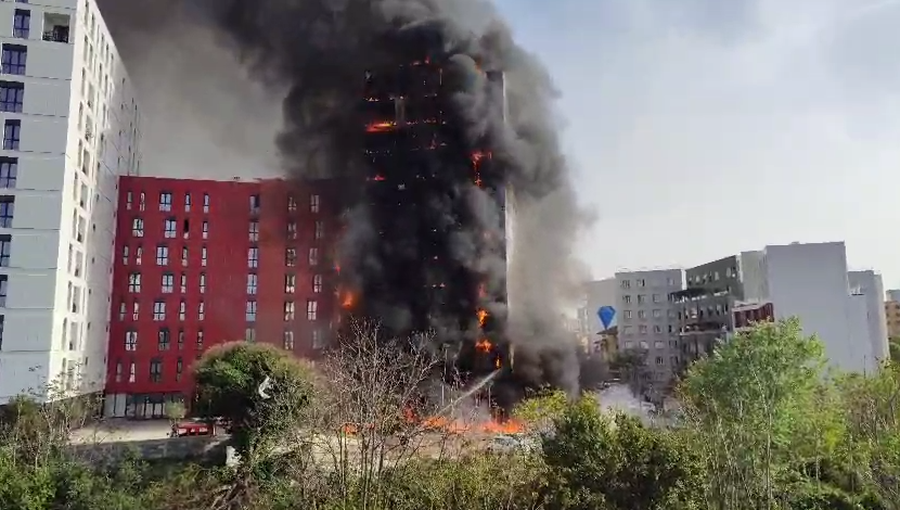
The recent event in Tirana, where a multi-story building was engulfed by a flash fire that spread very quickly through the facade, has brought the safety of modern construction technologies back into the spotlight.
Although ventilated facades are now the preferred choice of architects due to their thermal efficiency and aesthetics, they carry a great risk that can turn into a disaster if technical fire-fighting standards are not respected.
Engineer Nikolin Risilia, who specializes in fire protection systems, explained that energy efficiency policies are driving new technologies in construction, especially in facades. The old plaster or kapot system is advancing towards ventilated facades.
This type of technology, engineers explain, functions as a second skin of the building, where decorative panels are mounted on top of the aluminum or steel supporting structure.
This type of system creates an air space between the wall and the panel, which allows natural air circulation. This cavity serves to remove moisture and protect the structure from atmospheric agents, significantly reducing the need for energy during winter and summer.
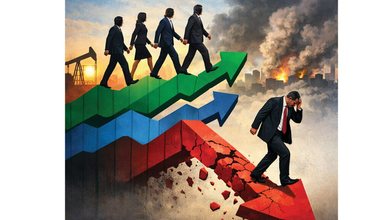
However, this very element that guarantees thermal comfort turns into a monster in the event of a fire. If the right materials are not used and the design does not take into account fire protection measures, the ventilated facade turns into a vertical propagation channel, creating what experts call the chimney effect. The burning of the building in unit no. 10 was a typical case.
The biggest challenge for the safety of these buildings is related to the classification of materials according to European standards, known as Euroclasses. To guarantee the protection of the lives of the inhabitants, it is vital that the external cladding is made of materials of class A1 or A2, such as ceramics, natural stone or fiber-cement panels, which are considered completely non-combustible.
But in Albania, standards are not regulated, says Mr. Risilia, as the country lacks Eurocodes for fire protection. According to him, these codes guarantee the entire legal chain for fire protection measures, from design, construction, materials, controls and responsibilities. Due to this lack, even when damage occurs, lessons are not learned and those responsible are not held accountable.
The builder, for example, cannot be blamed because the facade material, which is flammable, has no import restrictions and there are no laws and regulations that address measures and responsibilities. In their absence, the police arrest and prosecute people who are not the real culprits of the incident.
However, because Tirana has been in a rapid construction phase for years and, on the other hand, builders are increasingly using combustible materials, Eurocodes, laws, and regulations are urgent.
Why modern facades catch fire and how to prevent it
The European Union's 2030 targets are for 40% fewer carbon emissions and a 30% reduction in energy consumption in buildings. This policy has fueled the race towards "green" buildings. But the more insulation is added to keep heat in, the more fuel is accumulating around homes, engineers explain.
The construction sector has been identified as having the greatest potential for savings, giving rise to directives that dictate the energy performance of any new building. This has led to the massive use of insulating materials. On the one hand, we have non-combustible products, such as stone wool or glass wool (classes A1/A2), which remain the primary choice for safety, but have a higher cost.
On the other hand, our market is dominated by plastic-based materials, which, although efficient, melt and drip during a fire, escalating the situation, as in the recent case in Tirana and previous cases.
Engineers explain that modern ventilated facades in our country are fire-hazardous when compromises are made with cost, e.g. by using aluminum composite panels with a plastic core (polyethylene). These panels, classified as combustible, serve as fuel for flames, especially in high-rise buildings.
To protect yourself, you must choose the right insulation material, which in today's times is a decision that determines the fate of a building in a few critical minutes.
The use of stone wool is non-negotiable in this system, as this material has a melting point of over 1000°C and serves as a true fire barrier.
However, the final defense against the “chimney effect” we saw in Tirana lies in horizontal fire barriers, or “Fire Breakers,” experts claim. These are metal profiles or intelligent materials that are placed inside the ventilation cavity on each floor. Under normal conditions, they allow air to circulate freely, but the moment they detect the heat of a fire, they inflate or close mechanically, cutting off the path of flames to the upper floors.
The tragedy of Tirana is an example that even a ventilated facade can be just as safe, or even more resistant, than a traditional facade, only if it were treated as a complete engineering system. The biggest problem in our country is the avoidance of technical regulations for short-term gains.
The use of non-combustible materials and the installation of horizontal barriers are mandatory in the case of multi-storey buildings. Engineer Risilia says that this entire process should not be left to the conscience of builders, but codes and regulations should be adopted that oblige them to respect the standards and hold them responsible in cases where they do not respect them.
Why are house fires on the rise?
When the low temperatures peaked this winter, a series of fires in a few days engulfed several apartments in Tirana, where fortunately there were no casualties. The most serious was a few days ago in the new building in the pharmacy area 10. The Association of Fire Protection Engineers (SFPE) stated that the risk of fires in our country will increase even further in the future, as the conditions for the phenomenon are increasing.
Tirana is involved in rapid urbanization, which is not taking into account the standards with which it is built today, such as spaces, fireproof materials, etc.
Building multi-story towers further increases the risk of fires. Installing fire protection systems increases the cost of building a building by 5-10%, said Mr. Risilia.
But not all investors in the construction sector are willing to pay. That is why the developed world, such as the US and the EU, apply very innovative building codes that define fire-resistant construction measures.
In addition to construction volumes, investors are now increasingly using fire-inducing materials, such as insulated facades that often spread fire.
Now the windows are plastic, which burns faster than metal (duralumin) and generally the materials of the terraces and doors used in the construction process favor fire. On the other hand, the electrical equipment in collective housing has increased.
Increasingly, families and businesses are using tools and equipment that cause fires. There have been cases where a phone charger left plugged in has burned down a home.
Gas cylinders, stoves, and refrigerators in restaurants that are residential areas are potential hazards.
Bardhyl Gjana, who heads the fire department in Kamza, said that in 90% of cases, fires are caused by camping gas cylinders that citizens mistakenly use for cooking at home.
The situation is the same in Tirana. There are some canisters on the market that are used for quick cooking in camping, usually for tea or to heat something quickly. This type of canister has the nozzle very close to the tank and citizens often use it at home for long cooking times.
Firefighters consider the camping canister a real explosive and are calling for its import to be banned.
Challenges and urgency for fire safety reform
In the current legal framework for fire protection in Albania, there is a marked lack of a unified national code that would regulate in an integrated manner the entire life cycle of a building, from design and construction, to its use and maintenance in relation to fire safety and rescue.
The basic norms that regulate this sector today, concretized in 2015 through Council of Ministers Decision No. 626 and Minister of Internal Affairs Instruction No. 424, represent attempts to adapt foreign models, specifically British and Italian ones.
This “borrowing” from BS 9999 and DM 16 Maggio 1987 has posed a major conceptual challenge, as these two documents carry radically different philosophies on safety. Experts from SFPE Albania, a branch of the International Society of Fire Protection Engineers (SFPE), stated that while the British model encourages the use of active systems such as sprinklers and smoke ventilation to reduce the need for passive measures, the Italian regulation focuses strongly on the resistance of structures and safety distances, not making active systems always mandatory for dwellings.
This duality of different approaches and perspectives, on which our current rules are based, reinforces the necessity for the drafting of a Single National Fire Code that adapts to our specific reality and needs, the association emphasizes.
According to them, such a document should serve as a detailed legal and technical framework, precisely defining procedures for the protection of life, property and the environment. Based on the most consolidated international practices, this new code should combine clear legal requirements with high engineering standards and strong control mechanisms.
Only through such an integrated document can Albania ensure a high level of safety and full compliance with global best practices, leaving behind the current fragmentation and guaranteeing a safer construction environment for all.
In the last three years, house fires have been increasing, especially in Tirana. The increase in the flow of construction and the failure to implement a fire protection code will make fires even more aggressive in the future.
Teksa volumi i ndërtimeve po rritet me ndërtesa shumëkatëshe, me çmime si në metropolet e Europës, në anën tjetër, shteti shqiptar nuk ka ende një kuadër ligjor bashkëkohor dhe nuk ka as burimet njerëzore të trajnuara për të inspektuar, për të monitoruar dhe për të shmangur dëmet
Modeli italian, lidh incidentet me përgjegjësi penale
Italia ka revolucionarizuar qasjen e saj përmes Kodit të Parandalimit të Zjarrit, i cili zhvendos fokusin nga rregullat strikte “shabllon” drejt lirisë inxhinierike të bazuar në performancë. Ky model dallohet për një ndërthurje unike mes zgjidhjeve inovative teknike dhe një kornize ligjore jashtëzakonisht të rreptë.
Shtylla kryesore e këtij sistemi është “autocertifikimi”, ku pronari i një objekti mban përgjegjësi të plotë ligjore për funksionalitetin e sistemeve mbrojtëse çdo vit. Ajo që e bën këtë model efikas është lidhja organike me Kodin Penal.
Çdo neglizhencë apo deklarim i pasaktë konsiderohet vepër penale, duke krijuar një presion të vazhdueshëm për mirëmbajtje reale dhe jo thjesht formale. Trupa e zjarrfikësve luan rolin e autoritetit suprem që kontrollon jo vetëm mjetet, por edhe projektet teknike, duke garantuar një standard të lartë sigurie kombëtare.
Modeli Gjerman, standarde teknike të larta
Sistemi gjerman përfaqëson kulmin e saktësisë teknike, ku çdo detaj ndërtimor rregullohet nga ligjet e landeve dhe standardet e famshme DIN. Filozofia gjermane bazohet në parimin se shteti nuk mundet dhe nuk duhet të kontrollojë çdo gjë vetë, prandaj ka integruar figurën e inspektorit të pavarur të licencuar. Këta ekspertë privatë veprojnë si garantë të interesit publik, duke audituar me rigorozitet çdo fazë të projektit dhe zbatimit.
Në Gjermani, siguria nga zjarri nuk shihet si një kosto shtesë, por si një komponent integriteti i ndërtesës, ku materialet e certifikuara dhe rezistenca strukturore llogariten me saktësi matematikore përmes Eurokodeve. Ky model eliminon subjektivitetin dhe mundësitë për abuzime përmes një zinxhiri të qartë certifikimesh, që nga prodhuesi i materialit izolues e deri te certifikata finale e përdorimit.
Modeli Britanik, monitorim i vazhdueshëm
Mbretëria e Bashkuar operon me një sistem që është ndër më proaktivët në botë, i njohur si “Fire Safety Order”. Ndryshe nga modelet që fokusohen vetëm te momenti i ndërtimit, modeli britanik e konsideron sigurinë një proces të gjallë që zgjat gjatë gjithë jetës së objektit.
Pesha kryesore bie mbi personin përgjegjës, pronarin ose menaxherin, i cili ka detyrimin ligjor të kryejë dhe dokumentojë vlerësime të vazhdueshme të rrezikut. Ky model nxit përdorimin masiv të sistemeve aktive, si sprinklerët dhe detektorët inteligjentë, për të kompensuar rreziqet strukturore.
Autoriteti i Zjarrfikësve ka kompetenca të gjera për të kryer inspektime të befasishme, dhe nëse konstatohet se siguria e jetës është në rrezik, ata kanë fuqinë ta mbyllin objektin menjëherë, duke e bërë sigurinë një faktor kritik për mbijetesën e çdo biznesi.
The US model, standards and insurance as powerful levers
In the United States, fire safety is driven by a powerful alliance between NFPA technical standards and the insurance industry. This model is perhaps the most effective, as it uses economic leverage to ensure compliance.
If a building or a device does not bear the seal of certification from independent laboratories such as UL or FM, it becomes virtually uninsurable.
In a market where no bank will finance and no investor will buy an uninsured property, compliance with fire codes becomes mandatory. This system creates a common technical language used globally, ensuring that from high-rise buildings to industrial plants, the protection of life and property is guaranteed through rigorous third-party inspection and constant pressure from the insurance market./Monitor.al/