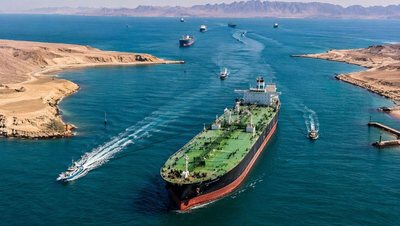


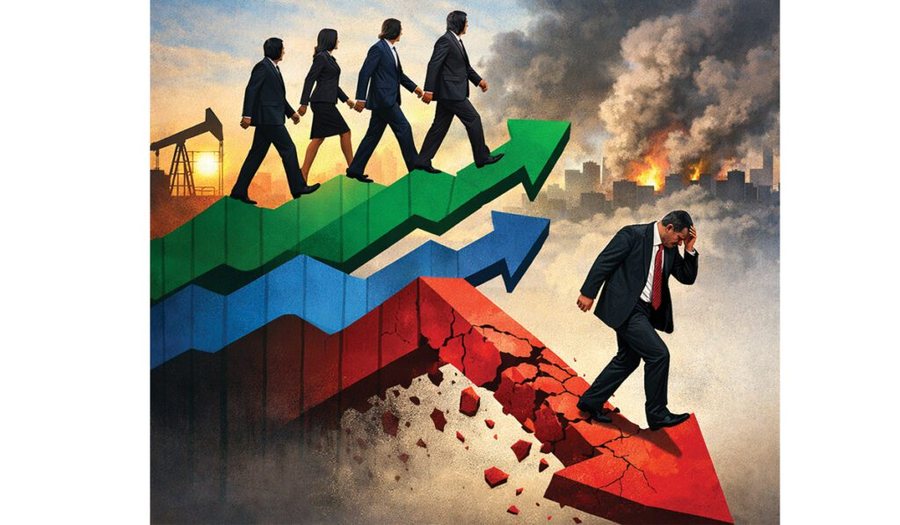
The war in the Middle East caught many governments unprepared, but not all reacted in the same way. Some chose to share the burden with their citizens. Others, like Albania, chose to accumulate all the profits in the budget.
Even countries much richer than us moved quickly to protect consumers. Germany, Europe's largest economy, approved a relief package this month that reduces energy taxes on gasoline and diesel by about 17 euro cents per liter for two months, at a total cost to the budget of about 1.6 billion euros.
The German government has explicitly requested that this reduction be passed on in full to the consumer. If this happens, a driver will save around 8.5 euros for a typical 50-liter supply. Reuters itself points out that in Berlin, the debate was not whether citizens should be helped, but how to ensure that the reduction does not remain with the oil companies.
This is the essential difference between a state that sees the crisis as an event to be managed so that it does not become just a public burden and a state that sees it simply as a source of revenue.
Even in the region, the reflex has been faster than in Albania. Serbia reduced the excise tax on oil by 25%. Montenegro halved the excise tax on oil and reduced it by 25% on gasoline. North Macedonia reduced the VAT on fuel from 18% to 10% and also reduced excise taxes.
Kosovo has imposed limits on profit margins. Bosnia, too, embroiled in procedures, has pushed forward with the reduction or temporary abolition of excise duty and the temporary suspension of customs duties on oil imports from third countries. So, almost everyone is trying to give something back to the consumer.
Albania continues to receive them. Because Albania, although it is among the poorest countries in Europe, with a per capita income of 34% of the European average, is behaving like the government of a rich country. Not like a state that should protect its citizens, but like a treasurer counting the profits from the crisis.
In March alone, according to customs data, the budget collected at least 3.3 million euros more from VAT on oil at customs, while in the final price this amount is estimated at around 4.3 million euros. At the same time, consumers paid around 11 million euros more to buy oil.
In other words, a good part of the burden of the crisis was not absorbed by the state, but was billed to the citizens, while the state also received its own commission. The government could have acted differently. The normative act for reducing the excise tax by 20% existed. But it was only implemented for five days. Only five.
Then, the Transparency Board did what it does best, not to reduce the burden, but to move the pricing methodology and keep the market below the formal ceiling of 220 lek per liter, which activates the reduction of excise duty without touching the essence of the problem. The fiscal burden on fuel remained where it was, among the highest in the region, while the citizen was left with the bill.
We don't know if it's a coincidence, but only when public transport was partially blocked, the first concession came, the subsidy of 50 lek per liter. So, not as a political choice, but as a reaction to pressure. Meanwhile, at the height of the oil price crisis, they remove the subsidy from the agricultural sector.
This is also the most important part morally. The additional money collected from VAT is not government money. It did not come from any reform, nor from any fiscal ingenuity or reduction of informality. It is money taken more from the pockets of citizens, simply because the price of the product increased.
And when an external crisis artificially inflates the coffers, the minimum expected of a responsible government is to return some of it to taxpayers, whether through temporary tax cuts or targeted support for transportation, farmers, and low-income families. This is not happening willingly. It is only happening when anger takes to the streets.
And this is not the first time. During the Covid period, Albania stood out not for the size of its support packages, but for their austerity.
According to the IMF, the first emergency package was 1.4% of GDP, while subsequent Covid-related budgetary measures remained well below developed European countries and below the average of developing economies and other countries, which reached up to 5% of GDP.
Meanwhile, Albanian citizens do not live in a wealthy country. They live in a country where prices have risen faster than in the region in terms of purchasing power, while wages remain lower than in their neighbors. This makes every liter of oil, every loaf of bread, and every bill even more burdensome. The government, however, continues to act as if the only problem is managing perception, not easing the real cost of living.
In the end, the irony is almost perfect. In Germany, a rich state behaves like a welfare state and lowers taxes to help its citizens. In Albania, a poor state behaves like the owner of a luxury that does not belong to it, keeps the additional revenue of the crisis “for itself” and leaves the bill to its citizens.
The government of poor Albania continues to ignore the situation, even though it does not have the luxury of leaving the economy alone in the face of the crisis. It's just that its luxury is paid for by people who are increasingly unable to afford it./Monitor.al/