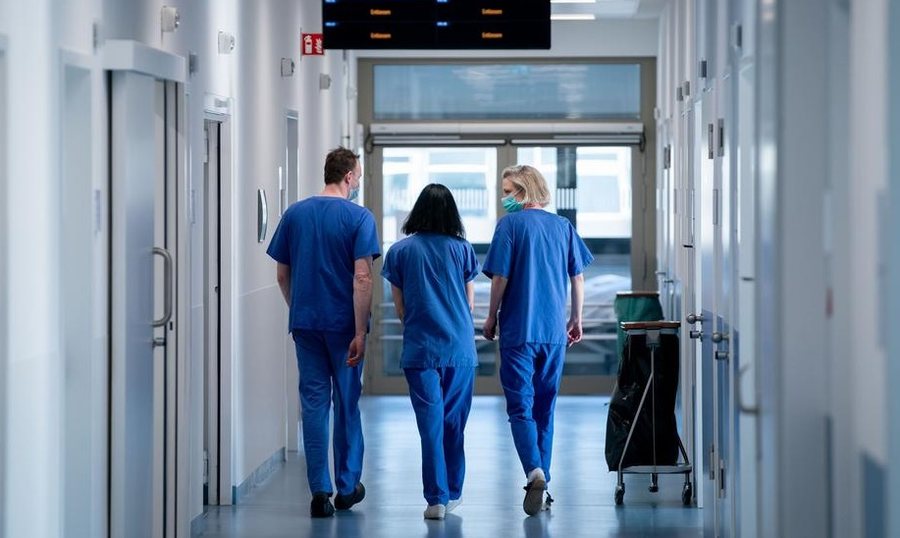
The activity of ambulances, polyclinics and public hospitals has been increasing in recent years due to the aging of the population and the increasing burden of diseases in the population, but on the other hand, spending on the health sector, both in relation to GDP and budget expenditures in general, is decreasing in the medium term.
Data in the 2026–2028 medium-term budget draft, which was recently published in the Official Gazette, shows that funds targeting only health are much lower than officially reported, because economic aid is also included within the Ministry of Health budget.
This year, the Ministry of Health's budget is around 80 billion lek, of which 53 billion lek are for healthcare functions and 27.3 billion lek are for economic assistance.
In total, the health budget this year is 3% of GDP, of which 2% is for health and 1% of GDP for economic assistance.
In 2028, the total health budget is planned at 82 billion lek, of which 29.5 billion lek are for economic assistance, accounting for 1%, and 52 billion lek for health, accounting for only 1.7% of GDP.
Data shows that the fund dedicated to health will decrease both in value and as a percentage of GDP. From 53 billion lek this year, 52.6 billion lek are planned for 2028, a decrease of 1.4%.
Data shows that the economy is growing faster than healthcare funding. This is leading to a reduction in the sector's share of GDP and pressure on the system, especially at a time when demands for public healthcare services continue to grow.
Albania remains below the average of Western Balkan countries in terms of health financing. Serbia spends around 5% of GDP on public health, North Macedonia over 4%, while Bosnia around 6%. Even countries with similar incomes such as Kosovo (around 3% of GDP) have a higher budget share than Albania. This difference is even more noticeable against the European standard, where public health budgets range on average from 7% to 10% of GDP (with Italy around 7.2%, Spain around 7.6% and Germany over 9%).
Budget data shows that as the economy grows, the government is unable to distribute it to more social services such as funding education, healthcare, and poor families./Monitor.al/