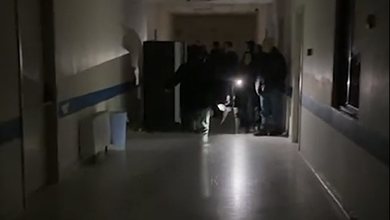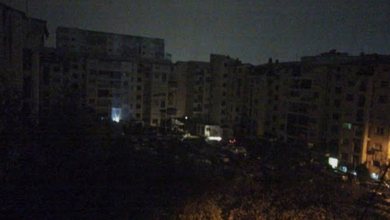



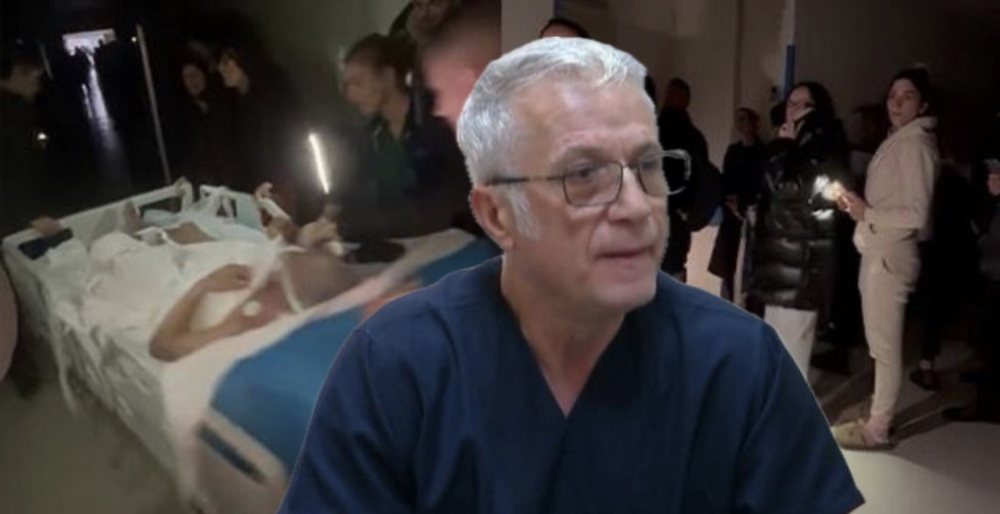
The Head of the Anesthesia-Reanimation Service at the Mother Teresa University Hospital Center, Krenar Lilaj, has reacted to the situation created yesterday evening at the hospital after the power outage, maintaining a critical stance towards the conditions in which the most vital services operate.
Referring to the loss of life of a convict who was being treated in the intensive care unit, Lilaj explained that the patient's condition was very serious from the moment of admission.
"His condition was quite serious, not only last night, but it was serious from the moment he arrived, from the day he was admitted, to undergo a surgical intervention," he said.
According to Lilaj, the patient passed away at 04:13 in the morning, while the electricity supply was restored around 21:40–21:45 the previous evening. He emphasized that the serious health condition is documented in the clinical file: the patient suffered from hepatic cirrhosis and had suffered a massive intra-abdominal hemorrhage, for which he was treated surgically.
But Lilaj's statements also highlight a serious structural problem. He acknowledged that backup power equipment has limited capacity and that consumption increases significantly when several patients are treated in intensive care at the same time.
"In conditions where you have 9 patients, the decision we made to transfer them was precisely to avoid the simultaneous decline in the functioning of these equipment, which would cause serious problems for the patients and their transportation," said Lilaj.
According to him, the "back up" devices provide power supply for medical equipment for only about 5-6 hours, a limit that, in emergency cases, makes the situation extremely dangerous.
More direct was his stance on the phenomenon of power outages in intensive care:
"How can I say that power outages in the intensive care unit are normal? My duty as a doctor is to protect the lives of the sick. My duty and that of the staff I lead."
Essentially, Lilaj's reaction goes beyond a single case and raises a clear alarm: intensive therapy cannot function with power outages and limited reserves, because every minute without complete technical safety poses a real risk to the lives of patients.