



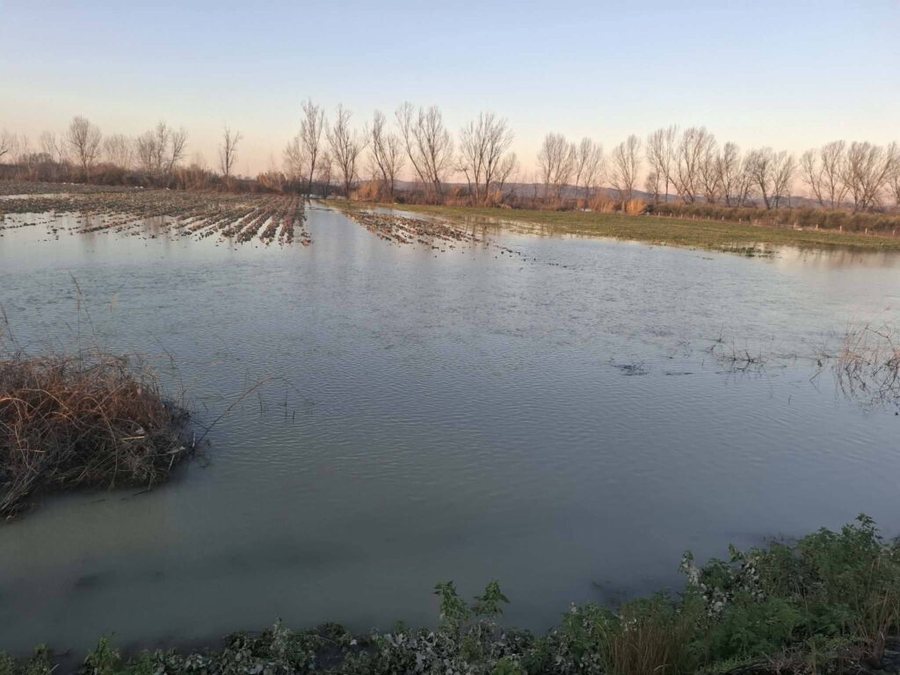
With the 2014 territorial reform, municipalities received new powers for the administration and maintenance of drainage infrastructure in their territory.
Meanwhile, the government retained rights over large collectors, strategic hydrotechnical works, and large pumping stations, as well as over national flood protection policies.
According to the Law on Local Government, municipalities have direct responsibility for the administration and maintenance of drainage canals, that is, those canals that are located within the territory of the municipality and that directly serve to protect agricultural lands, greenhouses, and residential areas from flooding.
Municipalities' responsibilities relate to periodic cleaning of canals, removal of inert materials, minor repairs, and emergency interventions in cases of intense rainfall.
Municipalities also have the obligation to plan and finance these interventions from their budgets, as well as to be the first to react on the ground when the water overflows. Local government is the link that directly faces the consequences, the farmers, and the concrete damages.
The central government, on the other hand, retains competence over the main drainage channels, large collectors, strategic hydrotechnical works and large pumping stations, as well as over national flood protection policies.
Through the Ministry of Agriculture and Rural Development and its subordinate structures, it plans major investments, finances the rehabilitation of key infrastructure, and makes strategic decisions for the management of water flows at a regional or national scale.
Duplication of competencies occurs precisely at the point where the main sewer connects to the local sewer. Experts explain that in the field, the functioning of one directly conditions the other. When the main sewer is not cleaned or does not have sufficient capacity, it overloads the local sewers, which are the responsibility of the municipalities.
Municipalities face flooding, but they lack the authority to intervene in the work that causes the problem. On the other hand, the central government often intervenes in the main canals without full coordination with local maintenance, creating a broken functional chain, experts explained.
The duplication becomes more apparent in emergency situations. Decisions to open dam gates or manage flows are made by the central government, while the consequences are borne by municipalities.
Another form of duplication is related to administrative structures. The central government, through the Ministry of Agriculture and Rural Development and its agencies, exercises technical supervision and control, while municipalities carry out field monitoring through their own structures. Instead of complementing each other, these levels often produce parallel reports and delayed reactions.
This duplication of powers directly impacts field work, while institutional responsibility is distributed between levels of government.
In cases of flooding, decision-making is central, the response is local, and the economic and social toll falls on communities. This fragmentation is why floods are often treated as natural events, while behind them lies a failure of institutions, experts explain./Monitor.al/