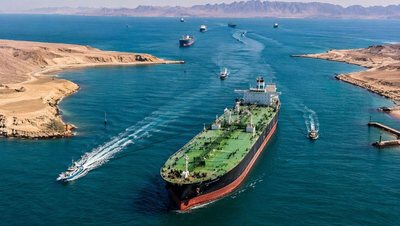




Despite its strategic importance for the EU and NATO, Corridor VIII in Albania is at risk of being completed on time and according to European standards. The failure of the tender for the Port of Porto Romano, delays in the construction of the railway and the poor quality of the road works are creating a dangerous impasse, not only in terms of time. The new requirements for military movement and speeds of up to 160 km/h require a radical transformation in roads and railways that is being neglected on the ground. Without coordination between road, energy and port infrastructure, Albania risks remaining outside the main trans-European network for many years to come. This 30-year-old project is again at risk of remaining suspended between international political ambition and domestic technical and administrative failures
As Corridor VIII has gained strategic importance for the European Union and NATO in the last two years, the failure of the tender for the construction of the new Porto Romano Port has complicated the realization of the project that has been languishing in the EU's drawers for 30 years.
The turning point of 2024, which culminated in the classification of this axis in the Extended Core Network of the European Union, increased the pressure of implementation on the ground. This new status has moved Corridor VIII from the category of regional secondary roads to that of absolute priority corridors, making it part of the 9 European Transport Corridors.
Consequently, every new kilometer of road that is built from Durrës towards the border with North Macedonia must guarantee strict speed parameters of 100 to 120 kilometers per hour for vehicles and up to 160 kilometers per hour for passenger trains, according to the standards set out in EU Regulation 2024/1679, adopted by the European Parliament on 13 June 2024. The Regulation completely revised the European Union's guidelines for the development of the Trans-European Transport Network (TEN-T).
In the same regulation in the railway sector, the challenge is stronger and requires a technological transformation that Albania has not known before. The new EU standards dictate that the railway line be a fully electrified system according to the European standard.
Furthermore, the installation of the ERTMS signaling system has become mandatory to allow train interoperability, enabling a locomotive departing from Porto Romano to arrive in Sofia without any technical obstacles or system changes at border crossings.
This also requires the infrastructure to support freight trains up to 740 meters long, which forces a review of projects to reinforce bridges and widen existing tunnels.
Corridor VIII took on a new dimension in 2024, that of security and facilitation of military movement. After the war in Ukraine, Corridor VIII was officially declared an axis of strategic importance for NATO, according to the document “Action Plan on Military Mobility 2.0” (EU-NATO).
This means that the design of works of art, such as bridges and overpasses in the new segments of Elbasan and Qafë Thanë, must be adapted to support the weight of heavy military vehicles moving between the Adriatic bases and the eastern flank of the Alliance.
This dual function, civil and military, dictates high construction parameters that seem to conflict with those that the Albanian side is implementing on the ground.
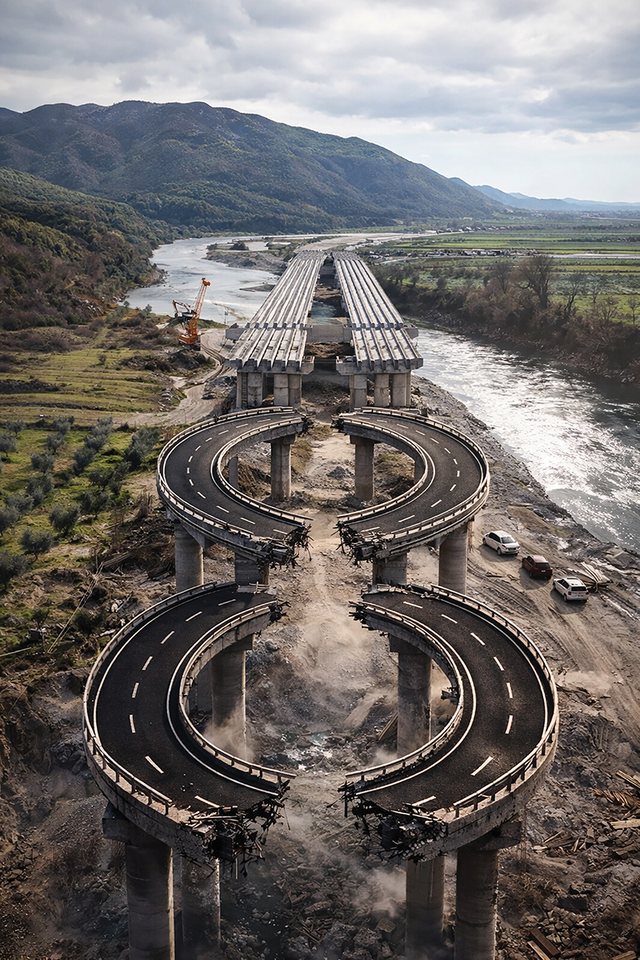
The construction of the Corridor axes in the Albanian part with river stone, with many lots and companies that are not certified for works of such importance, is compromising quality. The first signs were given in the collapse that occurred near Librazhd, as the renowned road infrastructure engineer, Faruk Kaba, raises the alarm that all road investments, including the Corridor, are avoiding basic technical standards and criteria.
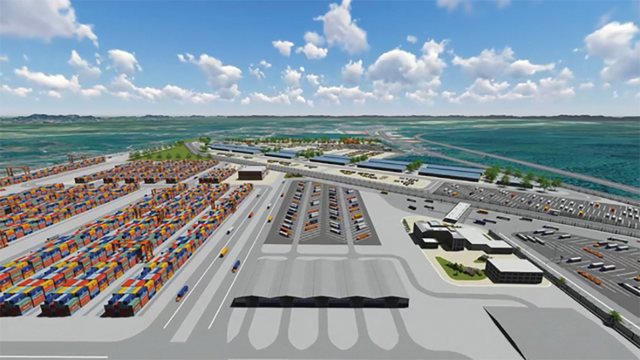
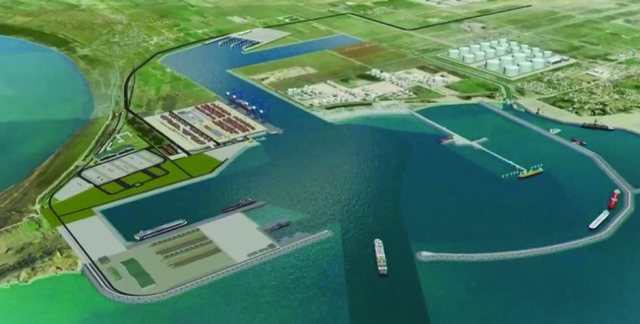
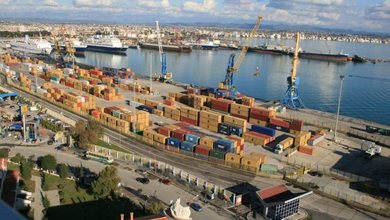
At the forefront of the problems that accompany Corridor VIII in the Albanian part is the New Commercial Port in Porto Romano, which functions as the node where the sea connects to the rails and the highway.
Economic analyses from the Western Balkans Investment Framework show that the success of the entire corridor depends on the new Port, where goods coming from the Mediterranean should be unloaded and transferred to the rail system in record time.
Any delay in integrating the port with the main axis would risk leaving Albania out of competition with other neighboring ports, says Mr. Kaba. The failure of the tender to announce the winner for the construction of the new port has created a ground for several years of delays.
Laert Dogjani, an energy expert, believes that energy corridors, unlike transport corridors, are strategic. According to him, this is how we could have pushed forward “Corridor VIII”. Many of the energy and transport corridors overlap with each other. Their joint construction would enable tremendous synergies and savings, especially if it also included the most powerful “currency” of this century: data, in the form of optical fibers and data centers.
While Corridor VIII is at its best historical moment in terms of political and economic support, Albanian authorities seem not to be giving the project the due seriousness it deserves.
The postponement of the deadlines for the construction of the new Porto Romano Port, the substandard works on the road line and the delays on the railway line, seem to be unable to meet either the standards required by the EU or the deadlines to complete the road line by 2028 and the entire corridor (along with the railway and modern ports) by 2030.
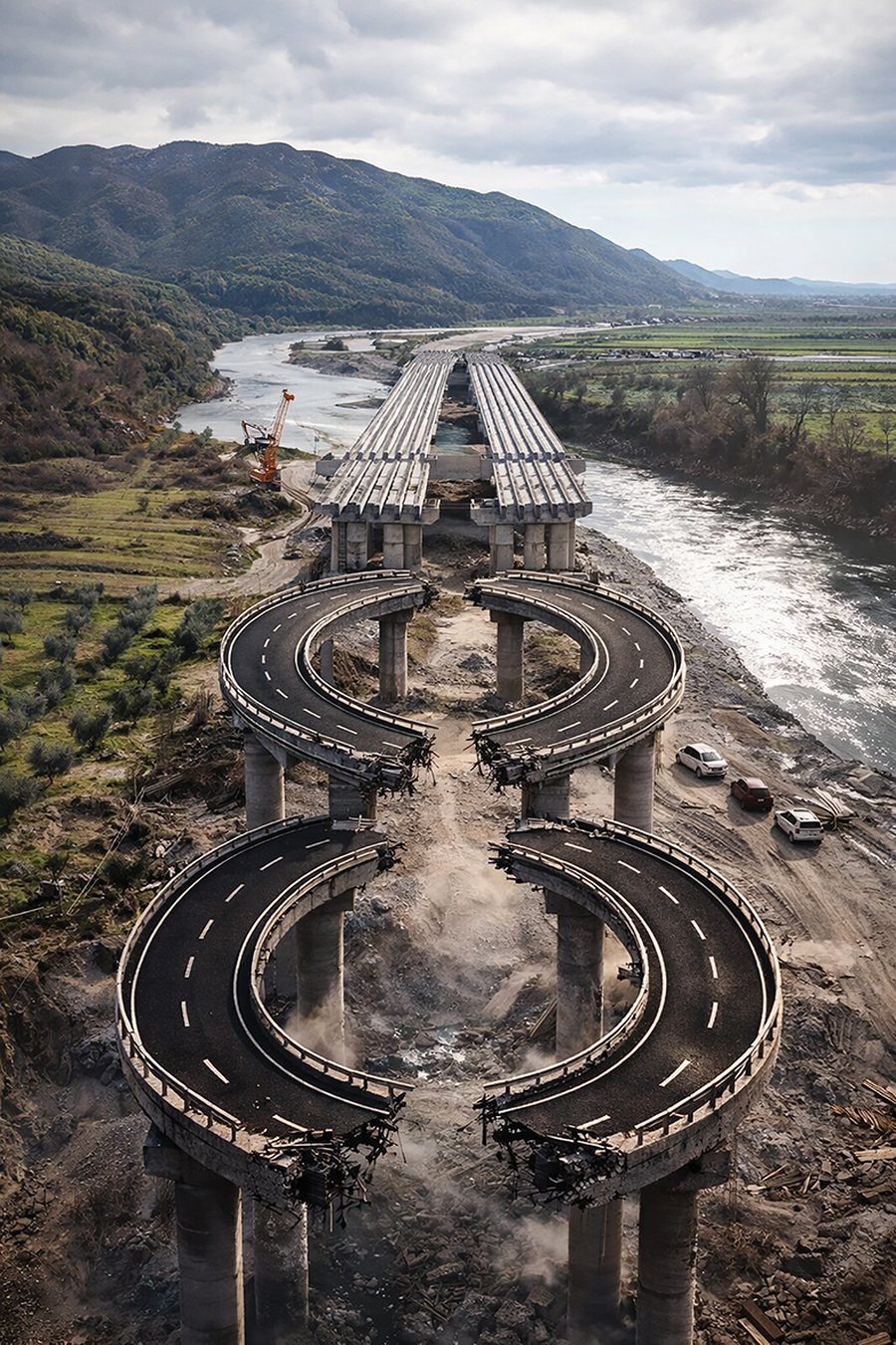
Situation of works on the road axis of Corridor VIII
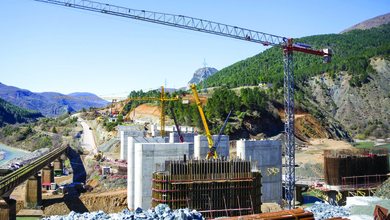
The Corridor VIII project represents one of Albania's major strategic investments, which aims to connect the Port of Durres to the Black Sea through a Category A highway with European standards and a modern railway line from Durres through North Macedonia to Bulgaria.
Official data from the Albanian Road Authority on this project shows that the main attention is focused on the Elbasan - Qafë Thanë axis, about 30.8 kilometers, which is divided into eight lots. The first lot, with a length of about 5 kilometers and a cost of 30 million euros, is being built by the company “Gjoka Konstruksion” and is in a very advanced stage, ready for traffic. The second lot, with a length of 3.8 kilometers and a similar cost of 30 million euros, is being built by the company “ANK”.
Recently, a massive slope collapse occurred in this lot, which has created difficulties not only on the new highway, but also on the old axis, affecting the normal movement of vehicles towards the Southeast. Meanwhile, the following lots 3 and 4 are being managed by the merger of the operators "Gener 2" and "GPG Company" and the company "4 AM".
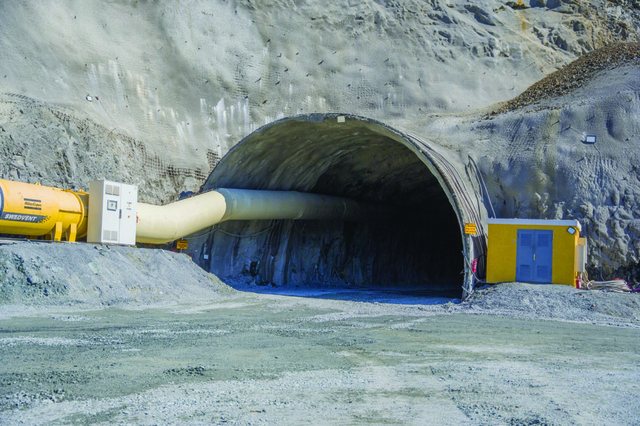
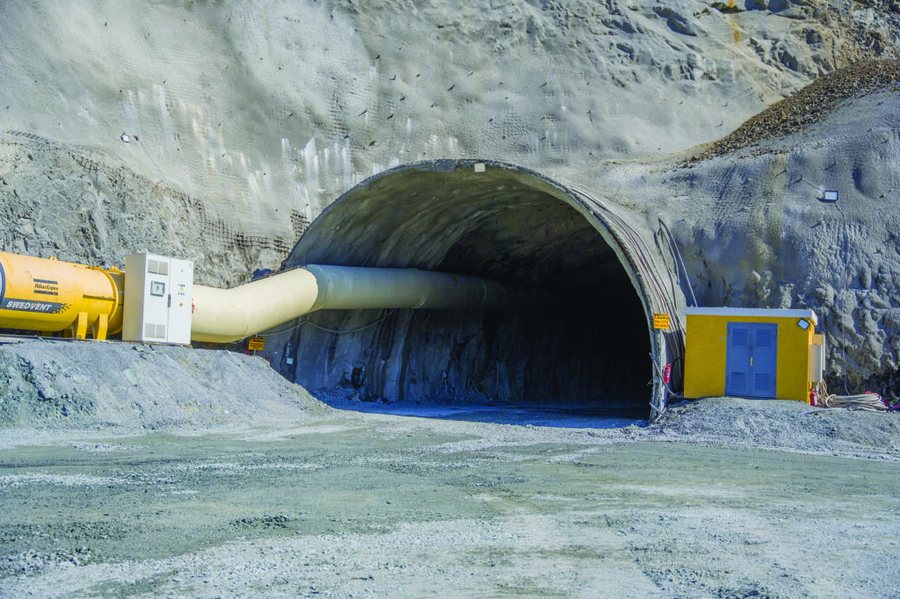
The total cost for the road section from Elbasan to Qafë Thanë alone is expected to exceed 200 million euros, but this figure is expected to increase significantly, due to the change in the new route near Bushtricë, where a joint cross-border tunnel with North Macedonia will be built.
In addition to this axis, the project also includes the Elbasan Bypass, which is a critical node that will cost around 250 million euros and will serve to take heavy traffic out of the city, connecting the highway coming from Tirana with the new section of Corridor VIII, for which work has not yet started.
Another important segment of Corridor 8 is the axis from Elbasan to Rrogozhina, specifically Elbasan - Lekaj. Works on the strategic axis Elbasan - Lekaj, as the central part of Corridor VIII, are underway for the first six lots, with the aim of being fully completed by 2026.
The first lot, worth around 2.1 billion lek, is being built by the 4 AM company, which has undertaken the road expansion and the construction of the connecting nodes at the entrance to Elbasan. This segment continues with the second lot, where the “GPG Company” company is investing around 2.2 billion lek for the base and asphalt layers, while the third lot of this area is managed by the “Gjoka Konstruksion” company with a contract worth around 2 billion lek, focusing on river protection and works of art near the Shkumbin River.
The highway route continues further westward in the Papër – Ura e Grykshit segment, divided into three other main phases. The first lot of this segment is being executed by the ANK company with a contract value of approximately 2.3 billion lek, working mainly on opening the new road body in the plain areas.
In parallel, in the second lot, the company "Vëllezërit Hysa" is managing an investment of about 2.1 billion lek for the supporting structures and drainage of the road, while the third lot, which closes this section towards Peqin, is being built by the company "2T sh.pk" at a cost of about 2.2 billion lek, focusing on connecting the highway with the existing network and secondary roads.
The delivery deadline for these first six lots has been set for the middle of this year, specifically around June, in order to facilitate traffic during the tourist season, while the last segment connecting Peqin with Lekaj is expected to be completed by December 2026.
The total cost of the works connecting Elbasan with Lekaj is estimated at around 360 million euros, which will serve as a connecting bridge with the Blue Corridor. Meanwhile, the railway infrastructure with a total investment of around 418 million euros, where work is being done on the rehabilitation of the Durrës – Rrogozhina line and the design of the extension to the border, is progressing more slowly.
Elbasan Bypass, the difficult node that is holding the Corridor hostage
The entire road axis of Corridor VIII has remained hostage to the most critical node, the Elbasan Bypass. The tender situation in this segment is a little more difficult than the other segments of Corridor VIII, as this project has gone through several study and review phases. The project has encountered delays from donors who have assessed the feasibility studies, projects and costs of the Albanian side as inappropriate.
Unlike the Elbasan - Qafë Thanë or Elbasan - Lekaj segments, where tenders have closed and work has begun on many lots, the bypass has been completed earlier and the technical project is ready.
According to the latest reports of the ARA and discussions in parliamentary committees, the project has been included in the 2026 Budget. Procurement procedures for construction are in progress. While the Ministry of Infrastructure is working on an interim solution, a short bypass to ease traffic until the full completion of the major work.
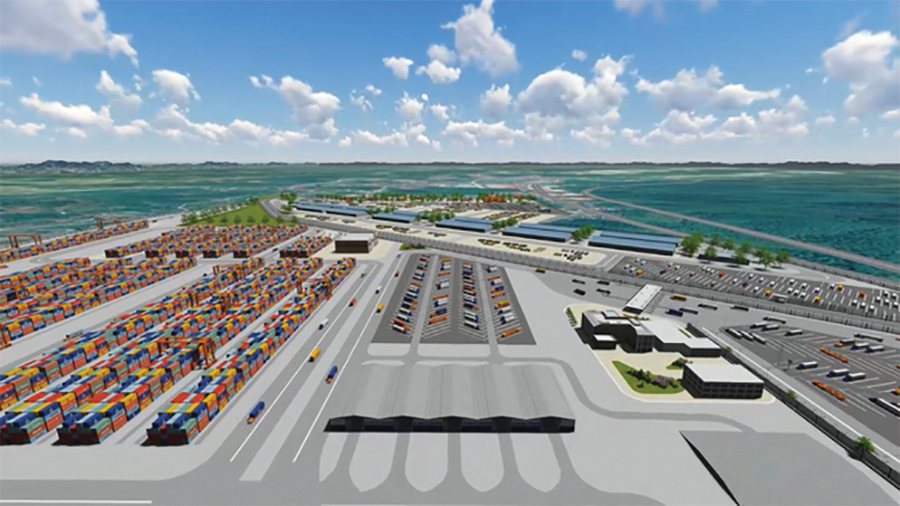
Delays for the new Porto Romano Port penalize the entire project
The failure of plans to build a new commercial port in Porto Romano seems to be sabotaging all efforts for Corridor VIII. The project was born out of a need to relocate commercial activity from the city of Durrës, paving the way for the transformation of the old port into a tourist marina, while Porto Romano was designed as a modern hub that would connect the Western Balkans with international corridors, through an integrated rail and maritime network.
The process began with great ambitions in July 2024, when the Durrës Port Authority opened the international tender for the first phase of construction with a limit fund of around 390 million euros.
Although the competition attracted the attention of 15 global engineering giants, such as Vinci Construction, Acciona, Jan De Nul and Dogus, the path to realization encountered barriers.
During the evaluation phases, most of these companies were disqualified due to technical inconsistencies or financial offers that significantly exceeded the estimated budget, highlighting a large gap between the strict requirements of the project drafted by the Dutch "Royal HaskoningDHV" and the reality of global market costs, sources from the Ministry of Infrastructure claimed.
The situation became complicated when the competition narrowed to a single remaining consortium, led by the Greek company "Archirodon", which at the end of the March 2026 deadline failed to submit a final bid.
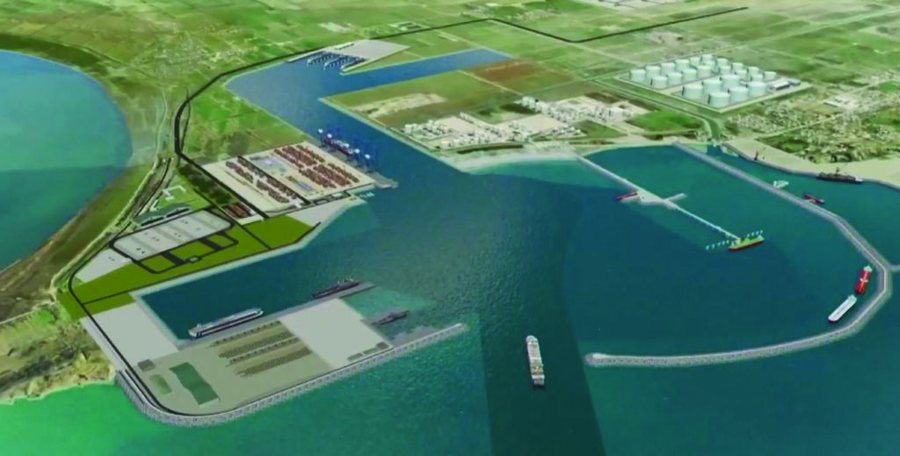
Plan “B” for Porto Romano
This impasse in the international competition for Porto Romano forced the Albanian government to move to a "Plan B", abandoning the foreign financing model in favor of direct investment from the State Budget.
This new strategy aims to divide the project into smaller lots to facilitate the participation of companies and accelerate the works, integrating within it a naval base for NATO, which gives the port increased national security importance.
While the government is trying to keep the construction deadlines alive through public financing, the entire process has fallen into the hands of the Special Prosecutor's Office (SPAK). Investigators have seized the tender documentation to verify the transparency of the procedures and to clarify whether the criteria were drafted fairly, or whether the failure of the international competition was the result of a financial miscalculation. Currently, Porto Romano remains a project at a crossroads.
Professor Faruk Kaba believes that the failure of the tender for the construction of the new port in Porto Romano represents a strategic blow that goes beyond the boundaries of the port itself, effectively paralyzing the entire operational mechanism of Corridor VIII.
This corridor is conceived as a multimodal system, where the port serves as the main pump that supplies the road and rail network with freight flows.
Without this entry point, other billions of euros of investments in highways and railway lines risk remaining underutilized assets, as the existing port of Durres does not have the processing power to feed a trans-European axis, says Mr. Kaba.
Osman Metalla, a port infrastructure expert, says that in terms of regional competition, this delay creates a vacuum that directly favors Corridor X and rival ports such as Piraeus or Thessaloniki. According to Mr. Metalla, while Corridor VIII aims to be the shortest route between the Adriatic and the Black Sea, the lack of a functional port in Porto Romano makes this route logistically inactive.
Goods that should have passed through Albania to North Macedonia and Bulgaria will continue to be diverted to existing, more efficient routes, causing our country to lose its geopolitical advantage as the gateway to the Western Balkans.
Furthermore, this failure, says Mr. Metalla, seriously undermines Albania's credibility with international partners and financial institutions such as the EU and the EBRD. Given that Corridor VIII is part of the core TEN-T network, synchronizing works between neighboring countries is vital.
Experts claim that the impact also extends to the security and defense dimension, given that Porto Romano was designed with a military component in service with NATO. The delays in the tendering process affect not only trade exchanges, but also the hosting capacities for the logistical support of the eastern flank of the Alliance.
Consequently, the full function of Corridor VIII remains hostage to this failure, turning the project from an imminent economic reality into an aspiration that requires additional time and cost to recover.
Railway, a difficult mission
The major Durrës - Rrogozhinë - Pogradec - North Macedonia railway connection project, with a total length exceeding 130 kilometers, is conceived as an integral part of Corridor VIII, being divided into three main phases that carry different engineering challenges and will likely require decades to complete, given the pace of the new Tirana - Durrës railway.
It all starts with the Durrës – Rrogozhinë segment, known as Lot 1, which serves as the connecting point. This 33.5 kilometer segment is in the most advanced stage, where after the technical study conducted by the Austrian consortium “ILF Consulting Engineers”, the international tender has been opened and the offers are being evaluated.
At a cost of 120.5 million euros, financed through a combination of European Union grants and loans from the EBRD and EIB, physical works are expected to begin this year and be fully completed in 2028, if all goes according to plan.
The route then continues to the Rrogozhinë – Elbasan – Pogradec segment, which represents the most challenging part of the entire project due to the difficult mountainous terrain in the Shkumbini Valley. To avoid the sharp curves of the old line and to guarantee modern speeds, the new project foresees the construction of many new bridges and tunnels. This engineering difficulty increases the cost of this phase to over 450 million euros.
While the feasibility studies up to Elbasan have been completed, work is underway on the detailed technical project for the remaining 79 kilometers to Pogradec.
The most delicate and critical part remains the new connection with North Macedonia, a short segment of about 7 kilometers that requires construction entirely from scratch in the Qafë Thana area.
In technical terms, this project will mark a new era for Albanian railways. Although expropriation procedures and project reviews have caused delays, this project remains the greatest promise for the integration of our infrastructure with that of the European Union.
Project-wide deadlines and delays
The Corridor VIII project extends over a total length of approximately 1,000 kilometers, creating a strategic line connecting the Port of Durres in Albania with the ports of Varna and Burgas in Bulgaria.
The project is an integrated multimodal system that includes highways, railways, ports and energy infrastructure. Its recent inclusion in the Trans-European Transport Network (TEN-T) has given it funding opportunities and geopolitical importance, and it is now considered a priority for the security of NATO's eastern flank.
In the Albanian segment, which is about 154 kilometers long, the main attention is focused on the Elbasan - Qafë Thanë axis. This section is being expanded to become a category A motorway, while work has not yet started on the important bypasses that facilitate traffic. The biggest challenge remains the railway connection.
The Albanian government aims to have most of the road works completed by 2027, while full railway integration is expected towards 2030.
In North Macedonia, the project covers about 300 kilometers and is considered the most complex part due to the mountainous terrain. Currently, through the agreement with the consortium “Bechtel & Enka”, work is being carried out on four main road sections, including the Tetovo - Gostivar and Bukojcan - Kichevo highways.
On the other hand, the railway in this country is divided into three phases towards the Bulgarian border, with the third phase (Kriva Palanka–Geshevo) being the most difficult to build. Macedonian authorities have set 2027 as the deadline for the road corridor, while the railway line to Bulgaria is expected to be ready in 2030.
The Bulgarian part of the corridor is the longest, at around 470 kilometers, and is largely finalized in terms of existing road infrastructure. According to media sources, Bulgaria is investing massively in modernizing the railway line to allow speeds of up to 160 km/h and in expanding the capacities of its Black Sea ports.
The remaining key point is the connection with North Macedonia at Gushevo, where work is underway to synchronize the rail networks. Bulgaria envisions its entire system within Corridor VIII to be fully modernized and interconnected with its neighbors by 2030, thus fulfilling the vision of a continuous bridge between two seas.
But after these initial deadlines, delays are occurring. In Albania, delays for the new Porto Romano project are undermining all investments in North Macedonia and Bulgaria, while in North Macedonia, delays are occurring in prioritizing investments towards Corridor 10. /Monitor.al/