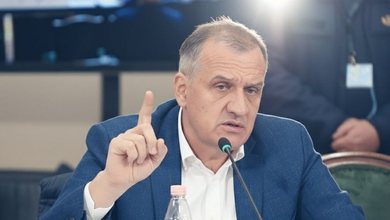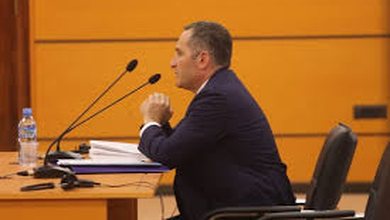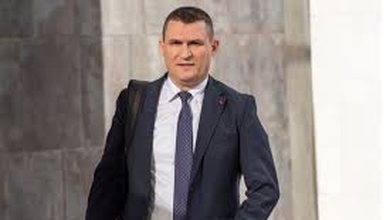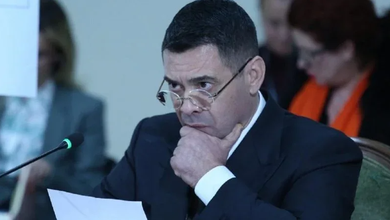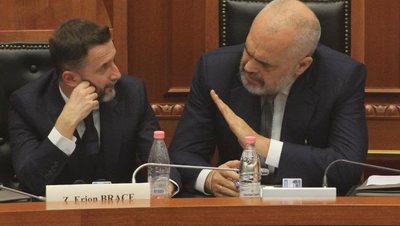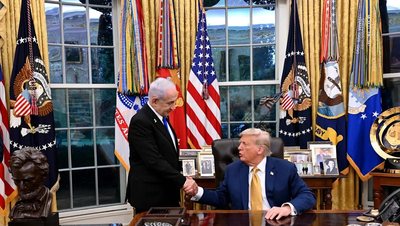



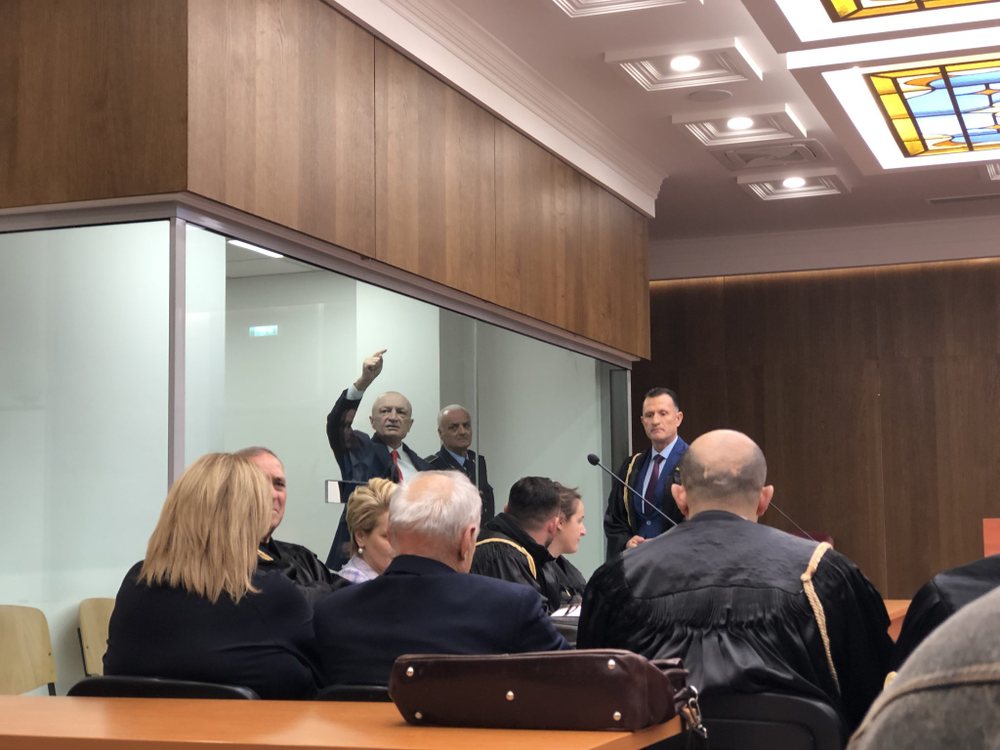
Former President Ilir Meta, Tirana Mayor Erion Veliaj, and former Deputy Prime Minister Arben Ahmetaj – all three defendants in various corruption cases – began their trials with a similar request: live streaming of court hearings.
The court partially allowed cameras in the Meta trial and rejected the request in the Veliaj case. In the Meta case, the court that allowed cameras in the first part of the process did not give any specific argument. For Veliaj, the refusal was based on the request of the two defendants who did not agree to the trial being broadcast live.
For the defendants' defense attorneys, this is a serious violation.
"All the trials since 1995, Ali's, Nano's, the trial in The Hague, all the trials are done with cameras, online. The court is going crazy, we have nothing to do," said Kujtim Cakrani, Meta's lawyer.
Even Plarent Ndreca, who represents Veliaj, insisted on live broadcasting.
"My client was elected by 160,000 citizens of Tirana and is the mayor, so everything that happens in this session should be heard. It is everyone's right to hear what happens in this judicial process," said Ndreca.
The special prosecutors did not object to the requests a priori. In the courtroom where Ilir Meta was tried, the prosecutor simply requested that the witnesses not be present in the courtroom during the trial. Even in the trial against Veliaj, prosecutor Altin Dumani said that they had no objections, but requested that the witnesses be protected.
"In criminal cases where there are witnesses, especially collaborators of justice, live broadcasts are not allowed. This does not happen in the region, nor in Europe, nor in federal courts in the US. Cameras may be allowed for some footage, but witnesses and collaborators cannot be exposed," said Dumani.
Trials of high-ranking officials are also expected with high public interest, but the treatment of witnesses in these trials keeps jurists divided.
Although live courtroom broadcasts are not common practice in lower courts, lawyers BIRN spoke to agree that there is no legal obstacle to doing so. However, they stressed that it would have an impact on witnesses and their testimony.
Lawyer Eugen Beci told BIRN that there was no reason to stop the live broadcast of the trial. “The trial should be open to cameras at all times,” Beci said.
For his part, lawyer Gurali Brahimllari, former judge of the Serious Crimes Court, says that the live broadcast of evidence harms the process and could not be allowed.
“In cases where there are witnesses, it cannot be live,” said Brahimllari. According to him, one testimony could influence another and harm the due process. But he also added that there was no reason why the part of the discussion between the prosecutor and the lawyers should not be broadcast.
Legally, court proceedings are open to the public. In practice, this means that journalists are in the courtroom to follow the proceedings, but without their mobile phones. There is no consolidated practice regarding cameras, with some cases allowing them at the beginning of the hearing and others not. Meanwhile, the regulation on communication with the media approved by the Supreme Court of Kosovo provides that the judge may prohibit the presence of cameras in the hearing only when he deems that it “affects the due process of law” or when the parties request not to be filmed.
Those familiar with the process, however, acknowledge that cameras affect the way parties behave in court and can affect the quality of the trial.
Two judges BIRN spoke to on condition of anonymity held different positions.
One of them, a judge at the Appeals Court, told BIRN that there was no legal argument for a priori rejections of requests for live broadcasts, especially when they come from defendants and the media. “In the event of a rejection, the court should not argue the reasons in an abstract manner, as the process should be public,” the judge said. She said the arguments for the rejection had to be strong, as the trial was open.
She also emphasized that the guidelines for communication with the media did not allow for a priori banning of live broadcasts, but regulated cases when the court found that the process could be influenced.
Meanwhile, another judge insisted that trials in this format risked turning into farces, with all parties being cast in the role. The judge insisted that regardless of whether the request came from the defendants, such a broadcast could harm their interests.
“The trial turns into a spectacle, when the defendant plays the role of the victim and the prosecutor becomes harsher,” he said.
"In such cases, defendants usually receive harsher sentences because the parties' behavior is influenced by being on air," he said, adding that overall this would undermine due process.
For lawyer Gurali Brahimllari, the trial is actually 'a theater' where the parties play their roles, so banning cameras should only be done for special reasons, according to him.
Brahimllari said that apart from the part when witnesses were called, or the parts regulated by law for the protection of investigative secrecy, minors, victims and justice reformers, there was no ban on broadcasting the session.
Beci also noted that beyond the procedure in trials like the one against Meta and Veliaj, both powerful individuals, there were reasons for witnesses to be protected from live broadcast of their statements. However, he said that there was no reason not to broadcast and film the parts of the trial when written evidence is reviewed, or the lawyer, prosecutor and defendant speak. /BRIN/