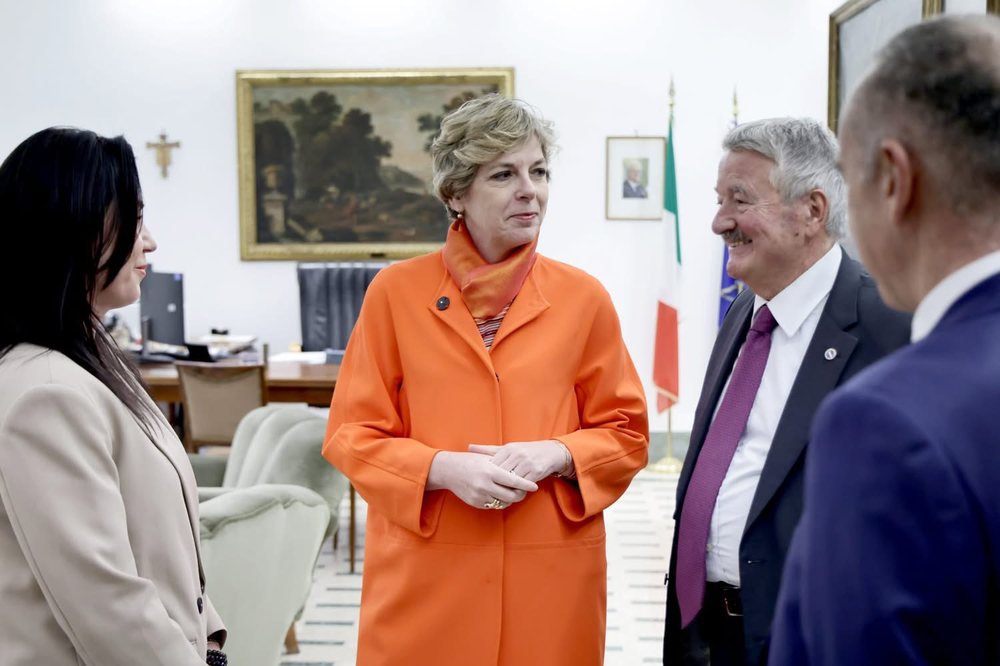
Health Minister Evis Sala, after solving the health problems, has now gone to give orientation to the Italian health system. This is the picture she tries to sell in her public appearances, while in Albania the reality of patients is completely different: cancer patients waiting outside hospitals, families wandering without hope for a treatment and a system that every day proves its limits.
Her post from the Istituto Superiore di Sanità in Rome, where she talks about artificial intelligence and the future of European medicine, sounds like a parallel reality. While there is talk of radiomics, multimodal data and institutional leadership, patients in Albania face basic shortages and a system that often fails to provide them with even the bare minimum of safety.
It is not a problem that a minister talks about innovation or technology. The problem is the brutal contrast between the image promoted abroad and the situation experienced inside the country. Instead of showing visions of European medicine, the first task should have been to see and hear what is happening in the corridors of Albanian hospitals.
With the arrogance of the government he represents, Evis Sala appears as the man who is providing solutions to the challenges of the future, while free healthcare in the country continues to be an unfulfilled promise for many citizens. And this is precisely where the question that many are asking today arises: can you talk about the future of European medicine, when the present of your system is in crisis?