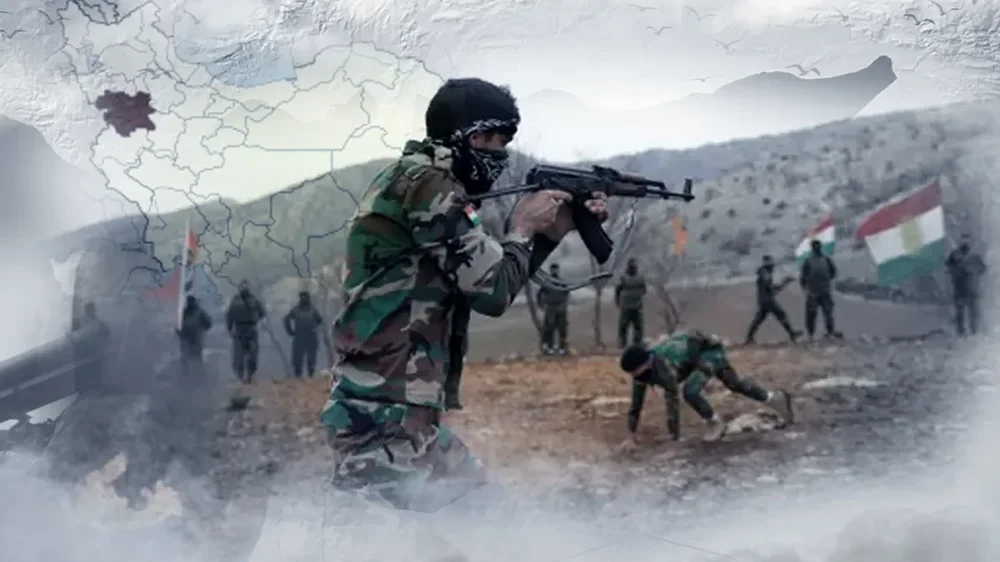
They are a Middle Eastern ethnic group with an estimated population of between 25 and 45 million people, distributed primarily in a mountainous area that encompasses parts of Turkey, Iran, Iraq, and Syria.
After the dissolution of the Ottoman Empire at the end of World War I, Western powers discussed the creation of a Kurdish state. However, this did not materialize and the territory where the Kurds lived was divided among several new states, leaving them scattered and often in conflict with the central authorities.
Today, most Kurds are Sunni Muslims, but the community is culturally, politically, and linguistically diverse. Across the region, the common demand of many Kurds has been for more autonomy, rights, and, in some cases, independence.
Kurds in Iran
Kurds make up between 8% and 17% of Iran's population, according to international estimates. The Kurdish regions in the west of the country have a long history of demands for autonomy and greater political and cultural rights. In 1946, a short-lived Kurdish state, the Republic of Mahabad, was established, which lasted less than a year before being dissolved by the Shah's Iranian forces.
Since then, several armed Kurdish groups have operated from the border areas between Iraq and Iran, opposing the Iranian government.
According to human rights organizations, such as Amnesty International, the Kurdish community in Iran often faces restrictions on the use of the Kurdish language in education, the banning of some Kurdish names in official registers, and the arrests of political activists.
Kurds in Iraq
In Iraq, Kurds make up about 15–20% of the population and live mainly in the autonomous region of Kurdistan, governed by the Kurdistan Regional Government, with Erbil as its capital.
In 2017, the region held an independence referendum, in which an overwhelming majority voted in favor of secession from Iraq. However, the government in Baghdad declared the vote illegal and the international community, including the United States, did not support it.
Kurds in Syria
In Syria, Kurds make up about 10% of the population. Kurdish forces included in the Syrian Democratic Forces have been important U.S. allies in the fight against ISIS. However, their political situation remains unclear following recent changes in power in Syria and interventions by regional actors.
Kurds in Turkey
Turkey is home to the world's largest Kurdish community, about 20% of the country's population. The Turkish government has been engaged in a decades-long armed conflict with the Kurdistan Workers' Party (PKK), a militant organization that seeks the creation of a Kurdish state. The conflict, which began in 1984, has claimed tens of thousands of lives. Turkish President Recep Tayyip Erdogan has been among the region's staunchest opponents of Kurdish nationalism.
Why are the Kurds being talked about in the context of the war with Iran?
According to US media reports, the CIA has been in contact with Iranian Kurdish groups and is considering supporting them to foment an uprising against the regime in Iran. Such a plan would require the cooperation of the authorities of the Kurdish region in Iraq to allow the passage of weapons and operations through their territory.
Analysts warn that such a development could increase regional tensions and particularly worry Turkey, which sees the strengthening of Kurdish movements as a threat to its security.