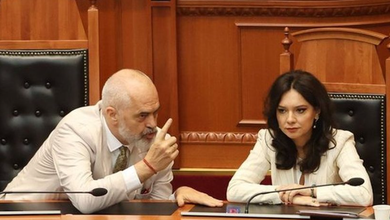


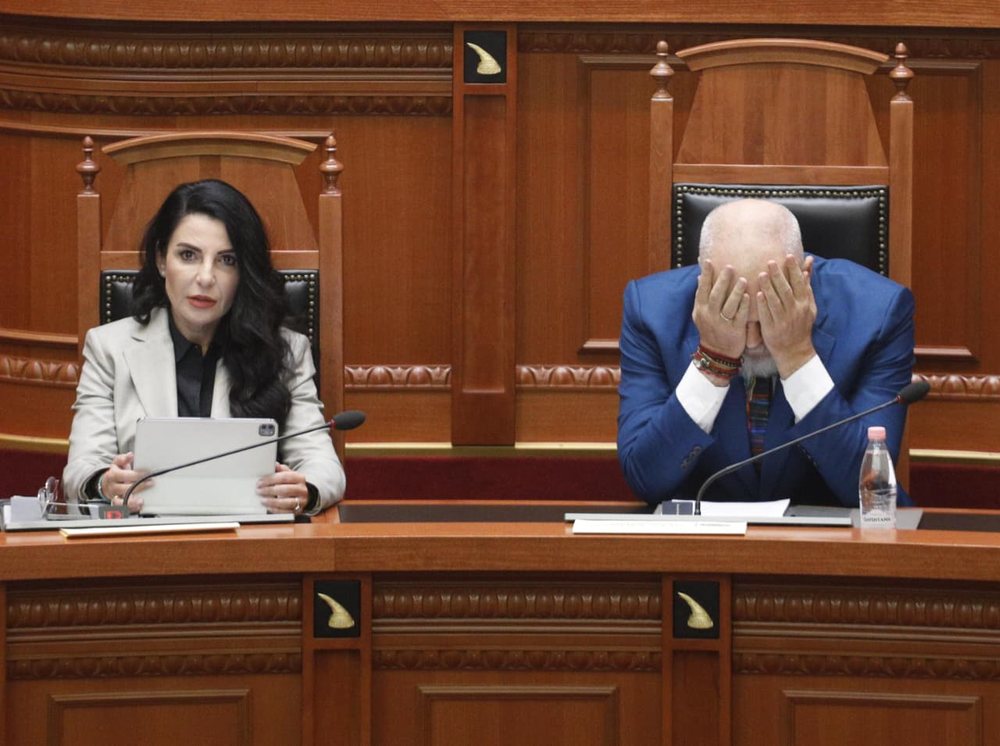
After a delay of almost 3 months, the Albanian Parliament will vote on Thursday on the request of the Special Prosecution Office to lift the immunity of former Deputy Prime Minister Belinda Balluku, accused of the criminal offense of repeatedly violating equality in tenders.
The vote is expected to be a formality, however, as Prime Minister Edi Rama and the Socialist majority announced their stance against SPAK's request to authorize an arrest warrant, offering Balluk their votes as a political shield. The votes of the Socialist MPs are sufficient to reject the request.
The expected rejection of SPAK's request, according to lawyers, risks having effects not only on the further investigation of Balluk, but also on other similar cases in the future, where subjects of the Special Prosecution Office may be government ministers or members of the Albanian Parliament.
Lawyers consider the Socialist Party's stance as political protection, which according to them risks becoming a practice for all MPs and ministers. Although the law guarantees the continuation of the Balluk investigation, for legal experts there is a risk of indirect influence on the provision of evidence and testimony.
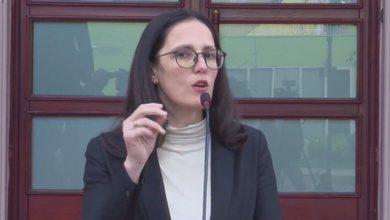
Lirime Çukaj, a criminal law professor at the University of Tirana, predicts that even in the case of failure to grant authorization, the "Balluku" case will follow its legal path towards a final criminal decision, regardless of whether or not an arrest authorization has been granted.
However, Çukaj estimates that in this case, the investigation while at large could destroy evidence if the person under investigation were to contact witnesses or make it possible to change their statements.
"...In this specific case, only this element needs to be considered, if the security measure were to be imposed for the truthfulness or obtaining of evidence, then it could harm the criminal proceedings," said Çukaj.
Lawyer Eugen Beçi also believes that the parliament's rejection of SPAK's request to arrest an MP is not simply a political decision, but could have a real impact on the progress of the investigations. Beçi also expressed concern that this decision could become a precedent for the parliamentary majority to become a political filter for investigations against senior officials.
"If the refusal is made by entering into an analysis of the accusation, it creates political interference in a process that should essentially belong only to the prosecution and the court," said Beçi.
"Although the MP no longer holds a function in the executive branch, her political and institutional status may influence witnesses, persons involved in administrative procedures or the provision of other evidence," he added, explaining that in investigations against senior officials, the influence is often not direct, but a consequence of public position.
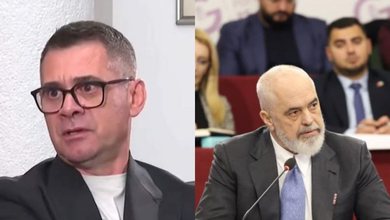
Lawyer Florian Bonjaku points out that the current provisions of the Constitution and the law do not prevent investigations due to the mandate of the MP, unlike in previous years. However, he emphasizes that in this case, rejecting the SPAK request could result in the poisoning or destruction of evidence - which would then affect the criminal investigation.
In a broader analysis, Bonjaku says that the decision on Balluk will leave its mark on future confrontations between the Special Prosecution Office and the political power.
"In practical terms, this could lead to a withdrawal of the Special Prosecution Office, as well as a greater level of caution on their part, in the sense that they would be more specific, more precise and with more organized evidence when they go before parliament to request the lifting of the MP's immunity," said Bonjaku.
Bonjaku calls the vote to overturn the removal of the deputy's mandate "a signal of strength" that politics gives to deputies to remove their fear of SPAK, now through a political shield.
In recent years, the Special Prosecution Office has undertaken corruption investigations against some of Prime Minister Edi Rama's close associates in the government, but the criminal prosecution against the government's number two marked a turning point.
Unlike other cases, Rama led a legal battle in the Constitutional Court to block Balluk's suspension from office, while his majority in the Assembly held hostage for almost 3 months the review of the request for authorization of arrest, only to then move towards its overthrow./Birn