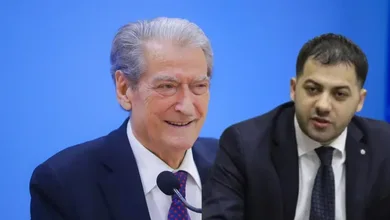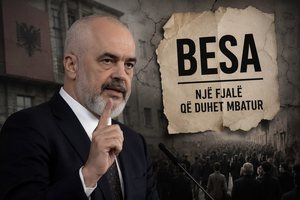


If there is another aspect that unites politicians from both sides in Albania, it is the paradox of attitudes that vary according to political position, majority or opposition. The same logic is seen today in Prime Minister Edi Rama, who won his fourth term with the promise that Albania would join the European Union in 2029. However, corruption scandals at high levels and the government's numerous problems, which the EU has clearly expressed, have forced the Prime Minister to include the opposition as the culprit for the failure to fulfill this promise.
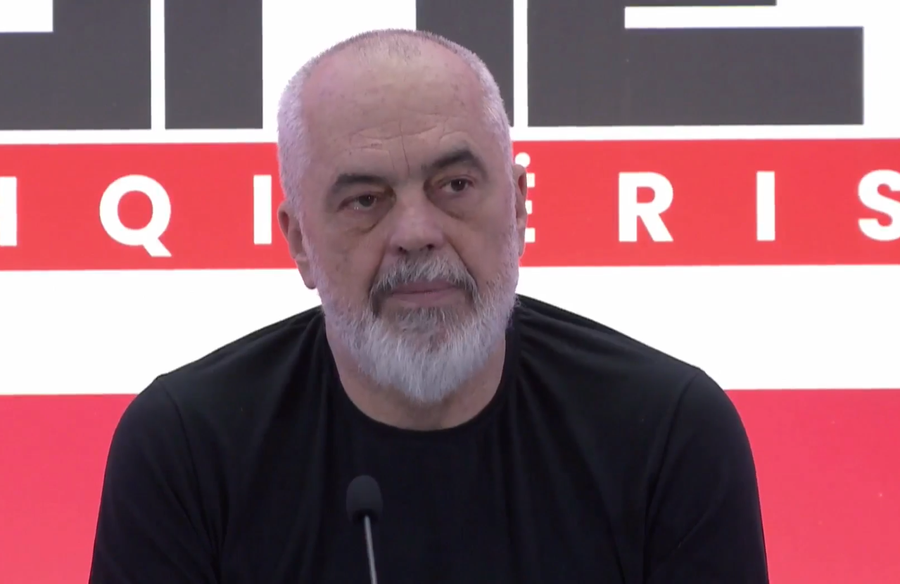
During the meeting held today at Unit 12 in Tirana with Socialist Party structures, Rama declared that in the EU integration process, the majority is "alone", while the opposition works against the national interest.
"But we need to understand that we are alone in this battle, we have bigger ones, we are the majority but alone. That others are against us and are so blind that they confuse opposition to us with the national interest and common good of the country, of our children and of those who want us to seize this moment and enter the EU."
When we look back, we notice the great paradox of the prime minister’s positions. In the period 2011–2013, when Rama and the party he leads were in opposition, the well-known impasse occurred in the Fier District Council. The election of the council’s president was fiercely contested by the then opposition (the socialist party), arguing that the majority was dominating decisions without consultation and without full legitimacy. This concern was also appreciated by the European Union, which showed reservations about opening negotiations with Albania, emphasizing the need for institutional stability and respect for the law in elections and the functioning of local councils. The impasse in Fier cost Albania time to accelerate preparations for European negotiations.
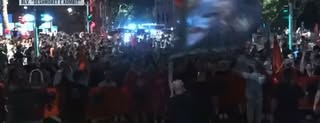
Actions against the “national interest” are not new for the current prime minister. For example, during the time when Albania was about to join NATO, Rama declared that “NATO is night” and announced a rally that was not held.
This shows that the long time in power seems to have erased the memory of previous actions, which were often more concrete than those of today's opposition.
Especially when he tries to find the blame on the weakest opposition he has ever faced, it makes it more believable that the problem lies with his supermajority, which is constantly accused of corruption.