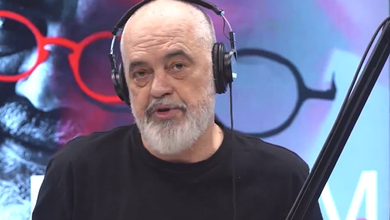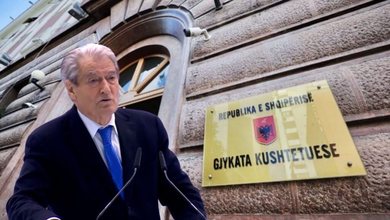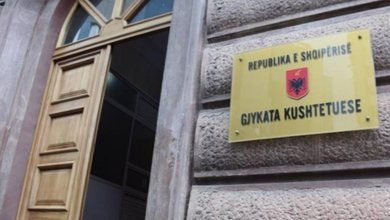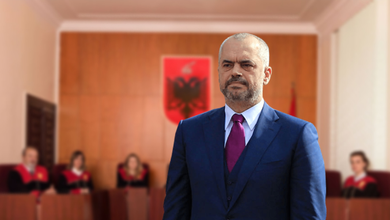




Prime Minister Edi Rama did not limit his clash with the Constitutional Court. In today's podcast, he opened a second front of institutional war, this time against the Durrës Prosecutor's Office, accusing it of what he called "the arrest mania of the new justice system."
The Prime Minister spoke in harsh tones, mocking those who, according to him, “have put their lips to the gas” after the recent judicial developments. He called the arrests “a new fashion of arrests without trial” and directly targeted the prosecutor in the case in Durres.
According to Rama, these security measures do not meet any Council of Europe or democratic justice standards. He went further, saying that the prosecutor “did not only detain himself, but everyone around him,” presenting the action as excessive, hasty, and politically motivated.
However, this rhetoric by the prime minister conflicts with a fundamental problem that remains unresolved in the "Kurum" file: none of the Turkish citizens who bear responsibility in this matter have been detained or seriously investigated.
Meanwhile, the Kurum company itself still appears unaffected by the legal consequences of this scandal, despite strong suspicions about the export of hazardous waste that was returned from Thailand.
In this sense, the criticism of the Durrës Prosecution Office is not related to the number of arrests, but to the wrong focus of the investigation: second-level individuals are punished, while the real responsible parties and the main company remain practically untouched.
Rama, on the other hand, presented this as evidence of the "deviations of the new justice system" and insisted that the government, parliament and institutions will continue the "battle for the rule of law", implying future legal changes, including the criminal code and the suspension procedure.
In the end, amidst the political tension and strong rhetoric, one question remains unanswered:
will the "Kurum" waste scandal be brought to an end, or is it being used only as a political battleground between the government and the judiciary?