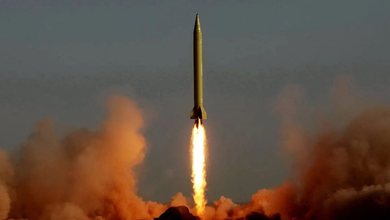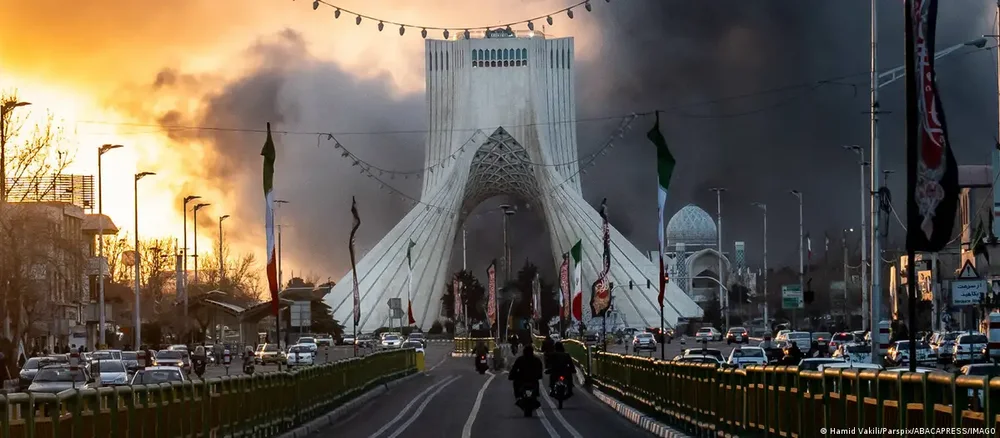
In the war with the US and Israel, Iran is largely alone. The regime in Tehran relies largely on its own missile and drone systems and refuses to surrender.
Unlike the United States, Iran was prepared for a long war, stressed Ali Larijani, Secretary of the Supreme National Security Council, on the third day of the war. Larijani thus repeated what other (still) Islamic Republic officials have declared since February 28: “We will defend ourselves, no matter the cost.”
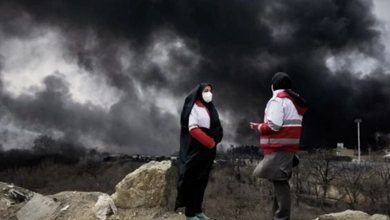
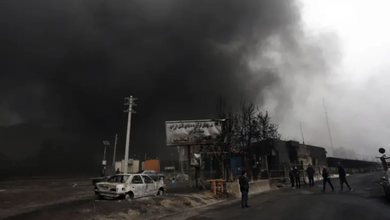
Since February 28, the US and Israel have been conducting a coordinated and massive military offensive against Iran. The attacks have specifically targeted leaders, as well as military and government facilities.
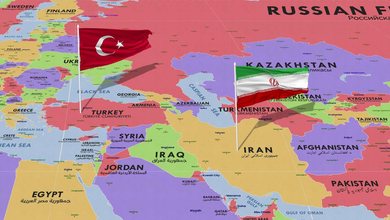
Iran is responding with missile and drone attacks on Israel and US bases in neighboring Persian Gulf countries. The United Arab Emirates (UAE) alone has reported facing hundreds of attacks from Iran.
As of Wednesday, March 4, Iran has launched more than 500 ballistic missiles and over 2,000 drones, according to Admiral Brad Cooper, head of the US Central Command for the Middle East (Centcom). He accused Iran of indiscriminately targeting civilians.
"We don't know exactly how many ballistic missiles and drones Iran actually possesses," a weapons expert, who spoke on condition of anonymity, told DW. He also reiterated a theory that has been discussed among military experts since the beginning of the war: If Iran had not attacked Israel with hundreds of missiles in October 2024 - in retaliation for the assassination of Hamas leader Ismail Haniyeh in Tehran - it would not have opened Pandora's box for itself.
The attack exposed the weakness of Iran's long-range missile program. The long-range missiles were unable to accurately hit their targets. As a result, the missile program not only lost its deterrent potential, but also crossed a psychological threshold for direct confrontation.
At the start of the war on Saturday (28.02.2026), the Israeli military estimated that Iran possessed about 2,500 ballistic missiles. In addition to the missiles launched by Iran, the number is likely to have been further reduced because many more were destroyed or buried in their storage tunnels during airstrikes by Israel and the US military.
Satellite images currently circulating online allegedly show attacks on missile bases in Kermanshah, Karaj, Khorramabad and North Tabriz. The images appear to show the entrances to collapsed tunnels of underground storage arsenals, which are said to have been destroyed in the recent attacks.
“We are also seeing that mobile rocket launchers are being pursued vigorously,” the weapons expert said. “What was very difficult five years ago is now possible thanks to technological advances. However, the question remains how many of these systems have actually been destroyed.”
However, it is not known how many missiles were taken from these depots and distributed throughout the country before the foreseeable war, or how many launchers still exist.
It is also said that Iran is able to respond flexibly to the pace of drone production. These are not large and easily visible production facilities. According to leaked Russian documents, Tehran can produce about 5,000 drones per month. The drones are launched from a simple structure that can be assembled in a matter of hours.
Producing one of these drones, called the Shahed, is expected to cost Iran a few thousand dollars. In contrast, a Patriot interceptor missile costs up to approximately three million dollars each.
According to a New York Times analysis based on verified satellite imagery and video, Iran used short-range missiles and drones over the weekend and Monday to damage structures that are part of or near communications and radar systems at at least seven US military bases in the Middle East.
The attacks on these sites suggest that Iran wanted to disrupt the communications and coordination capabilities of the US military. The US military's communications infrastructure is kept highly secret, making it difficult to determine exactly which systems might be affected.
"Iran will try to prolong the war and is playing with time," says Fawaz Gerges, professor of International Relations at the London School of Economics, in an interview with DW.
“The Iranian leadership has had time to plan and coordinate its actions. I think they are preparing for a long war.” The Iranian regime’s main goal is essentially resilience, the ability to endure in order to withstand the first, second and third blows and then continue to resist.
The brunt of the war is borne largely by the Iranian population, which is defenseless against attacks. Even if the US and Israel claim to be carrying out targeted attacks, significant collateral damage is almost inevitable in densely populated cities.
On the first day of the attacks, according to Iranian sources, a primary school in the southern city of Minab was hit. Iranian state media on Tuesday (03.03.2026) showed images of the mass burials of 168 children aged seven to 12 and their teachers. The United Nations described the attack as “absolutely shocking” and called for an investigation.
Israel denied attacking the school in Minab, which is located about 40 kilometers from the Gulf of Oman. The United States, which has several aircraft carriers in the Arabian Sea, said it would investigate the incident./DW/