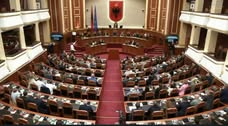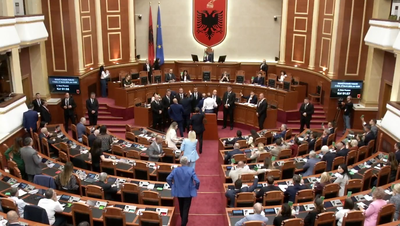



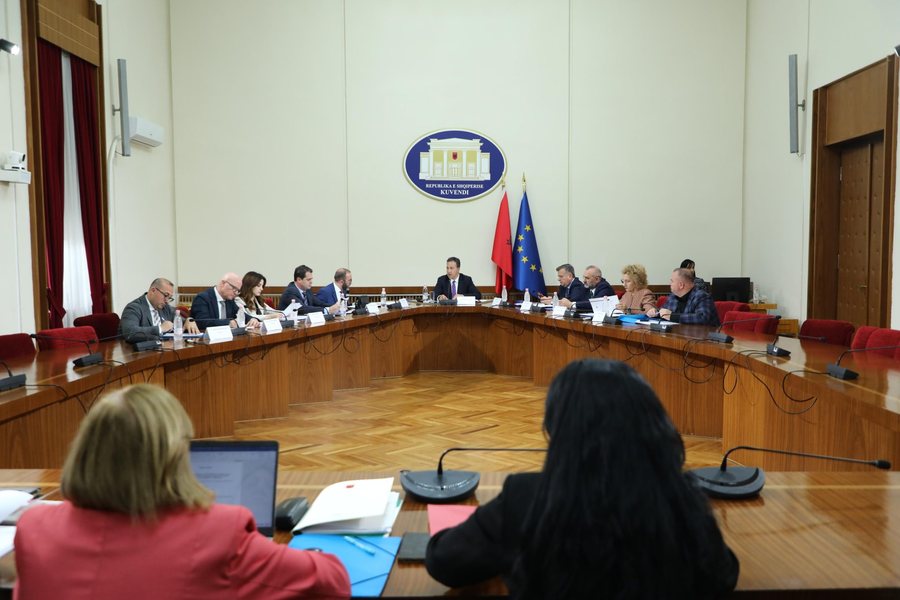
The Socialists and Democrats agreed to postpone the vote in principle on the proposals submitted by the Socialist parliamentary group and other additional amendments submitted by the Speaker of the Assembly, Niko Peleshi, and to begin discussions among themselves to move towards consensual proposals.
The Council on Rules of Procedure, Mandates and Immunity was convened under the auspices of a decision of the Constitutional Court, which overturned the parliamentary procedure by which the amendments to the Rules of Procedure were approved at the start of the new parliamentary session in September and forced the Assembly to follow a regular parliamentary procedure for the approval of the new amendments.
The Speaker of the Parliament, Niko Peleshi, suggested to the parties on Monday that they sit together to make the new changes.
"We must aim for consensual changes to the regulations, to be accepted and have the support, if possible, of all MPs, so that they have longevity," he said at the meeting.
The chairman of the Democratic Party parliamentary group, Gazment Bardhi, also requested that any new changes to this document be made with the approval of the opposition, based on the principles expressed in the Constitutional Court's decision.
"The Rules of Procedure are the act that guarantees democratic coexistence between the parties in the Albanian Parliament," said Bardhi, adding that this required that changes be made with mutual will.
In February, the Constitutional Court accepted the DP's appeal against the unilateral and unconstitutional procedure that the majority followed for the legal amendments and decided to repeal them, "due to the violation of the principle of representative democracy related to the freedom of expression of deputies."
The court justified the decision by violating the rules for calling the Assembly meeting as well as the procedure followed for approving the act under review.
The Socialists unilaterally and in record time approved new provisions affecting the parliamentary architecture, increasing the number of parliamentary committees and their names, sanctioning the accelerated passage of draft laws related to the approximation of legislation with that of the European Union, reducing the time for discussions for deputies, etc.
However, the Court assessed that the way the majority acted by approving the amendments "has made it impossible for MPs, especially those of the parliamentary minority, to freely exercise the rights that derive from their status as MPs."
The Court also considers that the opposition should have access to amendments to the Rules of Procedure, as a document that regulates parliamentary relations, and considers that the parliamentary majority should aim for "changes to be made, if possible, with a common and consensual will."