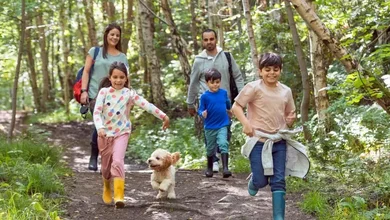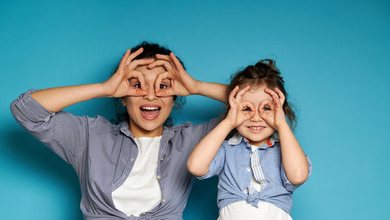



As summer approaches, many of you readers will probably have more free time to spend with the autistic person you know. So I would like to offer you ten tips to improve your relationship with less verbal autistic people like me. Of course, these are not just tips for summer and can be applied to other seasons as well. Let's get started.
We autistic people are not broken people, and above all, you are not in charge of “fixing” us by teaching us to behave like you. We are very good, but extremely different from you in the way our minds work. Finding a way to interact with us, even just a little, can be an exciting adventure.
Don't be sad or, worse, despair for us, because that convinces us that our autism is a disaster. It hurts us and pushes us towards problematic, sometimes violent, behaviors that have nothing to do with autism itself.
Slow everything down. Sometimes we understand so little of your world because so much is said, done, and happening so quickly.
Reduce your sensory impact by avoiding the use of aftershave and perfumes that are like weapons of olfactory warfare, while also avoiding shouting, wearing very bright colors, or making sudden movements.
Reflect that it is not necessary to always talk. We can also be together doing something without saying anything. In this silence, from time to time look at our bodies, because we communicate a lot non-verbally and you do this too, but if you always talk, you will hardly become aware of this.
Know that sometimes we isolate ourselves because we really enjoy being with others, but it also makes us very tired. So if we isolate ourselves a little, don't attack us with even more communication.
If a stereotype appears, don't immediately suppress it without first asking yourself if there is some sensory overload that caused it. Work on the causes, not the consequences.
Many autistic people take longer than you to understand and learn to do things. Don't be discouraged too quickly, because once we learn, we can become very skilled and often very accurate.
Autism is not just a limitation, but also a talent. Look for potential passions and talents in your autistic person and, if you find them, make yourself available to cultivate them.
Lying on the beach or in a mountain meadow, have you ever thought that this summer you could read a book that teaches you something about autism? I think you won't regret it.