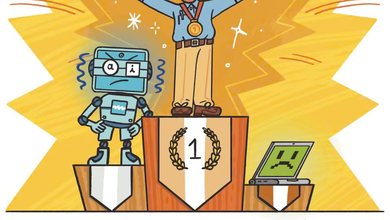




Just as GPS changed the way people navigate and search engines affected memory, scientists are now warning that artificial intelligence could have similar consequences for the human brain. New research suggests that excessive use of tools like ChatGPT could negatively impact creativity, memory, concentration, and the ability to think critically.
Experts explain that the danger lies in “delegating” mental processes to technology. Neuroscience professor Adam Green says that when people don’t engage in thinking themselves, mental abilities can fade over time. “It’s like going to the gym and having a robot lift weights for you – you don’t gain anything,” he says.
However, researchers emphasize that artificial intelligence is not necessarily harmful. According to neuropsychologist Jared Benge, it all depends on how it is used. If AI helps free up mental space for more important tasks, it can also have positive effects.
Experts recommend that users not blindly rely on AI answers, but use it as a tool to challenge their own thinking. They also suggest taking notes, solving problems without technological assistance, and leaving more room for creative thinking without the immediate intervention of artificial intelligence.
As AI becomes increasingly present in everyday life, scientists warn that the biggest challenge will be maintaining "mental fitness," to prevent technology from taking the wheel of human thinking.