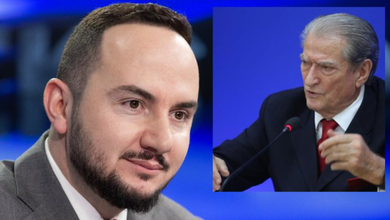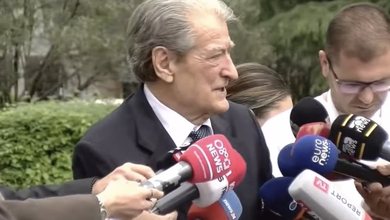



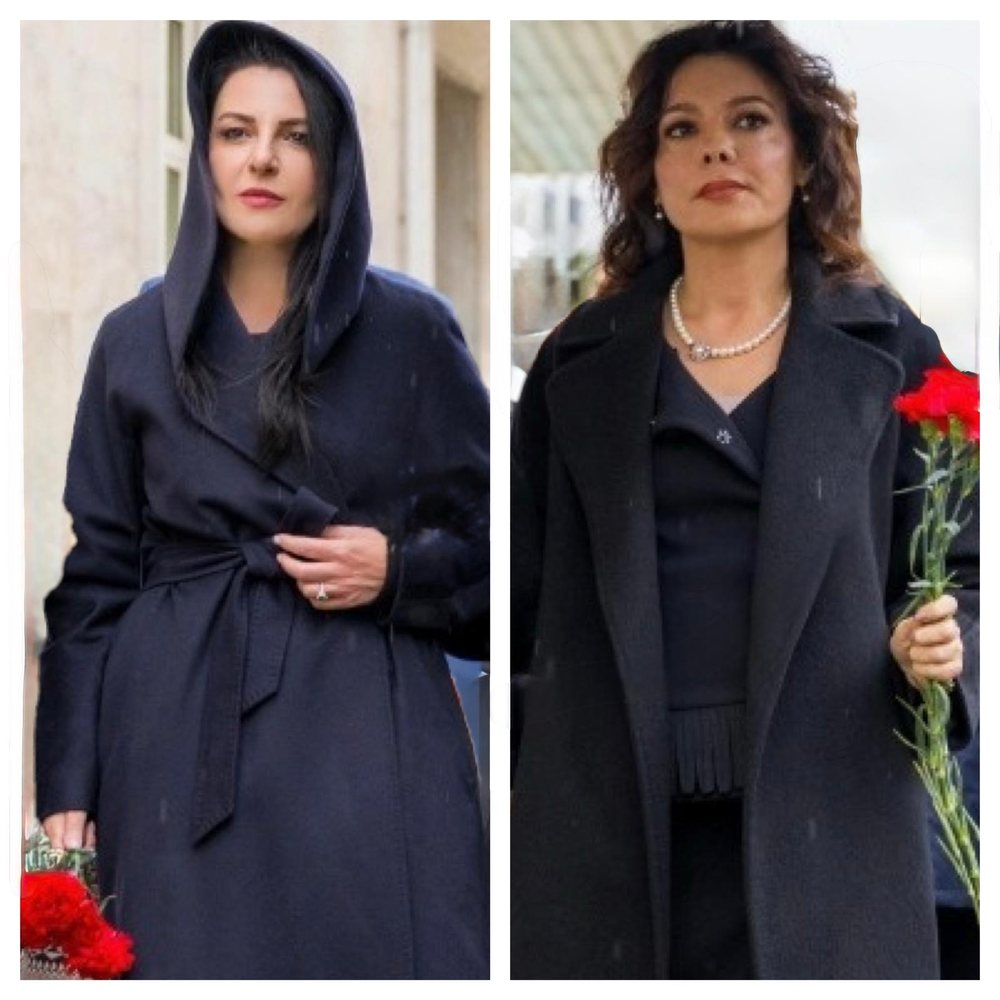
An interesting thing often happens in Albanian politics: the government starts complaining about the government. This time, this role has been taken on by the former Speaker of the Parliament, Elisa Spiropali, who in a long status on Facebook has decided to talk about what she calls a “model” gradually installed in the country. According to her, it is a system where institutions are no longer decision-making spaces, but instruments of pressure; where decisions are not made jointly, but separately; where the law is interpreted according to the need of the moment and not according to principle.
In this description, Spiropali goes even further. She suggests that state structures appointed and promoted by the same hand, preceded by portals financed with dark money, can also be used to attack family members of people who hold public office. And if such a mechanism is used against people with public protection, the question that naturally arises is: what happens to those who have no voice?
Her message has been widely read in political Tirana as a jab — albeit unnamed — at Belinda Balluku. In her status, Spiropali suggests that even people who may no longer have formal power continue to have “long hands” that influence the decision-making of the government and the Socialist Party.
So far, everything sounds like a harsh analysis of the way power works in Albania. But what makes this reaction really interesting is the moment it comes.
Because it's not about an opposition figure criticizing the government. It's not even about a political analyst describing a well-known phenomenon in Albanian politics. This time, it's one of the highest figures in the system itself who's speaking about it.
And this happens in the thirteenth year of socialist government.
But there is another detail that makes this reaction even more significant: it comes just two months after Spiropali was dismissed from her position as Speaker of the Parliament. In other words, the discovery of the “model” seems to have come not only after 13 years in power, but also after leaving one of the most important positions in this government.
This is perhaps the most ironic part of the whole story. Because the model Spiropali talks about is not a mysterious mechanism that appeared suddenly. It was built gradually over the years of governance, through the centralization of decision-making and through the creation of a system where real power often does not coincide with formal power.
In this sense, Spiropali's response is not so much the discovery of a problem as the public admission of something that many people have been saying for a long time. The only difference is that this time it is being said from within the government.
She herself states that this model not only produces injustice, but also alienation: it alienates people from politics, from faith and from the country. However, at the end of her reaction, Spiropali remains optimistic and says that the Socialist Party has the energy for improvement and transformation for the benefit of Albania and Albanians.
Here a very simple question arises: if the model is the problem, who built it? Because political models are not created by themselves. And when after 13 years of governance, people start talking about the need to change it, while this reflection comes only after a high-ranking figure leaves office, then suspicion becomes inevitable: either the reflection came too late, or the quarrels within the government have become stronger than the need to protect it.