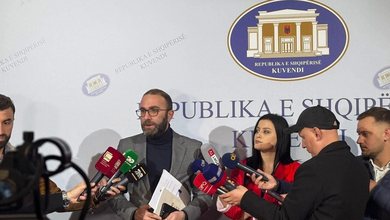



At a press conference held today, Health Minister Evis Sala was asked about the fate of the two most debated concessions in healthcare, check-ups and dialysis, which end this year and are currently under investigation by SPAK.
But in her response there was no reference to the investigations and no reflection on how these contracts have been criticized for years as examples of the privatization of public services in favor of a few companies linked to the government.
The minister limited herself to saying that legal procedures will be followed, emphasizing that the decision will be made when the contracts are completed.
"We don't need to stop the sterilization concession because it has been closed. The other two concessions that are ending this year are check-ups and dialysis. We are following, as we followed for sterilization, the legal procedures that must be followed in these cases. I cannot give an answer. The procedure will be implemented when the concession is reviewed when it comes to an end."
According to her, the only thing she can guarantee is the continuation of service to citizens.
"Will the service continue is the most important thing for me. How the service continues is for the experts to determine. The service will continue and there will be no age limit."
But this is precisely where the problem arises that was not addressed in the press conference: these concessions are under investigation by SPAK and for years have been considered models where the public health service has served the interests of contract owners more than patients.
The two names directly linked to these contracts are Klodian Allajbeu and Vilma Nushi, who have been the main beneficiaries of the largest concession projects in the health system.
Meanwhile, another fact that cannot go unmentioned is that Evis Sala, before being appointed minister, worked at Klodian Allajbeu's university, a previous professional connection that today raises questions about conflict of interest precisely at the moment when the government must decide on the future of these contracts.
Instead of a reflection on the concession model in healthcare, today's conference gave a simple message: the procedures will continue.
But the question that remains is much more direct:
when concessions are under investigation by SPAK, is the service being protected for patients or the interests of the concessionaires?