

In his new book "At the Moon's Table", Prime Minister Edi Rama has decided to re-enter the territory of personal publications. A territory he previously entered with the book "Kurbani", a work that was promoted as a political, personal and philosophical narrative about Albania and the author himself.
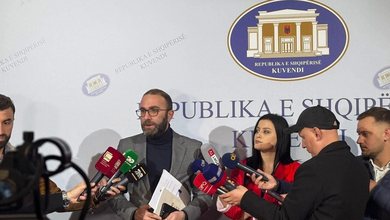
The promotion of the new book took place, as usual, in an atmosphere accompanied by his media and artistic circle. A now familiar scene, where for every new product of the prime minister - whether political, artistic or editorial - the permanent audience is always present to accompany it with enthusiasm.
In this sense, the new work can easily be seen as the continuation of a tradition that Rama has cultivated for years: politician, painter, essayist and occasionally book author. If “Kurbani” was the first chapter of this story, the new publication can be considered without much effort as “Kurbani 2”.
The irony of the moment is that this publication comes precisely during the month of Ramadan. A period of reflection for Muslim believers, while the prime minister – who often describes himself as Catholic, although he is Orthodox by origin – chooses this very time to come out with a book that refers to the symbolism of the moon table.
In political Albania, this is no great surprise. Religious identities, cultural symbolism, and public rhetoric often mix in a way that serves more scenography than theology.
After all, after Lulzim Basha and his book "My Mission", it seems that the shelves of Albanian bookstores are gradually turning into an extension of the political tribune. And in this silent competition of autobiographies and political reflections, Rama seems to have no intention of being left behind.
Whether the book will be widely read or not is a question that usually remains secondary. What is certain is that in Albania, books by politicians rarely go unnoticed — especially when the author is the prime minister himself.