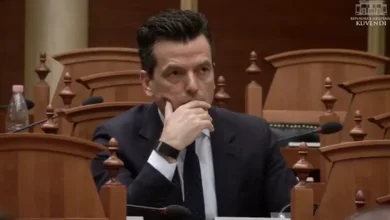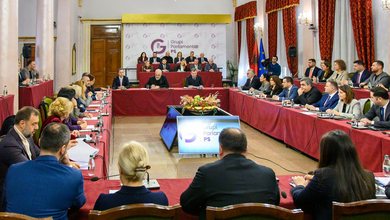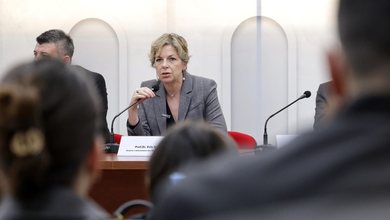



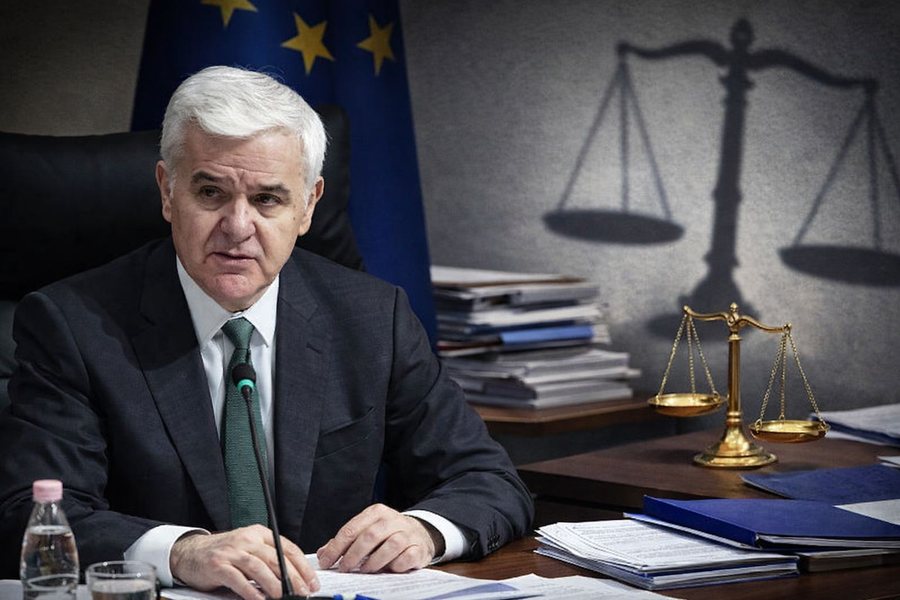
The Committee on Civic Initiatives, Cooperation and Institutional Oversight held a meeting to discuss the advancement of the process for “Strengthening Parliamentary Oversight.” The chairman of the committee, Fatmir Xhafaj, argued that this process is directly related to the recommendations of European institutions.
According to Xhafaj, the report of MEPs from the European Parliament's Committee on Foreign Affairs, subsequently adopted in the European Parliament, emphasizes the importance of strengthening parliamentary oversight.
"If we look closely at the report presented to the MEPs by the foreign affairs committee and ratified in parliament, in several of its important paragraphs the importance of parliamentary oversight is underlined. It underlines that it encourages the strengthening of parliamentary control over the executive, increased transparency and more meaningful consultation with civil society organizations, social partners and independent institutions", said Xhafaj.
But while the committee chairman chooses to quote the part of the report that talks about parliamentary oversight, another element that has been repeatedly emphasized by the European Union seems to remain outside this interpretation: the non-touching of the justice reform and the protection of the institutions that emerged from it.
In particular, the EU has been clear in its positions on the role of SPAK and the need for this institution to remain independent from political interference.
The irony is that this very institution seems to have been the source of a constant concern for Xhafaj himself.
SPAK has twice rejected initiatives directly related to the commission it heads.
The first time, when Xhafaj requested that SPAK representatives appear in his commission as part of discussions on changes in the justice reform.
The second time, just a few weeks ago, when the commission he led undertook a kind of "institutional excursion" to the courts and prosecutor's offices, with the argument that it was examining the issue of security of justice institutions.
The initiative was viewed with skepticism by some justice system actors, while SPAK refused to be part of this process.
Thus, while the committee talks about strengthening parliamentary oversight and Brussels' recommendations, it remains unclear whether this oversight is truly aimed at increasing transparency or simply paying special attention to institutions that, until now, have preferred to keep their distance from politics.
Because ultimately, oversight is a serious matter. Especially when its object is institutions that were created precisely to keep politics away from justice.