


The European Commission has stated that the Parliament should address without delay the request of the Special Prosecution Office to lift the immunity of Deputy Prime Minister Belinda Balluku.
In a response to Report TV, the EC emphasizes that the effective fight against corruption is of paramount importance for Albania's progress towards EU membership, which is also the expectation of its citizens.
"It is the responsibility of the Albanian Parliament to handle without delay requests for the lifting of the immunity of its members," the European Commission's response states.
Among other things, the EC says that in its report on Albania for 2025, the Commission noted that, while the stability of the judiciary has improved overall, increased efforts by public officials or politicians to exert undue interference and pressure on the judicial system remained a matter of serious concern.
“The Commission further recommended that Albania strengthen accountability by reducing political interference in the judiciary and prosecution services,” the EC says.
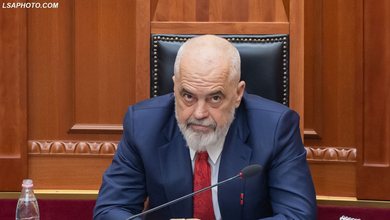
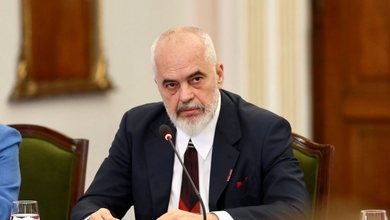
We recall that Prime Minister Edi Rama warned of a legal offensive to protect his cabinet ministers and other constitutional positions from the measure of suspension from office, while postponing the issue of Balluk's immunity, after the Constitutional Court upheld the suspension from office.
Rama also announced that SPAK's request to lift Balluk's immunity would be included in the 'Greek calendars', as according to him "there is no urgency" to address it after the Constitutional Court's decision.
EC response:
How does the European Commission assess this institutional clash stemming from the case of Deputy Prime Minister Belinda Balluku, involving SPAK, the Prime Minister's Office and the Parliament?
•It is the responsibility of the Assembly of Albania to promptly handle requests for the lifting of the immunity of its members.
•The effective fight against corruption is of paramount importance for Albania's progress towards EU membership, which is also the expectation of its citizens.
Do you think that the government's confrontation with the new justice institutions undermines justice reform and what consequences could this have for Albania?
•The EU attaches great importance to the rule of law and the independence of the judiciary in Albania, as well as the work done in the framework of justice reform.
•The European Commission monitors and reports on progress in this area in the context of EU accession negotiations.
•We will continue to closely monitor and support the consolidation of the rule of law and the independence of the judiciary in Albania, as part of the country's European integration process.
Does this institutional clash have a cost for Albania's path towards membership in the European Union?
•In its 2025 report on Albania, the Commission noted that, while the stability of the judiciary has generally improved, increased efforts by public officials or politicians to exert undue interference and pressure on the judicial system remained a matter of serious concern.
• The Commission further recommended that Albania strengthen accountability by reducing political interference in the judiciary and prosecution services.
Have there been official discussions in Brussels regarding this issue? And have you communicated with representatives of the Albanian government or justice institutions about this situation?
•EU institutions are in regular dialogue with the Albanian authorities.
• The EU-Albania Committee on Justice, Freedom and Security will take place in early March and will serve as an opportunity to continue discussions on justice reform in the country.