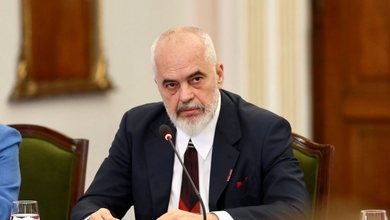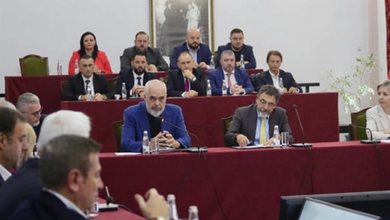




Foreign Minister Elisa Spiropali was in parliamentary committees today to present a new law on the foreign service, which she enthusiastically presented as an initiative that will brighten Albania's face and offer career opportunities for anyone, on merit.
While the document officially aims to regulate diplomatic careers, a specific point at the end of it – article 68, point 3 – is raising alarms about a possible wave of departures of professional diplomats and opening the door to pure political inflows.
Article 68, entitled "Transitional Provisions", hides in its third paragraph an obligation that could radically change the physiognomy of our diplomatic corps. According to this article, all current employees of the Foreign Service "must undergo a mandatory test to verify their abilities".
This process must be completed within 12 months of the law's entry into force.
In the text of the draft law, the "testing procedures and criteria" are not defined. They are left to a sub-legal act to be approved later. This legal "disloyalty" creates an uncertain terrain for career diplomats, since it is not known who will draft the questions, who the evaluation committee will be, and what the passing standards will be. Any diplomat who does not pass this "unclear" test risks remaining outside the system, interrupting the career built over the years.
The most critical point raised by opponents is that this testing could serve as a political filter. By removing current diplomats through a testing process where the rules are set "as the game goes," it creates immediate vacancies in the system.
"Let her be someone's wife or someone else's sister-in-law, let her pass the test and get in, this is not nepotism," Spiropali told critics today.
The draft law gives broad powers to the Minister and the Diplomatic Academy (which reports directly to the Minister) to administer these tests. Without strong legal criteria and with a regulation expected to be approved outside the attention of the Assembly, there are fears that the Foreign Service will be filled with individuals who enjoy political support, bypassing the principles of professionalism and merit that the law claims to protect.
With the entry into force of this law, the previous law no. 23/2015 "On the Foreign Service" is repealed. This legal move strips the diplomatic corps of the protection they previously enjoyed, placing them in front of a "loyalty test" disguised as a test of ability.
While the first 12 months after publication in the Official Gazette will be decisive, the question remains: Are we moving towards career diplomacy or towards an administration that changes according to the colors of power?