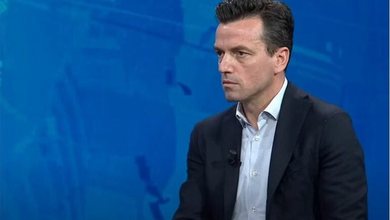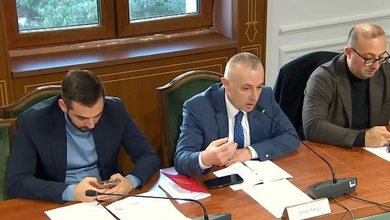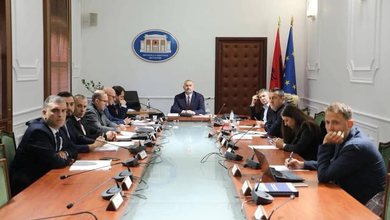



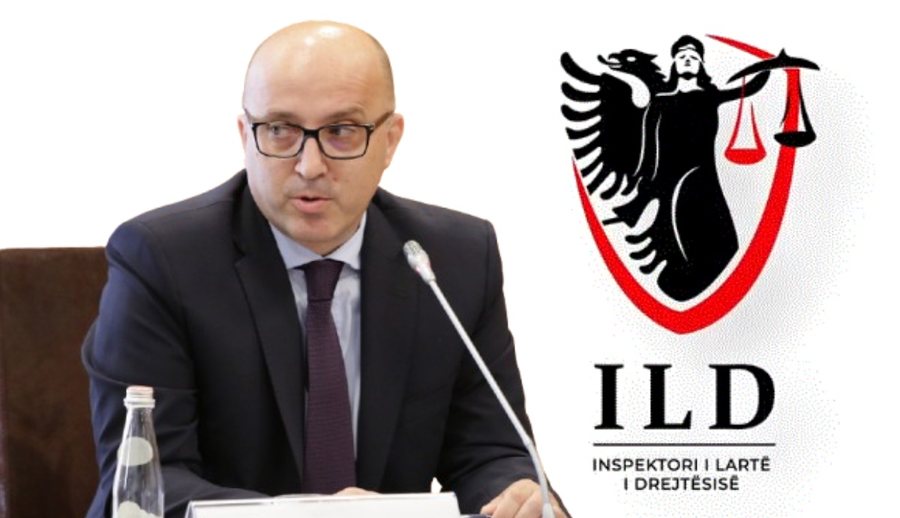
The head of the High Inspectorate of Justice, Artur Metani, spoke at length today. With tedious, polished sentences, with academic care. He spoke about constitutional balances, about professional and personal challenges, about the philosophy of an office that must maintain the balance between the independence of magistrates and the public interest. He spoke about the time it takes for principles to be tested, about the future of the system, about the rule of law that grows slowly, with patience. At the end, he also stopped to thank, with an almost ceremonial care: for Periant Teta, an inspector who worked in the archive, for the ILD team that searched for months in the archives, for the library researchers, for the pedagogue Erind Mërkuri who, out of passion for history, materialized the documents. It was a quiet moment, with the scent of old books, with archive sheets, with institutional respect and soft tones.
Meanwhile, in another Albania, far from this tranquility, the justice system for archives knows thousands of files awaiting trial and thousands of troublemakers who are waiting at the doors of the courts for justice. In Dibër, for three days in a row, a prosecutor's office head under criminal proceedings dismisses two secretaries because they had not informed him that he was under investigation. A prosecutor goes to the office himself to retrieve the materials that are being blocked. A routine procedure turns into a banal quarrel between two high-ranking state officials and there is a risk that the conflict will turn into a physical clash. Everything is thick in a peripheral prosecutor's office, noisy, without philosophy, without archives, without balance.
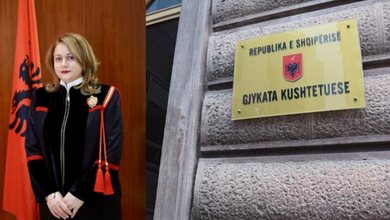
Today, in this same country, the prime minister and the Judges' Association are exchanging public accusations of executive interference in justice. Direct accusations, without metaphors, without passion for history, but with nerves, with tension, with the fear of power poking its nose where it shouldn't.
And today, in Albania, the High Inspector of Justice chose to speak about the ether, about history, about the archive. While real justice, what happens away from podiums with artificial light, continued to slide on concrete, with noise, with collisions, with its true face.
And naturally a normal mind asks: Should we export Artur Metani to some EU country, as "overqualified" for Albanian conditions? At least there he should have the opportunity to display his full intellectual capacities to talk about philosophy. Because we probably do not deserve such a capacity, as long as justice has such banal problems for such a great personality as Mr. Metani.