


By Fatjona Meidini
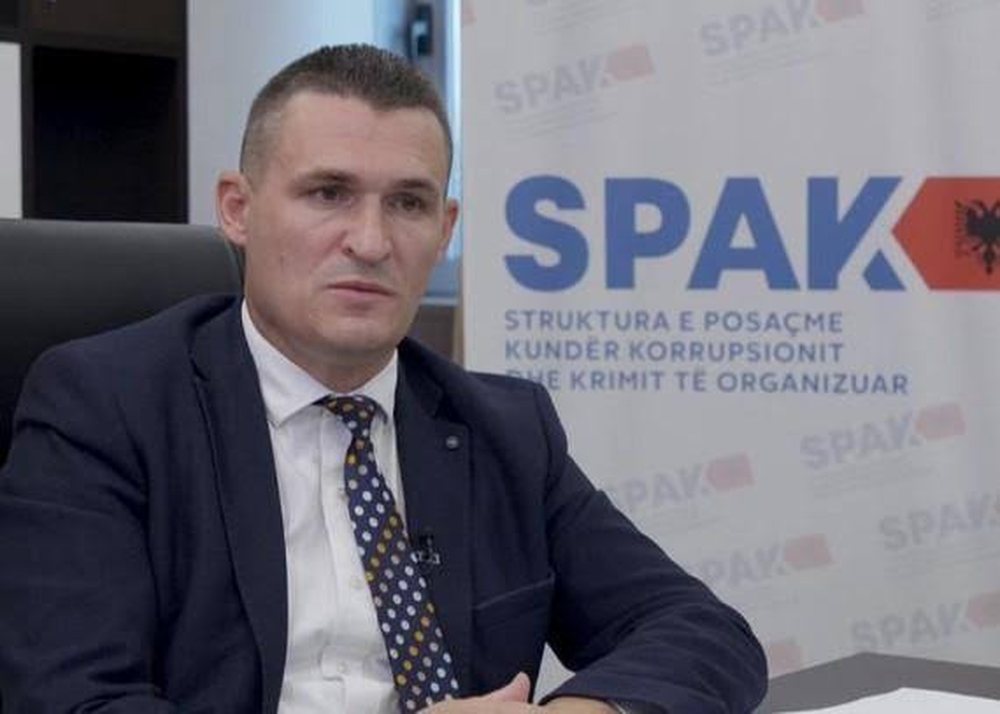
The leadership of SPAK by Altin Dumani was not a coincidence. The former Serious Crimes Prosecutor first ran for this position in December 2019, at the time of the establishment of the main institution of what was called 'new justice' in Albania.
Losing the race to his colleague, Arben Kraja, did not discourage the well-known prosecutor. Three years later, then 46 years old, he sat down again before his colleagues on the High Prosecutorial Council to present his platform again.
During the presentation, Dumani emphasized that, in the philosophy of his work, the names of those being investigated were of no importance; the evidence was the only thing that mattered.
He promised that, despite the bureaucratic aspects that the position imposed, he would sit and investigate alongside prosecutors on matters of particular importance and public impact.
Dumani emphasized that he had 23 years of experience in the field of justice and that he had held several important positions in his career. His insistence on being elected as head of SPAK did not stem from the desire to have a good job, but to fulfill a mission.
In December 2022, when he was confirmed in office, SPAK had just begun to walk on its own two feet. It finally had a building, equipment for special investigations, an almost complete structure of prosecutors and, in the process of being completed, also with investigators. It had international support and had also shown that it could hit high in the political system. But public expectations were equally high, mixed with doubts about whether its network could bear the weight of the main political actors.
SPAK, under Duman's leadership, began investigating cases that were considered inaccessible to justice, both new and old. Senior officials and the country's leading political figures suddenly became routine visitors to the blue-glass building, in front of which journalists reported every day, rushing to snatch a few sentences from them.
For three years, the investigation and punishment of corruption reached an intensity and a level never before seen in Albania.
From the request for the arrest of former Deputy Prime Minister Arben Ahmetaj; to the house arrest of the leader of the Democratic Party, Sali Berisha; to the arrest of former Minister Ilir Beqja; of former President and leader of the Liberal Party, Ilir Meta; that of Socialist MP Jurgis Çyrbja; the arrest of the mayor of Tirana, Erion Veliaj; and to the suspension of Deputy Prime Minister and Minister Belinda Balluku – not counting dozens of second-level officials, SPAK not only struck, but caused serious cracks in the wall of impunity.
In parallel, some of the most powerful Albanian criminal networks, operating on several continents, were being decisively targeted, with particular emphasis on financial investigations, but also connections with officials at all levels, including those within the ranks of justice.
Today SPAK counts around 80 investigated officials, with around half of them in court or having received a final decision. Over 10 criminal organizations and dozens of structured criminal groups with international reach have been targeted. The seizure of assets created by corruption and organized crime is now reaching the level of 100 million euros.
During his three years at the helm of SPAK, Dumani confirmed what he had promised his colleagues when presenting his platform: in his work philosophy, names were of no importance.
He could have actually led the prosecution from the comfort of investigating former functionaries and second-level officials. But he chose to strike at the heart of the government and the opposition, the most powerful criminal networks, including his colleagues within the ranks of the judiciary.
Dumani could have chosen to simply be a prosecutor, fairly distributing the workload and resources among colleagues, but he decided to be a chief prosecutor.
As he had promised in December 2022, he investigated alongside his colleagues at SPAK issues that he considered important.
This was clearly highlighted during the corruption investigation against Tirana Mayor Erion Veliaj. Dumani joined in investigating the case alongside the prosecutor, in what is considered the most powerful blow that SPAK has dealt to political power since its creation.
Dumani, during his leadership of SPAK, helped launch an avalanche on the mountain of justice, which has already increased in size, noise, and speed.
At the end of his mandate, Dumani confirmed what he had promised: that these three years for him were not just a job, but a mission.
Initially, a mission to build citizens' trust in justice. Trust in justice is often spoken of as a "return," but in reality it has never existed in Albania. SPAK, under Dumani's leadership, played a crucial role in creating this trust, which even today remains fragile and requires years and further efforts to consolidate.
He contributed to the mission to place the power of justice in balance with the executive and legislative powers. In recent years, SPAK has shown that justice in Albania may not be a byproduct or vassal of other powers, but is capable of standing with dignity in the constitutional triangle.
SPAK created an important center of power through the independence it exercised and the strong decisions it made—a role never before reserved for a judicial institution in Albania. It was loved and hated by the majority and the opposition with equal intensity. The structure was praised, opposed, lynched by politics, but at no point did they manage to intimidate or dominate it.
SPAK, in these years, contributed to improving the image of Albania. As a result of the work of this institution, the country's position has improved in recent years in every international index and report on corruption and organized crime. The speed with which Brussels officials opened all chapters of negotiations with Albania was largely motivated by the concrete results of SPAK, as well as by the created balance of powers. Foreign law enforcement agencies found there a trusted and professional partner, which they had been lacking for the exchange of information in the fight against organized crime.
SPAK, under Dumani's leadership, created a valuable legacy, not only for the justice system, but also for Albania's democratic journey. Time will tell whether this legacy will be preserved and advanced.
But the representatives of justice already have a good reference: that of one of their own who dared to use the profession to fulfill a mission.