

By Bjorn Runa
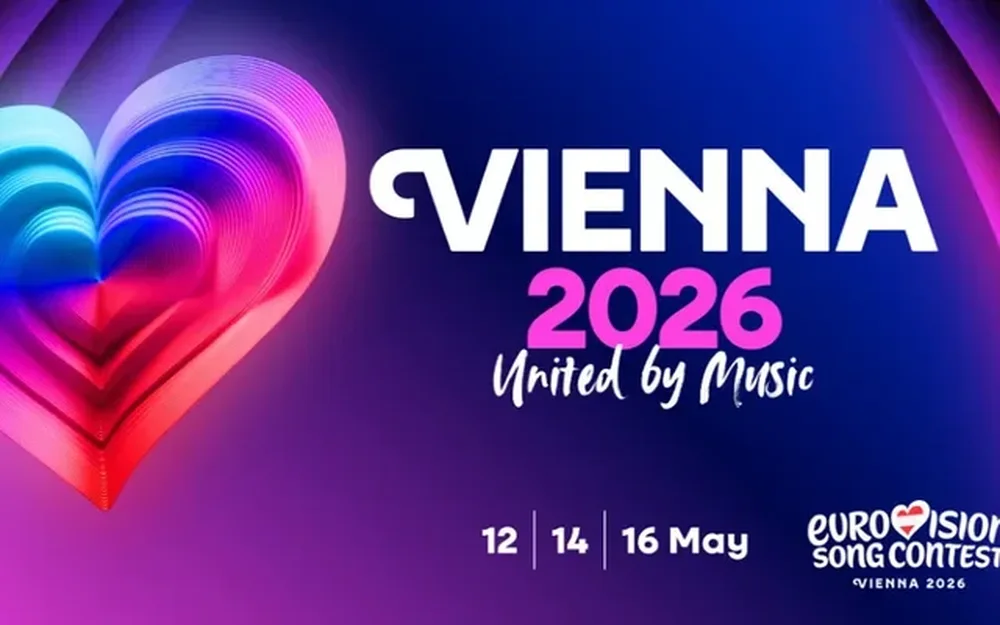
In a normal year, the Eurovision Song Contest's kitsch slogans, promoting harmony and insisting that music and art stand above politics, would perhaps have served their role as ideological noise to distract us from the reality we have been facing for several years. But this time they will sound even more grotesque than before. The European Broadcasting Union, despite the demands and protests of some of the countries participating in "Eurovision 2026", decided on Thursday, December 4, to approve Israel's participation in this competition, even though Gaza is facing such devastation that it makes any euphemism when talking about it impossible.
But, as one of the most internationally broadcast cultural events will continue its program without hindrance, while most of its self-proclaimed values have now been completely dismantled, we cannot help but wonder what exactly Europe is celebrating and what it means for Albania to step onto that stage, as if nothing is happening outside the frame that the "Eurovision 2026" cameras will transmit to our screens?
There is always a reason why people should be generally suspicious of spectacles. In most cases, they exist to distract us from the material conditions on which they are built and which they try to hide. Conditions that became quite clear for Albania a year ago, when a 2024 report by the organization Oil Change International showed that in 2023, our country was the fourth largest supplier of oil to the state of Israel, a detail that complicates our self-proclaimed claims as a small, powerless and, therefore, neutral state. We are not dealing here with symbolic gestures or rhetoric, but with the direct fueling of a war machine. The fact that oil “flows” freely from one of the poorest countries in Europe to a conflict that has produced mass civilian casualties raises questions that cannot be answered through a song festival.
And the questions are:
What does Albania's cultural participation in "Eurovision 2026" constitute in these circumstances, other than an extension of our political alignment? What does preaching values mean for a small state like ours, while we contribute to keeping a war machine in motion that flattens homes and hospitals? How long can we pretend not to see these contradictions?
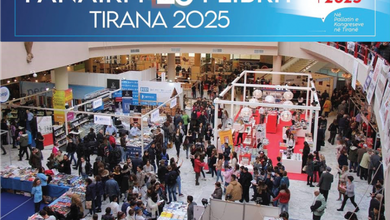
The paradox becomes even clearer if we see it alongside Albania’s role as host for the second time of the European Literature Festival, presented as a space of “bridges and arches”, a meeting point where narratives nourish the “architecture of thought”, allowing people to confront global challenges through imagination. Dozens of contemporary European authors gathered for four days in Tirana to discuss issues of migration, cultural memory, mental health, artificial intelligence, etc. – precisely the topics that Europe insists it values. But, while the description is quite elegant and generous, it forces us to raise a question that neither the organizers nor the embassies involved were and are not eager to face: What is the value of an “architecture of thought” when it leaves the architecture of power intact? Can a festival discuss the problem of migration and displacement, while Europe fortifies the borders that create this problem? Can a festival discuss war, as Gaza is being wiped off the face of the earth in real time, broadcast 24 hours a day on our phone screens?
FELT invited us to examine the fractures of the world we live in, but the institutions that welcomed it were careful not to name the hand that continues to deepen these fractures, turning this literary festival into a moral test where consciousness can grow, but not to the point of touching the real structures of power. Meanwhile, Albania, as always eager to appear as culturally sophisticated as possible, adhered to this paradox in the best possible way. During the day, we held panel discussions on identity, displacement, conflict and care, while in the evening we continued preparations to participate in a musical spectacle whose existence depends on ignoring all these issues.
Now, we have never stood out as a place for political independence. As a peripheral state, our instinct is to align ourselves in every historical period with the strongest, from Istanbul to Vienna, Moscow, Beijing, Washington or Brussels, and to present strategic subjugation as moral clarity. But Gaza complicates this complex. In its case, there can be no talk of innocent rhetorical neutrality. There can be no talk of denial, when the evidence of Albania’s material and moral involvement is already apparent.
So, at this point we must ask ourselves: Does Albania have the luxury of being more fearful and timid than countries that have much more to lose? When countries like Ireland, Spain, the Netherlands and Slovenia decide to withdraw from the 2026 edition of Eurovision, what does the fact that Albania refuses to even consider boycotting it tell us?
It is tempting to imagine Eurovision as a harmless entertainment spectacle, when its ideological role is quite important, since it projects a Europe exactly as it wants to be seen (peaceful, united, benevolent), when in fact it is the complete opposite of them. However, this time the spectacle seems to be unable to absorb the crisis. The boycott by four countries has also highlighted the political architecture of the festival. Today, the participation of any country, more than a matter of tradition, is an attempt to help rebuild the illusion of a united and principled Europe… Something that for the European Broadcasting Union seems to be no more important than the deaths of civilians in Gaza, but what value does it have for us?
To be clear, no one is so delusional as to think that Albania's boycott of Eurovision will change the policies of the state of Israel, or that it will kill the cowardice of Europe. In fact, even a total boycott of this spectacle would not achieve these two goals. However, our boycott may achieve a more modest and sincere result, by avoiding participation in a spectacle that has begun to collapse under the weight of its own contradictions.
Moreover, with the departure of Ireland, Spain, the Netherlands and Slovenia, a boycott by Albania would be part of the new coalition that is emerging and that refuses to allow Europe to promote harmony and unity at the cost of death. Participation, on the other hand, implies indifference and ignorance of reality. Although neither – boycott nor participation – will change the world, at least a boycott helps us avoid the absurd behavior of a state that pretends not to know what it knows well enough.
Albania cannot stop the war in Gaza or anywhere else, but today it is faced with the simple question of whether a country that has materially supported Israel's war machine should take to the stage of "Eurovision 2026" to sing for peace? If our culture has any dignity left, the answer to this question should be more than clear.
Sometimes, the only clear stance is to step away from the spotlight, so that the performance can continue without us, allowing silence to transmit what Europe refuses to hear.