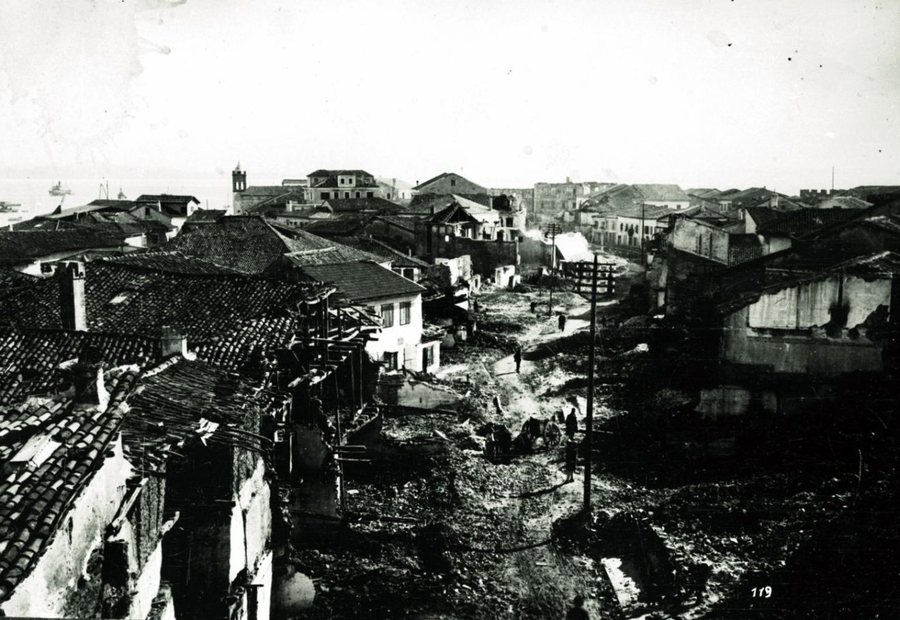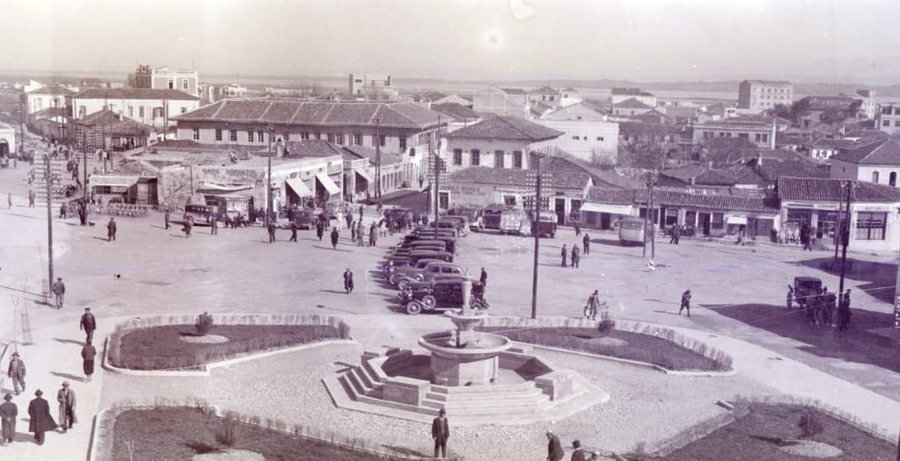
Durrës is retelling its history through early photos, exhibited in the city's public spaces. The Port Authority's initiative has now been joined by 102 other photos under the name "Durrës Tradition", which have been placed on the facade of the former Volga Hotel.
Griseld Hoxha, a member of the Durrës photographers' club, told BIRN that photos from the beginning of the last century were still found in seaside bars.
"Although open-air photo galleries do not have conditions for normal visits by citizens or tourists, the initiative should be commended," said Hoxha, emphasizing that the photos demonstrate interest in the city's lost memory.
Durrës has a 3,000-year history, part of which is still waiting underground to be discovered. But beyond ancient history, even memory of developments in the last century has been minimal.
During this period, Durrës experienced rapid development, especially after the severe earthquake of 1926. The appearance of Durrës changed thanks to the regulatory plan, on the basis of which the boulevard known as "Rruga Tregtare", the State Bank, the Municipality building or the Villa on the Hill were built.
“The collective memory of a city represents the way a community preserves, experiences, and transmits its history, traditions, and identity across generations,” says psychologist Elton Kuqja. According to him, memory is constructed through a combination of material and immaterial elements, which together create a shared social narrative.
There is no trace of the first school in Durrës in the city center. The STAMLES building and the tobacco-cigarette factory, founded in 1926 with 300 shareholders from different cities in the country, have also been lost in recent years.
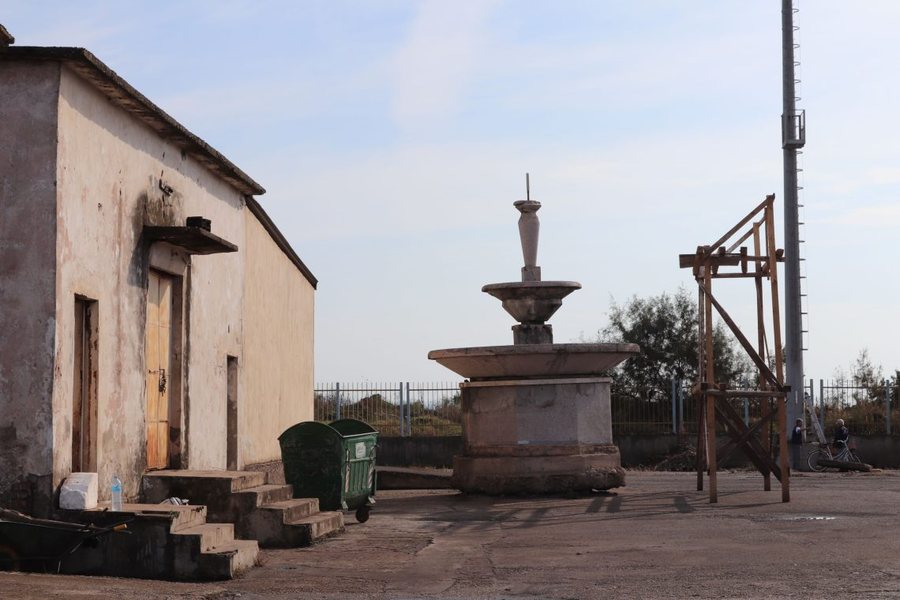
Even the old market, which was razed in the mid-1970s, has not found a place in any of the city's historical sights. The removal of the fountain that was erected a century ago in the park in front of the city hall was accompanied by the promise of the local government that it would be moved to one of the most suitable squares. For more than 10 years, the object was transferred to one of the port squares, and now it is not known where it ended up.
“The fountain in the city center was an element of historical and identity value for Durrës: not only as a physical structure, but as a collective reference point for generations and a cultural element,” Mirjam Reçi, head of the Civil Society Development Center, told BIRN.
According to her, new urban plans for city centers impose new and modern infrastructures, even in the design of fountains.
A source from the Durres Port Authority told BIRN that the fountain was not in storage or inventory, while he believed it was currently located in the area where the “Durrës Marina” project is being implemented.
In the early 2010s, thanks to a bilateral project, signboards were installed near archaeological and historical sites in Durrës, but they have been damaged by time and miscreants.
Dorina Xheraj Subashi, director of the MuzehLab Center, says that work should resume with the maintenance of existing signs and then with the enrichment of the city with various forms of restoring memory.
The center run by Dorina has also installed handicrafts next to doors and early buildings, which may remain as evidence of other changes in the city.
The same thing is suggested by Bedin Bedini, vice president of the “Adrijon” association. Bedini said that the association's members have been asking for a hall in the Durrës port area for years.
“We recently put up some more stands with photos from the merchant fleet on the port railings, but that’s not enough. Three directors of the Port Authority have replaced each other, but the association still doesn’t have a working environment,” Bedini told BIRN.
According to photographer Griseld Hoxha, many of the institutions important to the city's modern history, such as the current port, have been left in the shadows.
"The current port began construction in 1926 and its history includes very important events, including the 1991 exodus. The March and August 1991 exodus, during which nearly 35,000 Albanians left the country, are not yet included in the city's information boards," he concluded. /BIRN/