



The European Court of Human Rights in Strasbourg has decided to consider the complaint of 36 students of the University of Medicine of Tirana, who oppose the law that obliges them to work for several years in Albania after completing their studies, or otherwise pay the full cost of their education.
In February 2024, the Constitutional Court upheld Law 60/2023, but reduced the maximum period of employment obligation from five to three years. The amendments were made on the grounds that the law, in its original form, violated the constitutional right to free choice of employment and penalized students who were already enrolled in medical programs. The court argued that the measure, although intended to keep young professionals in the country, was disproportionate and not sufficiently related to the legitimate aim of strengthening the health system.
Following the Constitutional Court's decision, Parliament adopted a revised version of the law in September 2024, stipulating that medical students must accept compulsory employment for one to three years – depending on the year of enrollment – or pay the full cost of their remaining studies. The retention of diplomas until the employment deadline is met remains part of the law.
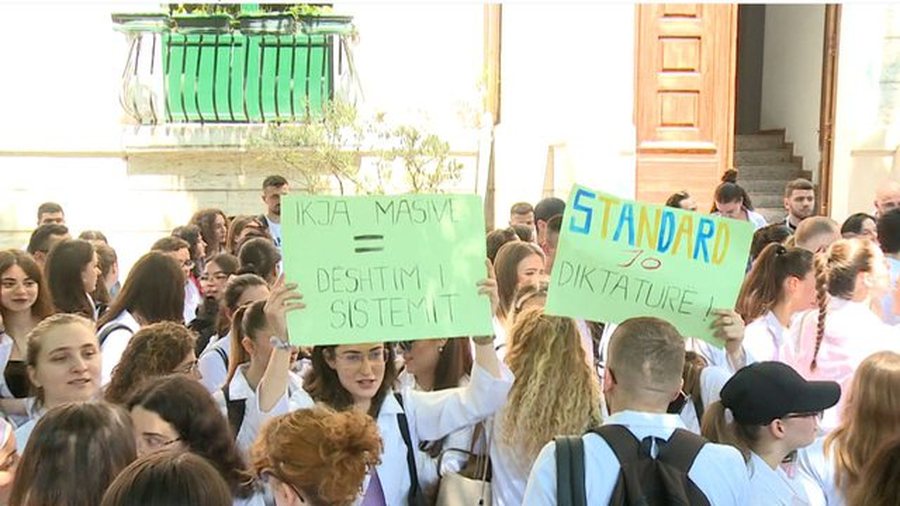
Before the Strasbourg Court, the students complain that the Constitutional Court has not provided sufficient arguments for the issues raised by them and that the process has not been adversarial. They claim that the law violates the right to private life and professional activity (Article 8 of the Convention), considering it unjustified and unnecessary measures. They also object to the retention of diplomas and the significant increase in study costs, referring to Article 2 of Protocol No. 1.
Students also raise charges of discrimination under Article 14 of the Convention, arguing that the law particularly penalizes those with more limited economic opportunities, who cannot pay full tuition fees.
Upon accepting the case, Strasbourg will assess whether Albania has respected the standards of the European Convention and whether the new law follows proportionately justified measures for the situation in the healthcare system.