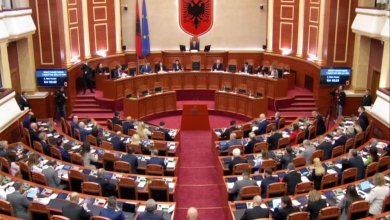


Influential Bulgarian oligarch Delian Peevski has long wanted to see a parliamentary investigation into the activities of American stockbroker and philanthropist George Soros and his Open Society Foundations (OSF) in Bulgaria. But the necessary parliamentary majority for such a step has been lacking for years. And last week, that majority was finally achieved.
A Bulgarian Parliament commission called the “ Ad-hoc Commission to examine the activities of George and Alexander Soros and their foundations on the territory of Bulgaria ” will soon begin its work.
The commission will report on which individuals and organizations are supported by the Soros father and son and who has received money from their OSF foundation.
No legal consequences are currently foreseen against individuals and organizations associated with Soros and his foundations.
However, the Bulgarian parliament may at some point – following the model of the Russian law “against foreign agents” adopted in 2012 – undertake such an attempt. In February 2025, there was an attempt, but the draft law failed to gather the necessary majority to pass it in parliament. Until there is a majority for this, such attempts will remain a kind of propaganda and public exposure: The point is to be able to denigrate as a “Sorosoid” – this is an offensive word in Bulgarian – anyone who has allegedly or actually had anything to do with the liberal philanthropist.
The initiator of this bill, Delyan Peevski, has been one of the most prominent figures involved in scandals in Bulgaria’s post-communist history for 20 years, and his name is associated with a series of entanglements between organized crime and high-level politics. The US and the UK have sanctioned the businessman and media mogul and have seized part of his assets abroad. But despite this, in Bulgaria, which is a member of the EU, Peevski continues to have a strong influence on politics. In the debate on the investigative committee in parliament, he said: “The time has come for a decisive battle. The false world of Soros and the Sorosoids must be destroyed.”
Hungary country of origin
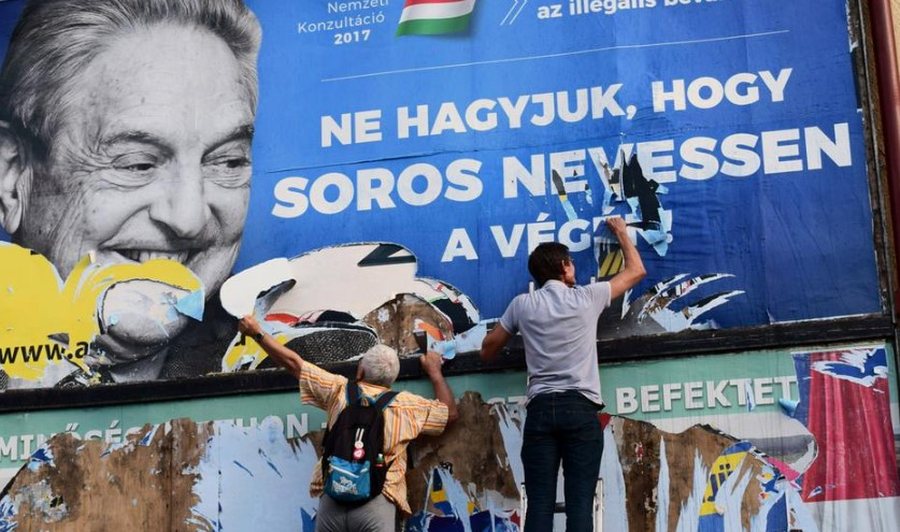
The idea that the accusations of corruption and criminality against him should be used in the opposite direction against all those who oppose him, calling them “agents of Soros” is not Peevski’s. This idea was born in Viktor Orban’s Hungary. There, media close to the government for the first time in 2013 began to systematically list how much money and when independent civil organizations and people critical of the government had received from the OSF foundation.
Since the 2015 migration crisis, the government of Prime Minister Orban has waged a major state campaign against Soros for the first time, using anti-Semitic and right-wing extremist narratives. In George Soros's homeland, this leaves a particularly bitter taste: The stock market billionaire is of Hungarian-Jewish descent and survived the Holocaust in Budapest as a young man. He has been accused by the Orban government of planning a population exchange in Europe or of embodying international greed, i.e. of Jewish financial capital, which is extorting nation states.
Orbán's aggressive campaigns against Soros culminated in several laws, including the so-called "Stop-Soros-Package" in 2018, through which Orbán's critics and independent organizations were financially destroyed in order to silence them. They were later declared illegal by the European Court of Justice without exception. But their propaganda effect has remained.
In Hungary, however, the stigmatization of Soros as an enemy figure seems to have worn off. Instead of the stock market billionaire, Orbán's propaganda is now using Ukraine as the new hotbed of evil. However, the Hungarian campaigns against Soros have now spread as a model to almost all countries in Southeast Europe.
North Macedonia
One of the first Eastern European countries to adopt the anti-Soros campaign model after Hungary was Macedonia (since February 2019, called North Macedonia). In early 2017, the “Stop-Operation-Soros” movement was founded there, whose representatives were close to the leader of the right-wing nationalist VMRO-DPMNE party and the strongman in Macedonia at the time, Nikola Gruevski. The latter had been forced to resign from office a year earlier (2016) under pressure from the massive civil movement for reform and against corruption. He accused the protesters against his government of being “led by Soros.”
Poland
In Poland, the ruling Law and Justice party (PiS) copied Viktor Orban's campaign against Soros from 2015 to 2023. In 2017/18, PiS launched campaigns against "non-governmental criminal organizations" that it said were "remotely commanded by Soros and Russia," despite the inconsistency that Soros had already been stylized as an enemy figure in Russia.
In the 2019 and 2023 election campaigns, the anti-Soros narrative of PiS and other right-wing nationalist parties played a major role. The “Soros network,” i.e. civil society organizations and media “bought by Soros,” was said to be threatening the nation and destabilizing Polish society.
The Polish president elected in June 2025, Karol Nawrocki, also uses the anti-Soros narrative. He accused, for example, his opponent in the election campaign, Rafal Trzaskowski, of being "paid by German foundations and Soros" and presenting himself as "the defender of Poland's security."
Serbia
In Serbia, President Aleksandar Vučić, representatives of his ruling SNS party, and pro-government media have for years pursued the narrative that independent non-governmental organizations, government critics, and civil protest movements are instigated by "foreign agents" and "financed by Soros."
In the current protests, which have been going on for a year against his government, Vučić does not explicitly speak of Soros as the instigator behind the scenes, but considers that “foreign secret services” and “foreign funds” are the financiers of the “color revolution”. In media loyal to Vučić, such as the tabloid newspaper Informer, from time to time editorials such as: “Soros' Secret Game! The bloody hand comes from Albania to Belgrade: Protests in Serbia are just the beginning of the destabilization of the Balkans”.
SLOVAKIA
In Slovakia, Prime Minister Robert Fico, who took office for a fourth term in October 2023, followed a legislative example from neighboring Hungary. A law initiated by his government that requires non-governmental organizations to submit “transparency reports” has been in effect since June 2025. Ahead of the legal initiative, Fico and representatives of the government and his ruling Social Democratic Party (SMER-SD) accused Soros and “foreign agents” of constantly influencing Slovakia.
Fico himself accused the protest movement, which led to his resignation in 2018, among other things, of being “financed by the Soros network.” Arguing for his law in force since June, the “transparency law,” he says that “everyone in Slovakia should know what song each non-governmental organization sings.”
Even in countries like the Czech Republic, Romania, Croatia, and Montenegro, there have been repeated campaigns by right-wing nationalist and populist politicians against Soros and his network in the past. But laws against non-governmental organizations, like in Hungary and Slovakia, have not been passed.
Albania a special case
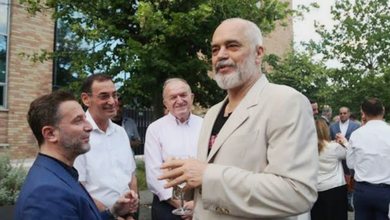
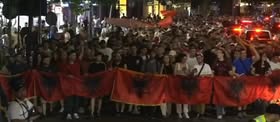
A special case in the anti-Soros narrative in Southeast Europe has long been Albania. This narrative is used by the opposition, but not the government. The opposition uses this narrative as a criticism of Prime Minister Edi Rama (SP), who has been in office since 2013 and often prefers to use authoritarian methods of governance. The national-conservative Democratic Party (PD) accuses Rama of being a “shining beacon of Sorosism”. George Soros and his son Alexander, according to the opposition, have been implementing a secret plan with Rama since 2013 to stay in power in Albania for the long term through judicial, cost-cutting and electoral reform./DW