


The phenomenon of escapes during the communist period constitutes one of the deepest wounds of Albanian society. The documents of the Ministry of Internal Affairs, compiled at the end of 1990, show the real dimensions of this phenomenon, accumulated for 46 consecutive years. The figures summarized below represent a clear picture of the number of escapees, the geographical distribution and the dynamics of departures by year.
1. Status of the fugitive element as of October 31, 1990
According to official data, 9,220 people had fled by October 31, 1990, accompanied by 4,472 family members (women, children, and relatives). These figures represent only the cases recorded by state bodies, while the real number is thought to be even higher.
Escape, severely punished by law and considered a political crime, was the last resort for thousands of Albanians seeking to escape isolation, political persecution, poverty, and the lack of basic freedoms.
2. Distribution by districts
The figures show that the phenomenon of escapes was present throughout the country, but some areas showed much higher levels than others. At the top of the list are:
• Gjirokastra – 1,399 people
• Kukes – 777 people
• Shkodra – 924 people
• Saranda – 859 people
• Vlora – 435 people
• Dibra – 520 people
• Tirana – 333 people
• Korça – 729 people
These figures also reflect geographical factors: proximity to land or sea borders facilitated escape attempts, while mountainous areas made capture more difficult. At the same time, districts such as Gjirokastra and Saranda report numerous attempts towards the southern and sea borders.
Smaller districts, but with notable figures such as Puka (184), Tropoja (402), Mirdita (71) and Librazhdi (53), show that escape was not an isolated phenomenon only in border areas, but a general national problem.
3. Distribution by years (1944–1990)
The dynamics of escapes reflect the evolution of the communist regime and its internal crises. From 1944 to 1990, the document used by us presents their annual distribution.
The period 1944–1955: a great wave of escapes
The first years after the war, especially 1945–1950, mark the highest numbers, peaking at:
• 1945 – 1,279 people
• 1949 – 871 people
• 1950 – 529 people
These waves are associated with political clashes, executions, punishments, and the consolidation of the totalitarian regime.
Period 1956–1975: temporary stabilization of the border
From the mid-1950s to the mid-1970s, the numbers dropped significantly. Most years ranged from 50 to 90 people, with a few exceptions.
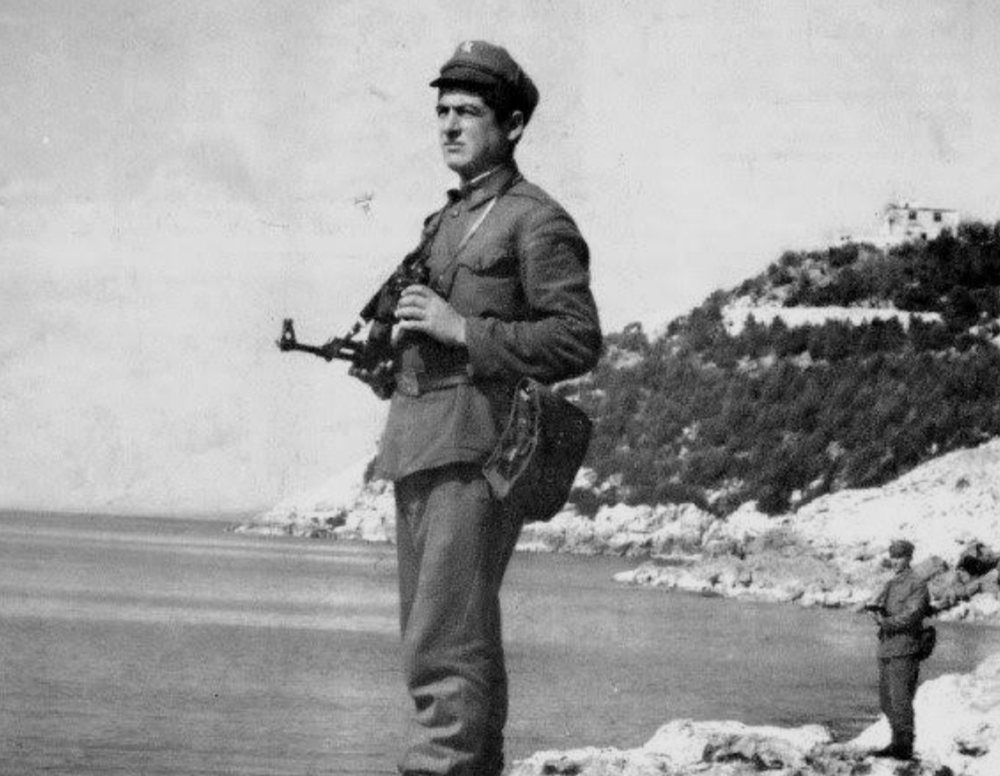
This period is associated with extreme border reinforcement, the construction of clones, border guards, the codification of severe punishments, and a climate of state terror.
The period 1976–1990: slow growth and the final explosion
From the late 1970s and throughout the 1980s there was a gradual increase:
• 1983 – 36 people
• 1984 – 59 people
• 1985 – 49 people
• 1987 – 80 people
• 1989 – 69 people
• 1990 (until October 31) – 510 people
The year 1990 represents the great explosion of escapes, linked to the political crisis of the regime, democratic movements, the collapse of socialist countries, and the famous embassy and maritime border incidents.
cONcluSiON
The figures presented clearly show that escape was a widespread, continuous phenomenon, closely linked to the political repression, isolation and poverty of communist Albania. Starting with the large waves of the first years of the regime, continuing with the more closed periods, and culminating in 1990, escapes constitute a powerful historical indicator of the internal crises of the dictatorship and of the desire of Albanians to escape the totalitarian system.
By Hasan Bello