


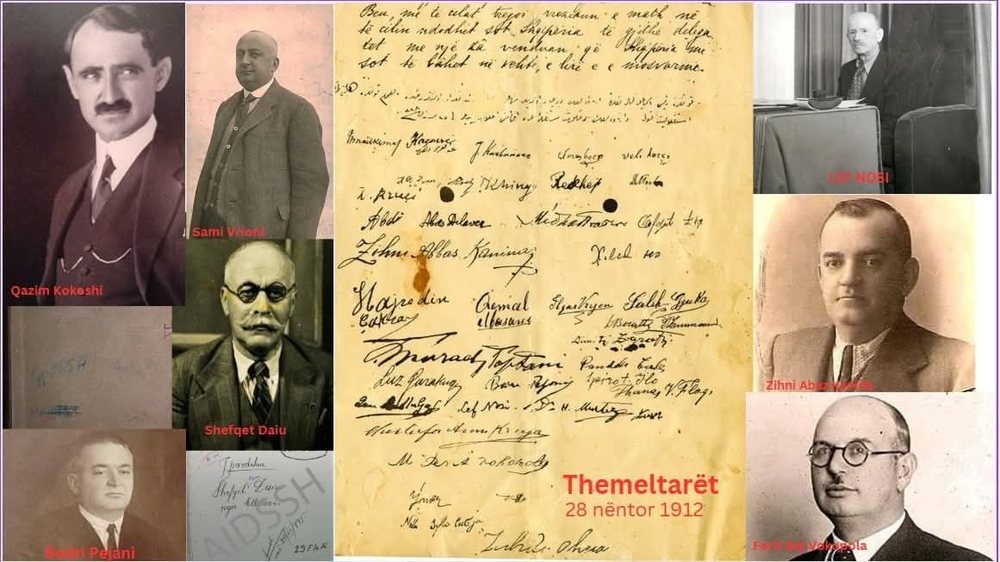
On November 28, 1912, in a small room in Vlora, in the Vlora family mansion, a group of men undertook one of the most important acts in Albanian history. Their signatures brought about the birth of the Albanian state. But those signatures, so courageous and so historic, for many of them turned into the signature of condemnation and persecution.
To understand the violence they experienced afterwards, one must remember a truth that scholars of totalitarianism always bring to attention: the greatest threat of oppressive regimes is the destruction of the public sphere, the eradication of the space where the individual speaks, thinks and acts. The forgetting and erasure of history. 20th-century Albania experienced this, with the signatories of Independence.
Those who signed the freedom became targets of political violence, torture, and erasure from memory.
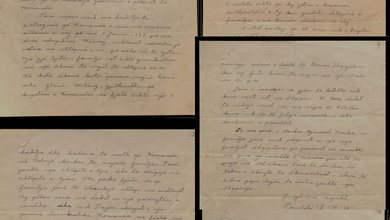
Shefqet Daiu, the patriot from Elbasan, the writer of the Declaration of Independence, a member of parliament and the compiler of an Albanian primer, was arrested and died tortured in 1946. He was one of the most articulate writers of his time. He drafted the text of the Declaration of Independence. But in 1946, the man who gave Albania the word of freedom was convicted, tortured and executed by the communist regime. Neither his name, nor his deeds, nor his sacrifice were mentioned for decades.
Lef Nosi, the keeper of the document, the forgotten shot.
Signer and protector of the original Declaration of Independence until his arrest in 1944. He was one of the nation's brightest minds, a scholar, collector, researcher, statesman. But in February 1946 he was shot as an "enemy of the people". His library was dismantled, his name disappeared from the books, and his contribution was overshadowed.
Qazim Kokoshi, the patriot who survived the Gestapo, but not the Albanian inquisition
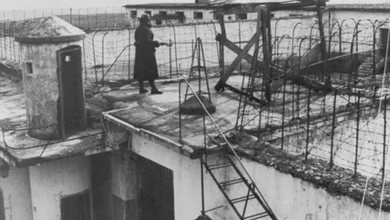
Kokoshi, one of the Albanian patriots who dedicated most of his active years in politics to the national cause and democracy in Albania, although he was arrested and exiled by the Nazis, as he decided to return to his homeland after the war, he was arrested in 1946. But the communist inquisition did not have the same "mercy" as the Nazi one. He died under torture in 1947. Today, the memory of him remains only in rare historical and administrative documents of the Albanian state.
Xhelal Koprëncka, the signatory erased from history
The silent hero of independence, a graduate of the prestigious American school Robert College in Istanbul, was treacherously murdered in 1919 for his patriotic activity. The communist regime declared him a “reactionary”, removed his name from the list of signatories, destroyed his grave and, according to witnesses, threw his remains in an unmarked place. His grandson was also tortured in Spaç and sentenced to be shot 70 years after his grandfather, in 1979.
Sami Vrioni, the learned aristocrat who died in prison.
Former minister in the Ottoman Empire, friend and colleague of Ismail Qemali, returned to Albania and was among the signatories and delegates to the Vlora assembly in 1912. The representative of a family with traditions and in a series of administrative and political positions, although he remained liberal in his political views, he closed his eyes behind prison bars in 1947, in poverty and oblivion.
Bedri Pejani, a well-known leader, handed over for execution.
The delegate of Plav, Guci, Peja, the Prizren native was a representative and founder of the "National Defense of Kosovo" Committee. He did not stop striving for the Albanian national cause until, as the chairman of the Second League of Prizren, he was captured and handed over to the Serbs, to be shot in 1948. Called an "enemy", he was one of the brightest minds of the nation.
Zini Abaz Kanina, a year of torture and an immediate end
One of the most worthy representatives of Kanina, he had a valuable career as a translator, teacher, writer and served in several positions in the Albanian state administration from 1912 until the end of the War, when he was arrested in 1951, after returning from Italy as director of the Bank of Albania in Rome. He was kept in isolation, tortured for a year, sentenced and shortly after his release he died in 1959. No honor, no ceremony, no public memory was held for him. A friend of Naim Frashëri, a close collaborator with Mit'hat Frashëri, Ali Asllani and Aristidh Ruçi, he was forgotten because of his patriotic and intellectual contribution, which overshadowed the bajraktars of the communist leadership after 1945.
Aristidh Ruçi, from a great merchant, to extreme poverty after prison
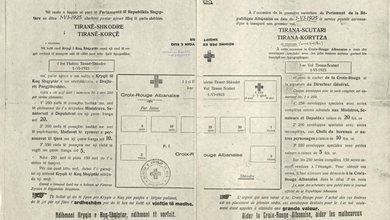
Delegate and signatory of the Declaration of Independence, was one of the most prominent tycoons of the City of Vlora, philanthropist, intellectual, patriot, founder of the "National Defense" Committee against the Italians in 1920, and co-founder of the "PërLindja" Society. Ruçi signed the declaration with his contribution as a fighter and co-founder and signatory of the Gërçe Memorandum. Ruçi was active in Albania's state journey between the two world wars, opposing authoritarian tendencies, to the point that he was arrested and exiled by the fascists in Italy. Although he was the founder of the Albanian Red Cross in Vlora, after returning from exile in Italy, he was arrested and imprisoned as a great merchant, on charges of non-payment of the extraordinary war tax and all his wealth was confiscated, leaving him to live. He died in 1950, while the press of the time passed in complete silence.
Ferit Vokopola, the translator of the Quran who lived under contempt
Signatory of the Declaration, stenographer of Ismail Qemali's speech in the Vlora Assembly, graduated in jurisprudence and economics in Istanbul, held a series of public positions in Albania until April 7, 1939, several times minister, deputy, writer, translator and polyglot remains the man who gave Albanian one of the most important religious translations, the Quran and the Ottoman calendar. During the war he was not politically engaged, he was involved with the magazine he founded "Njeriu", and writings in "Zani i Naltë", but was imprisoned in 1945. After his release from prison by amnesty, he lived in social isolation until his death in 1969, dealing mainly with translations from Ottoman.
Qemal Karaosmani, the signatory who accompanied Ismail Qemali
Elbasanlliu, a friend of Ismail Qemali and many other signatories, a worthy patriot, accompanied the flag from Durrës to Vlora. He signed the act of independence as “Qemal Elbasani”. He served as a minister and as a senior public leader, a member of parliament several times until 1939. But after his death in 1946, the family was persecuted, his property was seized, his name was left in the shadows for decades.
Hajredin Cakrani, the patriot declared enemy
of the Firmet, member of the Eldership established by the Vlora Assembly, former minister, senior military officer, organizer of the Albanian army of the time. Fighter and one of the organizers of the Vlora War in 1920. His patriotic contribution was denied, his family was persecuted, his brother Bektashi was declared a "war criminal" and died in prison.
Interdictions and exiles – the punishment that continued beyond the borders
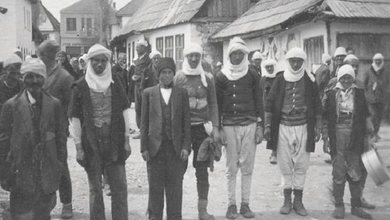
Dervish Biçaku, Dhimitër Berati, Eqerem Vlora, Mustafa Kruja, Mit'hat Frashëri, Rexhep Mitrovica, all signatories and patriots with extraordinary contributions to the establishment of the Albanian state were forced to leave their homeland after the establishment of the communist regime. They were declared “enemies” and “criminals”, simply because they did not belong to the totalitarian communist ideology. Instead of the honor they deserved, oblivion was left to obscure their contribution until the early 1990s.
Erasure from memory – the second crime
Totalitarian regimes do not stop at destroying the body. They aim to destroy memory.
The names of the signatories were erased from books
— photographs were destroyed
— biographies were censored
— graves were destroyed
— their children were driven into poverty, exile, and imposed shame.
The whole process was an uprooting of the cultural and historical roots of the Albanian state before 1945. This was an attempt to build a nation without going.
But history has a long memory, of those who fled through their own suckers and of the compatriots who brought them out of the darkness where the communist dictatorship kept them.
Today, 113 years after that great signing, their tragedies return to remind us that freedom is not a gift, but a sacrifice. Those who signed the Act of Independence paid a high price for themselves and for the nation.
And at a time when history is again in danger of being distorted, their memory is an act of resistance.
We remember. We honor. We reflect.