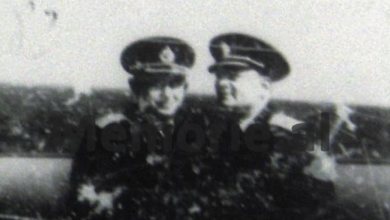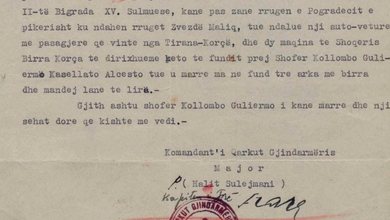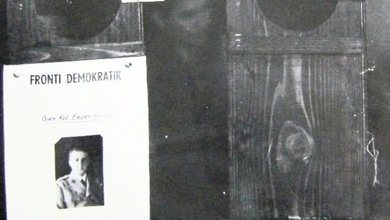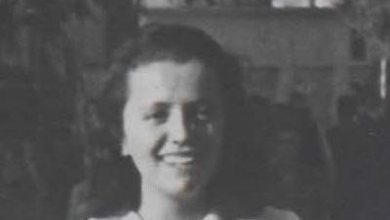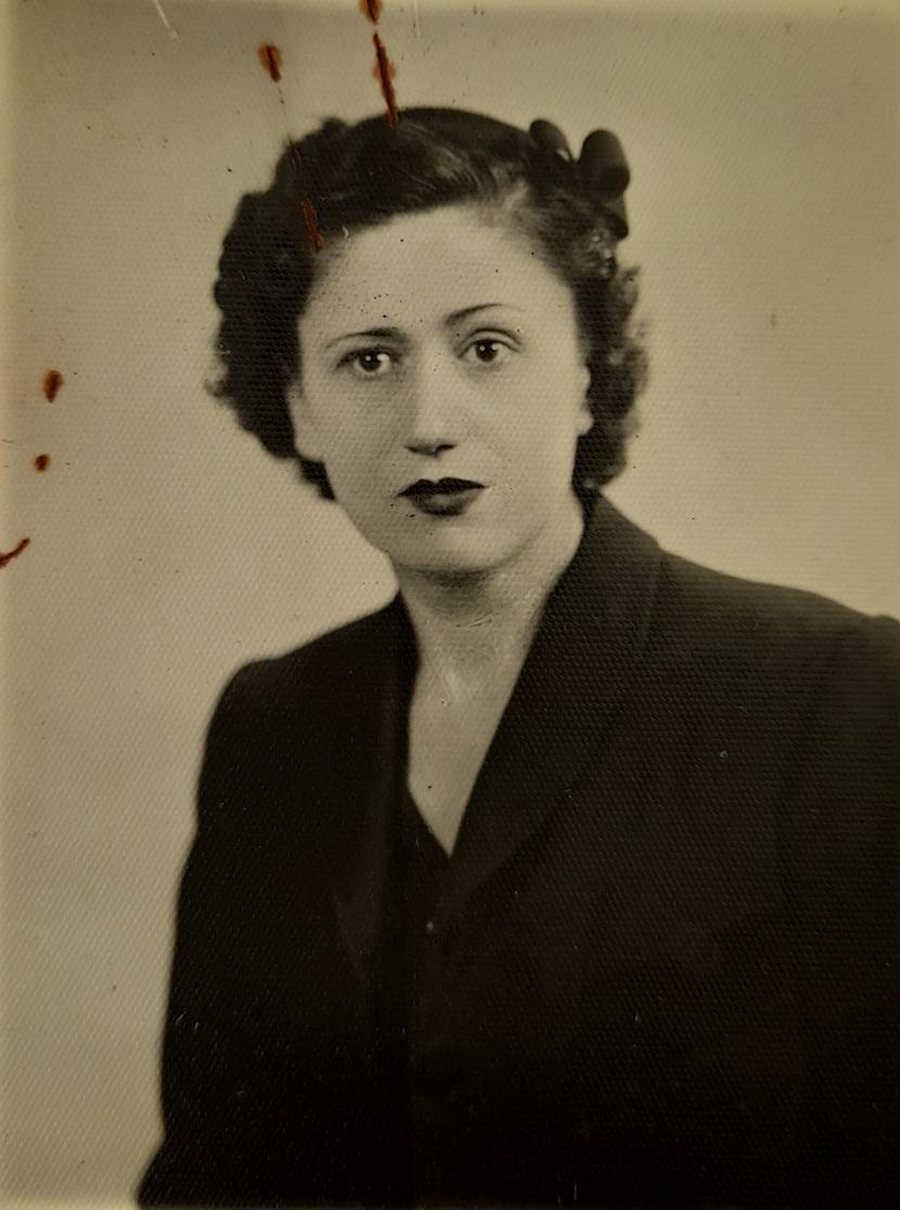
The story of Rumena Kristić, the wife of engineer Isuf Toptani, is one of those small pages of the archives that calmly, but clearly, show the way the communist regime treated the individual: as property of the state, not as a human being.
In 1949, a widowed, foreign woman, with two minor daughters and suffering from tuberculosis, addressed Enver Hoxha with a simple request: to leave Albania and return to Belgrade, to her parents.
Nothing political, no accusations, no claims. Just the right to live somewhere where she could survive.
After the assassination of Isuf Toptani in 1943, her only income was 1,800 lek in rent. Within a few years, Rumena was forced to sell her furniture, her clothes, every valuable thing that remained of her former life. Poverty was not simply a consequence of the loss of her husband, but also the result of a system that displaced parents, confiscated the assets of many such families, and left those who remained behind in an almost inexplicable state of abandonment.
Being a Yugoslav citizen, she requested the renunciation of her Albanian citizenship — which she had not requested herself, but had automatically acquired through marriage. The procedure was legal, she had submitted the documents months ago. She was not asking for any favors, only compliance with the rules. But the request was rejected, with silence.
In Albania in those years, asking to leave was enough to be considered dangerous. Rumena did not leave. She was not left. And four years later, in 1953, the regime sentenced her. She was released only six years after her sentence — a time that did not change her life, but it definitively closed any possibility of escape.
Rumena Kristić's letter remains evidence of a time when the violence of power did not need shouts: a refusal, a passport that was not issued, a silent condemnation was enough.
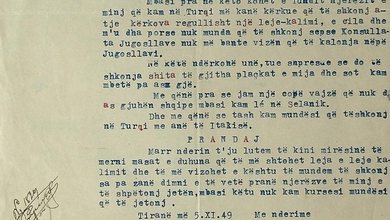
Full letter
Prime Minister
General, Colonel Enver Hoxha
I, Rumena Kristić, wife of the late Eng. Isuf Toptani, housewife, residing in Tirana, submit the following petition:
Being a Yugoslav citizen born in Belgrade, I celebrated, many years ago, a marriage with Eng. Isuf Toptani, and from this marriage two daughters were born, one named Fani, aged 14, and the other Ermina, aged 12.
While my husband was alive, we lived well, but after my husband was killed by the Italians in 1943, my economic situation became difficult, leaving me as the third person with 1,800 lek income from renting a house.
So, after my husband's death, I was forced to sell all my clothes, furniture, and everything I had of value, so that I could live with my two minor children and myself, who are affected by TB.
But I understand that being in a bad economic situation and affected by illness, I cannot live here, but I can live near my parents who are in Belgrade.
For these reasons, many months ago, I had addressed a request to the City's Internal Affairs Section, presenting all the documents required by the law and regulations on citizenship, to take the necessary steps at the Ministry of Internal Affairs to renounce Albanian citizenship, together with my children, and regain Yugoslav citizenship. Furthermore, I acquired Albanian citizenship ipse jure and not because I had requested it myself.
But, even under these bad economic and health conditions and without future livelihoods, it seems that my request has not been accepted and thus I risk suffering even more in the future.
Since I am a Yugoslav citizen married to an Albanian, and since my husband has been dead for more than 6 years, I wish to renounce my Albanian citizenship in order to go with my minor daughters to my parents in Belgrade.
Therefore, I fervently beg you, on behalf of both my minor daughters, to be kind and take every legal action you can to have me renounce my Albanian citizenship and then have my passport stamped so that I can travel by the first means possible to my parents in Yugoslavia.
With respect,
Rumena Kristić, wife of the late Isuf Toptani
Tirana, on 8/10/1949