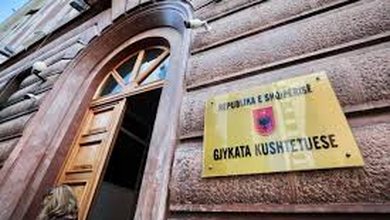



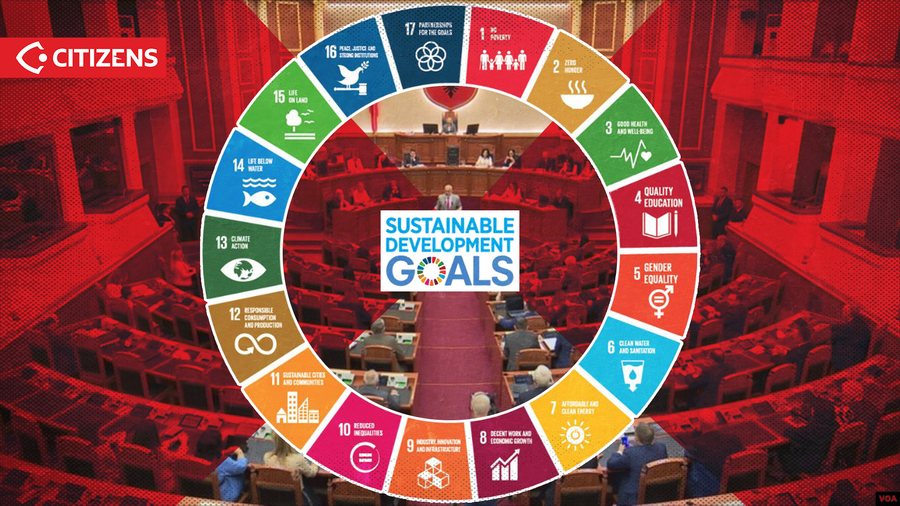
In today's plenary session, the Assembly is expected to approve the establishment of the Subcommittee on Sustainable Development with seven members, whose education and training reveal a deep discrepancy with the subcommittee's area of responsibility. The initiative proposed by MP Anila Denaj (SP), aims to achieve the sustainable development objectives and the UN 2030 agenda, such as climate change, the protection of terrestrial ecosystems and the protection of the oceans. None of the proposed MPs [Ilva Gjuzi (SP), Blendi Himçi (PD), Besa Spaho (SP), Klevis Jahaj (SP), Bora Muzhaqi (SP), Klodiana Çapja (PD), Kliti Hoti (PD)] appear to have graduated or been educated at the Faculty of Natural Sciences, or at the Agricultural University of Tirana, as the only institutions that can provide the necessary expertise for sustainable and rational decisions in favor of achieving the 2030 objectives.
The new subcommittee reports to the Parliamentary Standing Committee on Natural Resources, Infrastructure and Sustainable Development, which unfortunately manifests the same inconsistency in the educational background of its twelve member MPs.
Standing parliamentary committees, in addition to the preliminary review of draft acts, also monitor the functioning of ministries. Thus, the committee and the standing subcommittee on Sustainable Development cover issues of energy, biodiversity and environmental protection. Consequently, their functioning is influenced not only by the political positions, but also by the educational background of the members of parliament. If their education does not match the field of expertise of the committee, there is a risk of politically and ideologically driven decision-making on issues that are deeply and clearly scientific and rational.
Albania has a satisfactory parliamentary gender distribution, compared to some EU countries. But there seem to be no rules for the distribution of MPs across committees depending on their educational background. For a long time, mandatory quotas have been set in the electoral law to guarantee a balanced gender representation in political life and decision-making. The Assembly itself, through its services, provides data on MPs. But these are poor, as they are limited to reporting statistics by gender and age group, but never on the education and background of MPs.
Specifically, the proposed members of the Subcommittee on Sustainable Development (a total of seven) that are expected to be approved in today's plenary session (also as first-time participants in a legislature) are civil engineers, lawyers, architects, financiers (including a doctor). Thus, their expertise does not match the expertise of the subcommittee. How can a deputy – a civil engineer – make sustainable decisions about forests without knowing them?! How can a financier protect the oceans and marine resources?!
Historically, political parties, as well as their supporting non-profit organizations, have not developed programs to diversify educational formation and increase the scientific representation of the list of candidates for deputies. The lists of many names with fixed rankings, the so-called “closed” ones, could serve to control the professional personality of the candidates for deputies, but in reality, they have served as a shelter to gather trusted political candidates. Therefore, the distribution through committees serves the same logic.
Continuous monitoring and evaluation of the educational formation of MPs directly affects the weakening of political and ideological dictates in decision-making, making MPs more independent and democracy more functional. And here we are not talking about imposing quotas not based on meritocracy, but about its opposite: supporting an unrepresentative meritocracy. This will increase the public's trust in their representatives in the Assembly. /Citizens.al/