


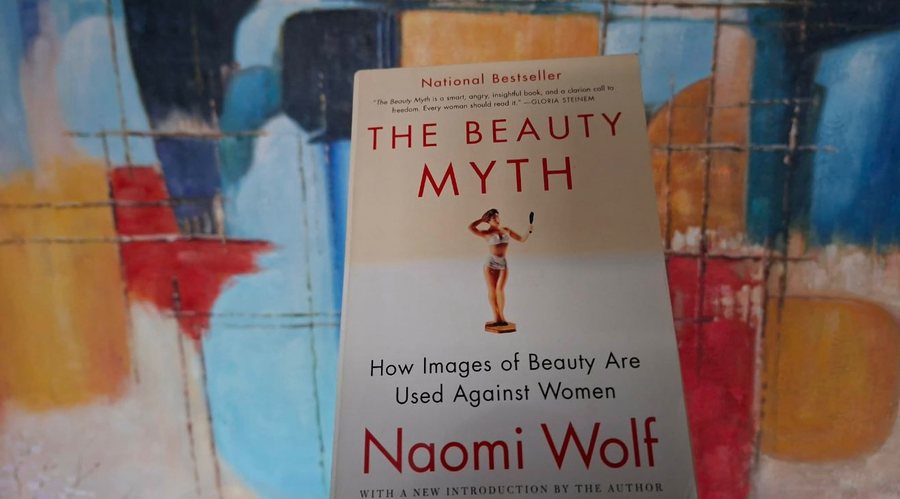
“…In fact, the myth of beauty always describes behavior, not appearance.”
— Naomi Wolf, The Myth of Beauty
In The Beauty Myth, Naomi Wolf observes that as women moved closer to social and professional power, the more visible obstacles were replaced by softer means of discipline, standards that appeared natural, even helpful, but that required constant self-observation. Beauty, Wolf argues, has never been merely aesthetic. It has functioned as a system of control, a way of keeping women busy constantly correcting themselves.
When I reread the book from the perspective of workplace communication, I was deeply struck by how accurately this logic applies in today’s offices. Instead of waist size and wrinkles, we now talk about performance and professional development. The promise is growth, but in practice, for many women, the goal is control.
Take feedback, or evaluation comments, for example. What is supposed to be about work, goals, skills, and results often slips into more murky waters: personality and presence. This is where gender quietly creeps in. Women who conform to expectations of gentleness and obedience usually receive evaluations that maintain balance. Those who lead directly, speak with determination, or refuse to back down face a different vocabulary: they are labeled as difficult, intense, and not quite right for the environment.
I didn’t understand this change from theory, but from the experience of a woman like me. For several years, her reviews had exceeded expectations, praised her strong performance, and described her as a “true team player.” Gradually, over the course of eight months, the language changed. Her confidence was reframed as arrogance, her determination as a mental health problem, her independence as “not a team player.”
The performance appraisal that reflected this new framework was less an analysis of months of work and more the culmination of a narrative silently woven by the group. What could not be attacked in results was shifted to personality. She was not failing; she was simply no longer wanted by the female boss.
This pattern is not uncommon. Many successful women experience that moment when being great no longer protects them. When their departure can no longer be justified by numbers, it is realized through perception. The question is no longer what they do, but how they make others feel.
Often, the harshest scrutiny comes from women in positions of power themselves, especially those who have learned to secure belonging through conformity rather than freedom. In a society where femininity is still closely tied to male approval, some female leaders reproduce the hierarchies that once limited them.
Behind their authority sometimes lies a fragile self-esteem, which they protect through control. A woman who is visibly independent, who is not afraid of male disapproval, and who has no interest in playing the role of the likable one, can be perceived not simply as different, but as destabilizing. What follows is sometimes open hostility, but more often it is surveillance, reinterpretation, and the silent construction of the narrative of the “problematic.”
Here, The Beauty Myth makes one of its most astute observations. Rating systems thrive on constantly shifting standards. There is always something to adjust, smooth out, refine, or moderate, as if the goal were not improvement but perpetual adaptation.
Feedback in the workplace, as my friend’s experience shows, often works in the same way. Women are encouraged to become more submissive, less intense, more accepting, more “professional,” a word that often conceals expectations of subservience. The threshold is constantly shifting and only relentless self-control guarantees.
Over time, many women learn to constantly edit themselves. They gauge the tone of the emails they send, weigh emotions in meetings, control their appearance in leadership, internalize the message that brilliance is allowed only when it is carefully tempered.
Thus, performance reviews become less a tool for development and more a tool for discipline. They reveal whose comfort defines the culture and whose presence must take on a different form to maintain the workplace culture. Wolff writes that myths of beauty are reinforced as women gain power. The closer women get to authority, the more energy is spent on constraining them.
This reflection is not a criticism of feedback. Clear, specific, and competency-based assessment is essential for professional development. The danger arises when feedback becomes a tool for imposing conformity, when it shifts from performance evaluation to identity management.
Just as the beauty myth convinces women that their bodies are flawed, toxic feedback cultures convince them that the problem lies with their personalities. Only later do many of them realize that what was presented to them as a personal flaw was actually the system's discomfort with "the other."
Some workplaces don't push them away or demean them by criticizing their work, but they do it by building the narrative of how these women are allowed to be. Growth should expand the capacity of the individual, not compress their identity.