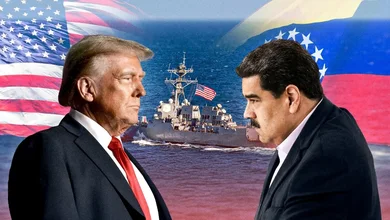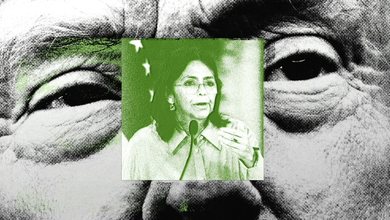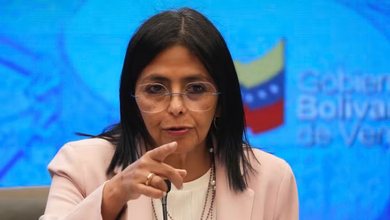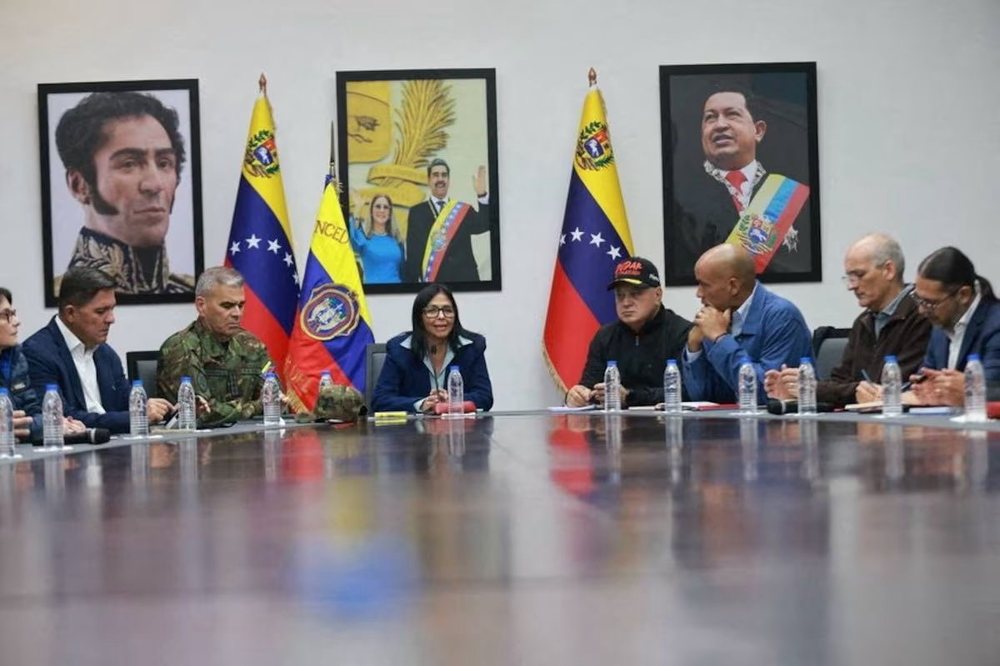
CARACAS/WASHINGTON, Jan 5 (Reuters) - Venezuela's acting President Delcy Rodríguez on Sunday offered cooperation with the United States on an agenda focused on "joint development", striking a conciliatory tone for the first time since U.S. forces seized the oil-rich country's president, Nicolás Maduro.
In a statement published on social media, Rodríguez said her government is prioritizing building respectful relations with the US, although she had previously condemned Saturday's operation as an illegal act to plunder Venezuela's national resources.
“We invite the US government to collaborate with us on a cooperation agenda oriented towards shared development, within the framework of international law, to strengthen sustainable coexistence between communities,” declared Rodríguez. “President Donald Trump, our peoples and our region deserve peace and dialogue, not war.”
Rodríguez, who also holds the post of oil minister, has long been considered the most pragmatic figure within Maduro's inner circle. Trump himself has previously stated that she is willing to cooperate with the United States.
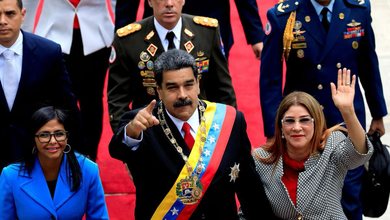
Publicly, however, Rodríguez and other Venezuelan officials have called the detentions of Maduro and his wife, Cilia Flores, a "kidnapping" and have insisted that Maduro remains the country's legitimate leader.
US President Donald Trump told reporters on Sunday that he could order another military strike if Venezuela does not cooperate with US efforts to open up its oil industry and stop drug trafficking. He also warned of military action against Colombia and Mexico, while saying that Cuba's communist regime "seems to be ready to fall" on its own. The Colombian and Mexican embassies in Washington did not immediately respond to requests for comment.
Maduro expected to appear in court in the US
Rodríguez's statement came on the eve of Nicolás Maduro's scheduled appearance, on Monday, before a federal judge in New York.
Trump administration officials have described his capture as a law enforcement action aimed at holding Maduro accountable for criminal charges filed in 2020, accusing him of narcoterrorism conspiracy.
However, Trump has acknowledged that other factors also influenced the decision, citing the influx of Venezuelan immigrants to the US and Venezuela's decision, decades ago, to nationalize American interests in the oil sector.