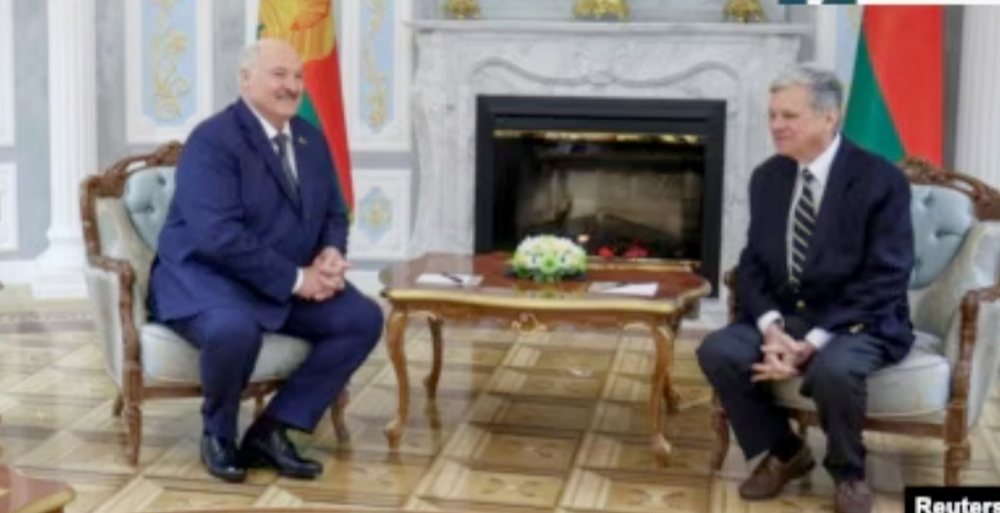
Recent moves from Washington and Brussels show that diplomatic channels are moving in opposite directions regarding Belarus, highlighting a deepening divide among allies over how to address Europe's security.
On one side of the Atlantic Ocean, the United States is engaging with Minsk and the authoritarian leader, Aleksandr Lukashenko, easing sanctions in exchange for the release of political prisoners, including 123 people who were freed last weekend.
This is in stark contrast to what is happening in Brussels, where European Union officials are continuing to impose restrictive measures targeting Lukashenko, a staunch ally of Russian President Vladimir Putin.
Political prisoners released in Belarus have no regrets about the opposition movement
Political prisoners released in Belarus have no regrets about opposition movement - Radio Free Europe/Radio Liberty
A new line of communication
Supporters of the steps taken by the administration of US President Donald Trump to open dialogue with Minsk say this is a clear strategy to open another line of communication with the Kremlin, which has relied on Belarus' support in the war against Ukraine.
"Your president [Lukashenko] has a long history with President Putin and has the ability to advise him. That is very helpful in this situation," Trump's envoy to Belarus, John Coale, said after talks with Lukashenko that led to the release of the prisoners, noting that the Belarusian leader may be able to change Putin's mind about ongoing talks to end the war in Ukraine.
"Of course, President Putin may accept some advice and not others. This is a way to facilitate the process," he added.
But critics fear that years of coordinated pressure on a state that has seen a brutal, often deadly, crackdown on civil society are being undone. They say even limited diplomatic contacts could lend legitimacy to Lukashenko's regime.
“For the EU, copying Washington’s approach would be strategically wrong: unlike the US, the EU shares a border with Belarus, faces immediate security risks from Russia’s military presence there, and has already invested significantly in supporting Belarusian democratic forces,” said Giselle Bosse, a professor at Maastricht University.
"What might serve the US's short-term diplomatic goals would undermine the EU's long-term, values-based strategy," she wrote recently.
Lifting of US sanctions
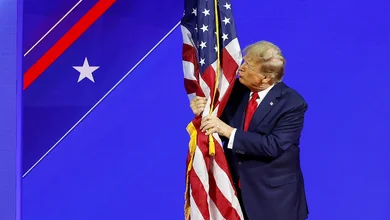
Trump surprised many when he spoke with Lukashenko by phone in August, shortly before his summit with Russian counterpart Vladimir Putin in Alaska.
This was followed by the lifting of sanctions on the Belarusian airline Belavia, meaning that the US government allows all US entities and individuals to do business with the national airline. At the same time, Minsk announced the release, through a presidential pardon, of 31 Ukrainian citizens who had been held in Belarus. This was one of a number of prisoner releases over the past year.
The latest prisoner release came after Washington announced the lifting of sanctions on Belarus' lucrative fertilizer exports - including its largest company, Belaruskali - which are a significant source of revenue for Lukashenko's regime.
For Lukashenko, who has long been criticized and isolated by the West and has been described as a dictator and staunch ally of Putin, the phone call with Trump was a diplomatic achievement.
Some criticized that call, expressing apprehension that it gave Lukashenko the first step towards returning to the international diplomatic scene.
But Trump supporters and some analysts welcomed the move, saying the engagement was necessary after years of trying to isolate Belarus.
Mark Episkopos, a fellow at the Quincy Institute for Responsible Governance and a professor of history at Marymount University in Virginia, welcomed the release of the prisoners on December 13 and the overall engagement with Minsk, calling it “necessary work to move forward, step by step, the normalization of US-Belarus relations.”
"The best and only way to address these challenges is through sustained dialogue with Belarus, not by pushing for government change or punishing Minsk until it cuts ties with Moscow," he wrote recently.
Long described as "Europe's last dictator," Lukashenko has walked a fine line between Russia - Belarus' largest trading partner - and the West.
Following the 2020 presidential election, in which Lukashenko declared victory, opposition groups called the results fraudulent and staged mass protests for weeks. Lukashenko's security forces responded with a brutal crackdown, arresting over 30,000 people, many of whom reported torture and ill-treatment in detention.
This crackdown forced most opposition politicians to flee Belarus out of fear for their safety and freedom. Meanwhile, many Western governments have refused to recognize the results of the 2020 election and do not consider Lukashenko the country's legitimate leader.
While Brussels has targeted the country and its leadership for human rights violations, for siding with Russia in the war against Ukraine, and for pushing migrants from Asia and Africa towards the EU's borders, the bloc, through a unanimous decision on December 15, added three more criteria to target Lukashenko's regime.
Now, Belarusians can be sanctioned if they are deemed to have planned or engaged in “foreign information manipulation and interference” within the EU.
They can also be sanctioned for actions aimed "against the functioning of democratic institutions, economic activities or services of public interest of the EU" and unauthorized entry into the territory of the European bloc will be considered a punishable offense.
The last criterion is the most important, as it is a direct EU response to the weather balloons that Belarus commonly uses to smuggle counterfeit cigarettes, which in recent months have entered Lithuania and interfered with its air traffic.
Lithuanian officials recently told Radio Free Europe that a total of 315 unauthorized balloons have entered the country from Belarus since June, reaching a record number in October with 71 airspace violations.
These interventions have forced Lithuania's two largest airports, in Kaunas and Vilnius, to temporarily close 15 times this year alone, affecting over 320 flights and 45,000 passengers.
According to several EU officials with whom Radio Free Europe/Radio Liberty spoke, the bloc will renew all sanctions against Belarus in the coming weeks, as all 27 EU member states agree that the sanctions should remain in place.
Vilnius is also expected to propose new sanctions in early January against those responsible for the balloon incursions, while other economic sanctions against Minsk are expected to be included in the 20th package of EU sanctions against Russia, which is expected to be adopted near the fourth anniversary of Moscow's full invasion of Ukraine, at the end of February.
After a foreign affairs meeting held in Brussels this week when asked whether the EU would consider following the US example and easing sanctions, EU foreign policy chief Kaja Kallas rejected the suggestion.
"As this war continues and Belarus is clearly assisting Russia in its war effort, as well as in hybrid attacks against European member states, our position has been very clear. We are imposing more sanctions on Belarus to pressure them not to use these tactics against us. So we are increasing the cost to them in order to change their calculus," Kallas said.
Several EU diplomats, speaking on condition of anonymity, were also adamant that the US steps had no impact on Brussels' thinking, with one adding that "the US can offer whatever sanctions relief it wants, [but] without EU involvement, nothing will happen for a landlocked country like Belarus."
Another argued that because the US does not border Belarus, it does not “feel the same threat perception as Europe.” However, he acknowledged that Washington likely sees Lukashenko as useful to influence Russian President Vladimir Putin as part of US efforts to achieve peace between Moscow and Kiev./REL