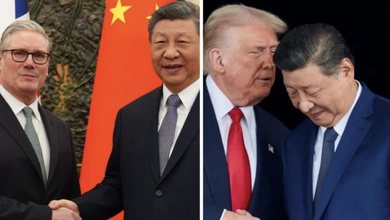
It is not a psychiatric diagnosis, but a clinical way of reading some of the behaviors of political leaders that today concern international public opinion, including US President Donald Trump.
It is about solipsism, a concept little known to the general public but widely debated in scientific circles, which is often mentioned alongside the hypothesis of narcissistic personality disorder. According to experts, a solipsist is an individual who sees himself as the only point of reference, failing to recognize the existence of others as autonomous subjects.
"Unlike the narcissist, the solipsist neither tries to seduce nor please others: for him, the external world loses all consistency," explained Claudio Mencacci, co-president of the Italian Society of Neuropsychopharmacology, during the association's XXVII Congress.
Mencacci emphasized that in psychiatry it is not possible to establish a diagnosis without a direct assessment of the person. However, according to him, it is legitimate to talk about behavioral patterns when they are already the subject of a broad international scientific debate.
The behavioral model of solipsism – which is not considered pathological – helps to interpret traits such as disregard for rules, contempt for social norms, a tendency to lie, irritability, lack of empathy and a sense of guilt. These characteristics, according to experts, take on much greater weight when they appear in individuals who exercise unlimited power.
Another worrying element is the lack of impulse control and the release of behavioral inhibitions. According to Mencacci, some American and British researchers have suggested that the lack of filters in behavior may be related to a dysfunction of the frontal lobes of the brain. In advanced age, these signs are sometimes also associated with hypotheses of a cognitive deficit of organic origin, although these are theoretical assumptions.
According to the Italian expert, the topic is not about media sensationalism, but about collective health. "Traits that in private life may seem purely personal, become a serious problem when they influence decisions with global consequences. History shows that psychiatric assessments of great leaders are often made only after dramatic events. Therefore, it is important to know how to read the signals today, without trivializing them," concluded Mencacci.