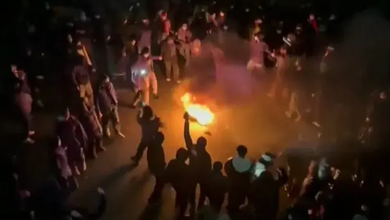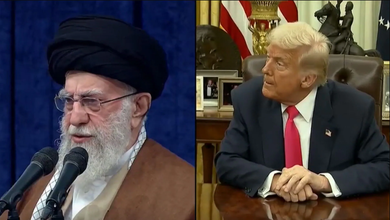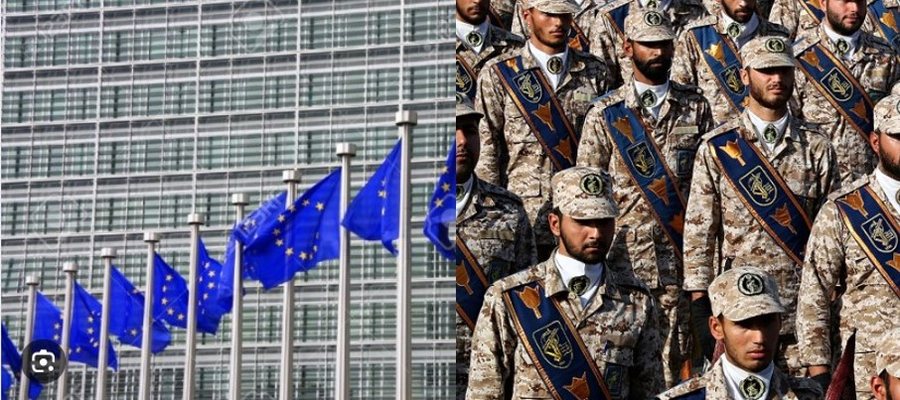
The European Union has reached the unanimity needed to designate Iran's Islamic Revolutionary Guard Corps, IRGC, as a terrorist organization, a highly symbolic rebuke in response to the Islamic Republic's violent crackdown on street protesters.
The political decision was taken on Thursday during a meeting of foreign ministers in Brussels.
This designation will entail an asset freeze, a ban on providing funds, and a travel ban for all permanent members of the IRGC, many of whom are already subject to these restrictions under the regular EU sanctions regime.
"Repression cannot go unanswered. Any regime that kills thousands of its own people is working towards its own destruction," said High Representative Kaja Kallas.
The breakthrough came after France and Spain, both of which had raised concerns about the designation, expressed a change of position on Wednesday. Belgium, whose position had been ambiguous, also moved toward approval.
"We cannot allow any impunity for the crimes that have been committed," said French Foreign Minister Jean-Noël Barrot, urging Tehran to release political prisoners, end executions and restore internet access.
Barrot also demanded that Iranian authorities allow two French citizens to leave the country. Cecile Kohler and Jacques Paris, who spent more than three years imprisoned in Iran, are on bail at the French embassy in Tehran.
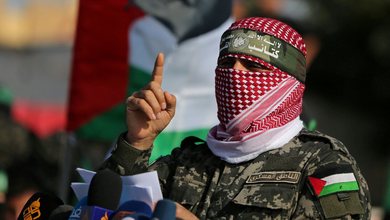
The IRGC is accused of orchestrating Iran's violent suppression of protests, supplying Russia with weapons, launching ballistic missiles toward Israel, and maintaining close ties with armed allies such as Hezbollah, Hamas, and Yemen's Houthis.
The United States, Canada and Australia have already designated the IRGC as a terrorist organization. Germany and the Netherlands have repeatedly urged the bloc to follow suit.
As of today, the EU's terrorist list, which is periodically renewed, includes 22 groups, such as Hamas, Hezbollah's Military Wing, and the Kurdistan Workers' Party.