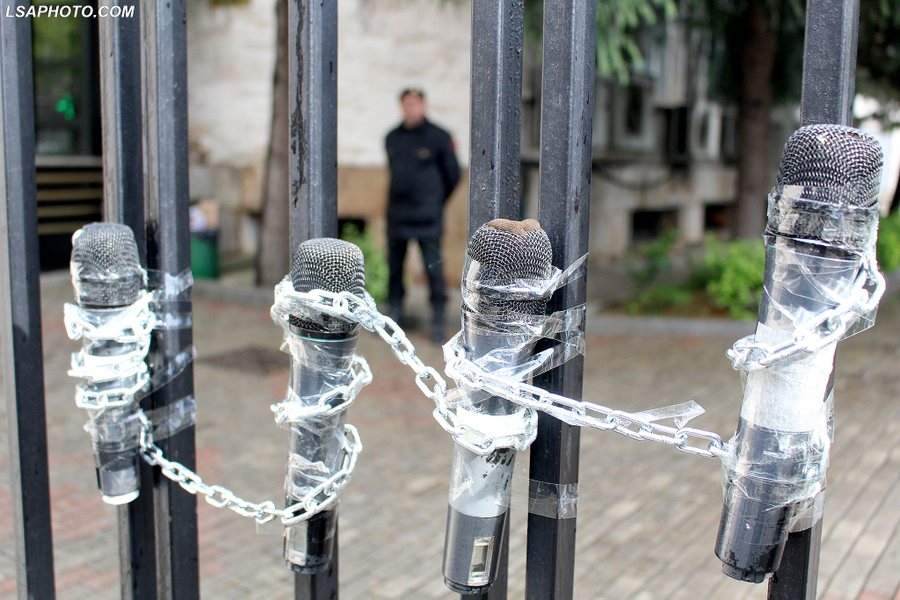
In the context of Albania's accelerated European integration process, the debate on the decriminalization of defamation raises a broader question: whether commitments to reform are substantive or merely performative, and whether the standards that Albania has undertaken to implement are treated as real obligations or as formal requirements to be met.
Defamation, damage to reputation, smear campaigns and manipulation of information are real and visible problems in the public space in Albania. They affect the political debate, the credibility of the media and public trust, but above all they directly affect people's lives. Those who have experienced persistent defamation campaigns, coordinated attacks on reputation or deliberate manipulation of their public image know well the cost that this has: in professional terms, personal terms and in the ability to continue their work.
Precisely because the harm is real, how we approach this problem matters fundamentally. The question, therefore, is not whether defamation should be addressed, that much is clear, but what kind of reform is needed and whether the instruments being used address its real causes.
For years, civil society and media organizations working for media freedom in Albania have been calling for a comprehensive, evidence-based reform agenda. This agenda encompasses the full spectrum of conditions that determine whether journalism can function safely, professionally, and in the public interest: protecting journalists from physical, legal, and digital threats; improving working conditions and labor rights; real access to public information; transparency on media ownership, financing, and connections to state resources; addressing the entrenched relationships between media ownership, political interests, economic power, and organized crime that have structured the media environment in Albania; and strengthening self-regulation and professional standards that build media integrity from within the sector.
Decriminalizing defamation is one element of this agenda. It is not the main priority, nor the only one, nor a magic bullet. Its specific function is to remove a disproportionate legal instrument that creates a chilling effect on expression in the public interest and to contribute to the creation of a more enabling environment, where journalism can be practiced with greater safety. This step should be accompanied and followed by reforms of civil remedies, guarantees against SLAPPs, and addressing the structural conditions that determine how the media operates in practice.
On 25 March 2026, the second plenary session of the platform “Promoting Freedom of Expression in Albania through Open Dialogue”, co-financed by the European Union and the Council of Europe, provided an important moment to reflect on the progress of the reform and the issues that still remain unresolved. Civil society and media organizations present raised concerns regarding the January 2026 amendments to the Criminal Code, stressing that the final law fell short of full decriminalization and included conditional protections that do not comply with European standards.
What was demanded was not a specific political outcome, but something more fundamental: that the reforms meet clear legal standards, guarantee due process, and be based on real accountability, including transparency and traceability of how the contributions from the consultation process are reflected in the final legislative decision-making. What happened was that recommendations agreed upon in a structured and participatory process were ignored by the majority without explanation, and responsibility for the problematic outcome was shifted to civil society actors who engaged in good faith, thereby shifting accountability away from those who made the final decisions.
In the context of Albania's accelerated European integration process, this raises a broader question: whether the commitments to reform are substantive or merely performative, and whether the standards that Albania has undertaken to implement are treated as real obligations or as formal requirements to be met. The case of the amendments to the Criminal Code regarding freedom of expression and the protection of journalists, which were adopted at the end of January, are a typical example of this dynamic and the risk it carries. This is also clearly seen in the way the issue of defamation is argued today and the choice of instrument to address it.
A starting point that creates confusion
One of the main arguments put forward is that the European Union itself has not completely removed defamation from the Criminal Code and, therefore, Albania is not obliged to do so. But this argument confuses two different things: the existence of a legal norm and the standard that it must meet. Some EU member states still maintain defamation as a criminal offence. However, the required standard stems from the case law of the European Court of Human Rights and the guidelines of the Council of Europe: any restriction of freedom of expression must pass the test of legality, legitimate aim, necessity and proportionality. Criminal law is the most severe and intrusive tool at the disposal of the state. When it comes to defamation, especially in cases involving public officials or matters of broad public interest, this test is rarely met. It is on this basis that the Council of Europe calls on states to move towards the complete removal of defamation from criminal legislation. This direction is reflected not only in European standards, but also in the region: countries such as Kosovo and North Macedonia have already taken concrete steps on this path.
Where defamation remains a criminal offence or misdemeanour in some EU Member States, it operates within an institutional environment that Albania does not fully share: independent courts, strict proportionality control, effective civil law remedies and safeguards against strategic lawsuits aimed at stifling public participation and debate (SLAPP). The starting point of the recommendation to decriminalise defamation is not simply related to which EU countries have done so, but above all what the European human rights framework actually requires, and the direction it sets is clear, requiring states to move towards the full decriminalisation of defamation.
The call for decriminalization is not simply a response to external recommendations. It reflects years of evidence-based analysis and advocacy by media organizations, civil society, and journalists in Albania and the region, based on documented models of how the legal framework influences media behavior in practice.
The issue is not just punishment, but the use of criminal law.
Even when there are no prison sentences for defamation, it remains an instrument that not only punishes after the fact, but disciplines speech in advance. Editorial decisions are silently shaped by the question of whether a report is worth the legal risk. This is a form of self-censorship, which operates largely invisibly and produces a distorted picture of public reality not through punishments, but through the absence of reporting.
The 2025 Annual Report of SCiDEV and BIRN Albania, which tracks Albania's progress in media freedom and safety of journalists against EU standards, documents this phenomenon as systemic: structural weaknesses continue to influence editorial behavior, while political actors remain the main source of threats and pressures reported by journalists, and there is a recurring gap between formal institutional mechanisms and their effectiveness in practice.
Monitoring by the SafeJournalists Network recorded 42 violations of journalists’ safety and freedom of expression during 2025, while in the first months of 2026 10 cases have already been recorded. These include coordinated smear campaigns and persistent attempts to discredit independent journalism, patterns that reflect a broader effort to undermine the oversight media, rather than isolated incidents. Survey data from the previous year reinforces this in concrete terms: almost half of journalists report having experienced pressure to change, delay or abandon a story due to external influences, while the majority identify corruption and organized crime, precisely the areas of highest public interest, as particularly sensitive or restricted topics.
This is not an argument against accountability for defamation. Those who deliberately spread false information causing serious harm to individuals should be held accountable. Civil law exists precisely for this purpose: it offers compensation for the injured party and proportionate consequences for the perpetrator. The argument is about which instrument guarantees this accountability most effectively and with the lowest risk of abuse.
Criminal law, with its investigative apparatus, prosecutorial discretion, and stigmatizing effects, is a harsh and disproportionate instrument to regulate expression, especially in an environment where the same instrument can be used against those it aims to protect.
A structural problem, not just an individual one
The level of defamation and denigrating discourse in Albania is not simply the result of individual behavior, but is a consequence of a distorted media and governance environment. Denigrating campaigns and coordinated attacks on reputation are symptoms of the way a system functions where ownership is concentrated, funding is non-transparent, editorial autonomy is weak, and the boundaries between the media, political and economic interests, or even informal influences are blurred. Criminal law does not address these causes; it addresses the symptom, leaving the problem at its core untouched.
There is also a structural asymmetry in the way defamation works as a criminal instrument. Powerful actors, those with political connections, institutional access or economic resources, are in a better position to initiate and sustain legal proceedings, exerting prolonged pressure on critics. Journalists, freelancers and smaller media outlets face the opposite: they are more exposed to the chilling effect and less able to bear the costs and duration of legal proceedings. In this sense, defamation as a criminal offence or misdemeanour does not protect the most vulnerable; on the contrary, it risks empowering those who already have more opportunities to use the law and influence more effectively than others.
This asymmetry is rooted in the long-established links between media ownership, political interests and economic power, which have shaped the information environment in Albania. In this context, smear campaigns and reputational attacks are not simply random failures of individual ethics, they are instruments of a system where control over information translates into political and economic advantage. Dismantling this system requires structural reforms: real transparency over the ownership and financing of the media system, enforceable guarantees for pluralism, the elimination of entrenched networks of informal and hidden influence, and the creation of conditions for editorial decisions to be made independently of political or economic pressures. The criminalization of defamation does not address any of these dimensions.
On the other hand, Albanian courts do not publish detailed data on criminal defamation cases involving journalists, activists, or human rights defenders: how these cases are initiated, who brings them, and what the outcomes are. This lack of judicial transparency is not simply a technical gap; it is a governance problem, repeatedly raised by organizations in the field.
What has changed in Albania — and what hasn't
The legal changes adopted in early 2026 are presented as a step towards decriminalization. In essence, they are not. By linking the partial exemption from criminal liability to journalists who are considered “registered” or “known”, the reform establishes a status-based approach, incompatible with European standards. Such an approach creates the risk of establishing control mechanisms over who is considered a journalist, paving the way for arbitrary exclusion and political influence over the exercise of freedom of expression. The European Court of Human Rights has been clear that protection is linked to function, not title: bloggers, civil society actors, human rights defenders, whistleblowers and citizens participating in the public debate enjoy the same protection as accredited journalists. The reform excludes these categories and leaves unanswered who decides who is “known” and on what criteria, and maintains insult as a criminal offense, deepening, rather than resolving, the deterrent effect. The reform also bypassed a comprehensive, year-long process, facilitated by the EU and the Council of Europe, which had produced a draft reflecting the recommendation for full decriminalization for all individuals. This draft was set aside and a fundamentally different text was adopted without further consultation.
These concerns are reinforced by a broader coherence problem. The January 2026 amendments were adopted in isolation from ongoing work on a comprehensive new Criminal Code, which contains a number of provisions with a direct impact on media and expression freedom and for which there have been worrying reactions. Reforming a provision through a status-based exception, while the broader criminal law architecture remains unaddressed, and in parallel drafting a new code without addressing these issues systematically, produces fragmentation rather than coherent reform. Civil society and media organizations have consistently called for these processes to be treated as interconnected, rather than as parallel paths developing without reference to each other.
A different approach to accountability
Moving away from criminal defamation does not mean less accountability, but better accountability. It is true that civil courts in Albania face significant delays, and this cannot be ignored. But slow civil courts are an argument for reforming civil justice, not for maintaining a criminal framework that has also failed to protect victims.
The Council of Europe’s standards on civil remedies in defamation cases, the EU Directive against SLAPPs and the Council of Europe Recommendation on the protection of journalists from strategic lawsuits, provide a clear framework: proportionate damages, faster procedures, enforceable rights of reply and correction, and clear guarantees against abusive lawsuits. Albania does not need to build this from scratch; it needs the political will to implement what European institutions have already developed.
Broader structural reforms, ownership transparency, fair distribution of public advertising, strengthening editorial independence and effective self-regulation, remain equally essential and cannot be treated as secondary to legal reform.
A matter of direction
The challenges facing media freedom in Albania, ownership concentration, financial dependence, working conditions, weakening editorial autonomy, are more complex and urgent than just the issue of decriminalizing defamation. Decriminalization does not solve these challenges. What it does do is remove a disproportionate instrument from a legal environment that already weighs heavily on public interest journalism, harmonize the framework with the logic of proportionality required by European human rights standards, and signal a willingness to take seriously the democratic substance of the reform, not just its formal appearance.
The danger of the current trajectory is not just that it fails to meet a technical standard. It is the broader risk of a formal approximation without democratic content, of legal mechanisms that appear compliant but that preserve the conditions that allow the government to discipline criticism. Decriminalization, combined with stronger civil remedies, guarantees against SLAPPs, judicial transparency and structural reform in the media, is the most credible path precisely because it addresses this deeper problem. /BIRN/